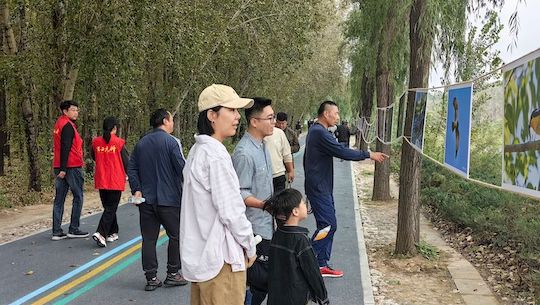
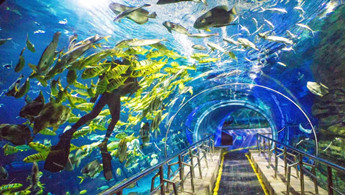
Waterfall in Shidu [Photo via tuchong.com]
Fangshan District is situated in the southwest of Beijing, covering a total area of 2,019 square kilometers. It administers 28 towns, townships and sub-districts, 459 administrative villages, and 230 community neighborhood committees. The permanent population of the district is 1.312 million. In 2024, the district's GDP grew by 4.5 percent.
Fangshan district has a long history. The Zhoukoudian Peking Man Site, dating back 700,000 years, is a cradle of human civilization. The Liulihe site of the Yan State (a vassal state during the Western Zhou dynasty), with over 3,000 years of history, is regarded by historians as the starting point of ancient Beijing's urban development. The Imperial Mausoleums of the Jin Dynasty, built over 860 years ago, bear witness to the vicissitudes of Beijing since it became a capital.
The district is also renowned for its ecological environment, being home to the China Fangshan Global Geopark, Shangfangshan National Forest Park (the oldest secondary forest in North China), and the largest group of karst caves in North China, such as Shihua Cave and Yinhu Karst Cave.
The transportation in Fangshan District is also convenient. It is only 30 minutes' drive from the Beijing Daxing International Airport and within one hour's drive from the Xiong'an New Area and the core area of the capital.