Cases of Global Urban Governance Innovation Released in Beijing

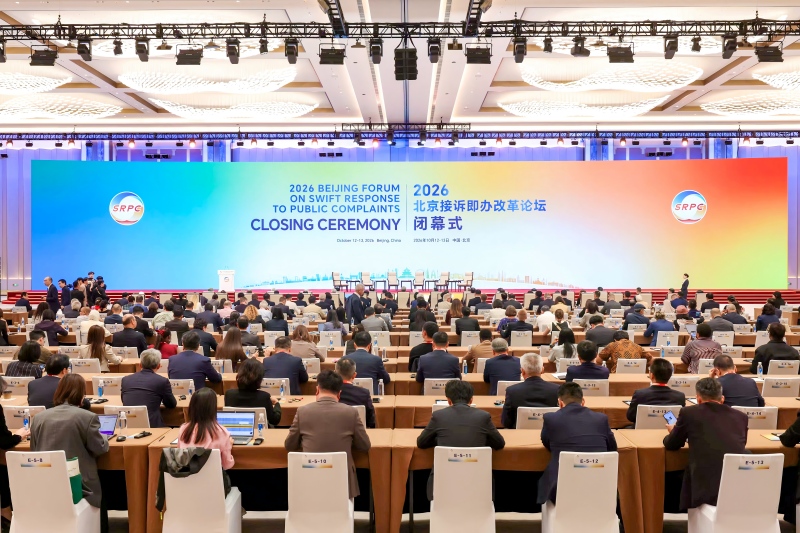
On October 12, Cases of Global Urban Governance Innovation was officially released at the opening ceremony of the 2026 Beijing Forum on Swift Response to Public Complaints.
Closely aligned with the forum's annual theme of "Digital Intelligence Era and People's City," this collection of cases focuses on five major directions: people's city, smart city, resilient city, ecological city, and service city. It is both a systematic review and summary of the achievements of global urban governance practice in recent years and, grounded in the era of digital-intelligent transformation, an outlook on the future direction of urban governance.
Through the sharing and exchange of typical cases, it provides new ideas and inspiration for global urban governance innovation, helps iterate and optimize governance practice, and pools practical wisdom for building modern cities that are innovative, livable, beautiful, resilient, civilized, and smart.
Cases of Global Urban Governance Innovation is divided into two major sections: typical cases of international metropolitan governance and typical cases of Chinese urban governance. It was written by experts from Renmin University of China in collaboration with Harvard University, Stanford University, Oxford University, and other universities at home and abroad, including 21 domestic cases and 22 international cases, covering different countries and regions across all five continents of the world, as well as various types of cities in the eastern, central, and western regions of China.
The international section brings together innovative measures of global metropolises in areas such as public service optimization, organic urban renewal, climate resilience building, digital transformation, and sustainable community development, taking into account urban practice samples from both developed and developing countries, fully demonstrating pluralistic governance pathways and broadening the international perspective of global urban governance.
The Chinese urban cases focus on presenting the latest achievements of urban governance modernization in the process of Chinese modernization, covering key areas such as digital-intelligent empowerment, grassroots co-governance, urban renewal, public service quality improvement, and urban-rural coordination, vividly interpreting the core value of people-centered governance in the new era.
Among them, Beijing has continued to deepen the Swift Response to Public Complaints (SRPC) reform, continuously exploring the reform pathway of megacity governance featuring active response to residents' demands, promoting the expansion of the governance model from SRPC to proactive governance, and developing the "Beijing experience" as a model for cities in China and around the world.
The release of this case collection builds a cross-border and cross-regional platform for exchange and mutual learning on urban governance, promoting the dissemination of excellent practices, advanced governance experience, and scientific concepts from various places. There is no universally applicable standard answer for urban governance. This case collection is an open practical toolbox that does not encourage the simple copying of models, but advocates that localities, based on their own realities, draw on governance logic to transform it into localized solutions. Using the case outcomes as a bond, the forum promotes the exchange and integration of urban governance experience across different civilizations, continuously injecting vitality into global urban governance innovation and jointly advancing toward a more prosperous and better urban future.
(Source: 2026 Beijing Forum on Swift Response to Public Complaints)