About SRPC
Forum
Latest Info
Hotline Stories

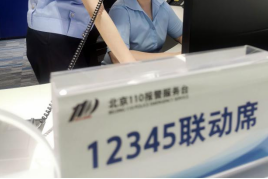
Since 2019, adhering to the people-centered development philosophy, Beijing has been innovatively advancing the "Swift Response to Public Complaints" reform. The city has established a public service mechanism centered on the 12345 Citizen Service Hotline, which features rapid response to, efficient handling of, and timely feedback to the public's inquiries, requests, suggestions and complaints, and underlines proactive governance. This has blazed a new path for modernizing the governance of a megacity — one driven by citizens' needs.

For the past seven years, the 12345 Citizen Service Hotline has handled a cumulative total of 180 million cases (including inquiries, requests, suggestions and complaints) from the public and enterprises. The resolution rate of cases has increased from 53.1 percent to 97.3 percent, while the satisfaction rate has risen from 64.6 percent to 97.7 percent.

Closed-Loop Handling Process

Acceptance
Assignment
Handling
Evaluation
Every case is accepted indiscriminately through one system. The city has integrated 64 government service hotlines for the public and established a "20+N" online channel system.
Cases are assigned based on categories in a swift manner. Cases are directly assigned to 343 subdistricts and townships, 16 districts, 79 municipal-level authorities, 51 municipal public service enterprises, and 127 key platform enterprises across the city.
Responses are made in a tiered way, with coordination among different responsible entities at different levels. Beijing has established tiered timeframes for handling (2 hours, 24 hours, 7 days, and 15 days) and introduced mechanisms including first-contact responsibility and coordination by higher-level authorities.
Public assessment helps improve government services. Citizens who have submitted cases are followed up individually, and service performance is evaluated based on the rates of response, resolution, and satisfaction.

Theme of the Month

In 2021, Beijing established the "Theme of the Month" targeted governance mechanism. This is an innovative measure and a key tool for enhancing the "Swift Response to Public Complaints" reform toward proactive governance. Each year, based on big-data analysis of public cases received by the 12345 Citizen Service Hotline in the previous year, the city identifies the most-raised, common, and challenging public concerns. Issues that entail overall coordination at the municipal level are selected for targeted handling.

For each issue under the "Theme of the Month" mechanism, one municipal leader in charge oversees overall coordination, one municipal authority acts as the leading authority, relevant entities work in coordination, and district authorities proceed with implementation of relevant measures. This forms a collaborative working mechanism involving municipal, district, subdistrict, and township levels.

The handling of each issue under the mechanism continues throughout the year. The tasks for all selected issues are assigned and dealt with in parallel. Each leading municipal authority takes charge of formulating the "One Plan and Three Lists", comprising an issue resolution plan, a task list, a responsibility list, and a policy list. Through list-based management and project-driven implementation, the mechanism addresses difficult issues and bottlenecks affecting people's livelihoods at source and through comprehensive governance.

In addition to resolving specific issues, the "Theme of the Month" mechanism places greater emphasis on policy innovation and the establishment of effective working mechanisms. Focusing on issue resolution, leading municipal authorities clarify division of duties, compile policy-related Q&As, and facilitate policy implementation. In this way, a closed-loop, scenario-based governance mechanism tailored to specific issues has been put in place to foster long-term governance mechanisms.

Timeline

2018

The "Quick Response to Community Calls" reform was launched.

2019

The "Quick Response to Community Calls" reform was upgraded into the "Swift Response to Public Complaints" reform.

2021

The "Swift Response to Public Complaints" reform was further enhanced toward proactive governance. Beijing established the "Theme of the Month" special governance mechanism and the improvement mechanism for subdistricts and townships with higher volumes of cases. 

The Regulations of Beijing Municipality on Swift Response to Public Complaints was promulgated and implemented.

2025

The Opinions on Further Deepening "Swift Response to Public Complaints" Reform was issued.

Agile Governance
Resilient Governance
Proactive Governance
Law-Based Governance
Multi-Stakeholder Governance
Consultative Governance
Smart Governance

We will strengthen the functions of the 12345 Citizen Service Hotline platform, improve the closed-loop system covering request intake, dispatch, case handling and evaluation, and refine the public-service mechanism featuring swift response, efficient processing, timely feedback and proactive governance.

Receiving: One-Number Response, Comprehensive Handling of Public Requests

The city has integrated 64 government service hotlines and established more than 20 online channels for receiving requests, creating a one-stop service hub accessible through both telephone and digital platforms.

Since October 2019, an enterprise service hotline has been established. In 2024, Beijing introduced 13 measures to improve enterprise services and launched the "Three Deliveries" initiative — providing businesses with policy information, digital services, and hotline services — to further improve the business environment.

Assignment: Classified Handling, Swift Assignment

A five-tier request routing directory and scenario-based guidelines have been developed and are dynamically updated to ensure the accurate assignment of requests.

Across the city, assigned requests are handled by 343 subdistricts and townships, 16 districts, 79 municipal government departments, 51 municipal state-owned enterprises providing public services, and 127 key platform enterprises.

Handling: Tiered Response, Coordinated Processing

Based on the urgency and importance of requests from residents and businesses, the city adopts tiered and categorized approaches to handle requests within specified time limits.

  • Within 2 hours: Requests involving emergencies, potential sources of instability, public health incidents, or other situations that may result in loss of life or property must receive a response within two hours.

  • Within 24 hours: Requests concerning essential public services, including water, electricity, gas, and heating supplies, as well as those related to extreme weather, must receive a response within 24 hours.

  • Within 7 days: General requests must receive a response within seven calendar days.

  • Within 15 days: Complex and difficult requests must receive a response within 15 calendar days.

Mechanisms including first-contact responsibility, escalated coordination, supervisory follow-up, and consultation-based handling have been established to improve the efficiency of request resolution.

First-Contact Responsibility: Requests with Unclear Responsibilities

For requests where responsibilities are unclear, the department that first receives the request assumes responsibility for handling it from start to finish, with no passing of responsibility to other departments.

Escalated Coordination: Cross-Regional and Cross-Level Requests

For requests involving multiple administrative levels or regions, higher-level coordination is applied, with local governments and relevant sector authorities working together to resolve the issues. Particularly difficult cases are addressed through dedicated coordination.

Supervisory Follow-Up: Key and Difficult Requests

For key issues, the city adopts a supervisory follow-up mechanism and conducts a second round of supervision for cases that remain unresolved after follow-up visits.

Consultative Handling: Matters Concerning the Community

For matters concerning the wider community, grassroots democratic consultation platforms are used to bring people together to discuss and resolve community issues collectively.

Evaluate: Public Evaluation Drives Improvement

The city has established an evaluation system based on three key indicators: response rate, resolution rate, and satisfaction rate. The effectiveness of government work and the performance of government departments are evaluated by the public.

Comprehensive Evaluation of Swift Response to Public Complaints

Monthly review meetings and performance assessments are conducted, with evaluation results released to drive improvements in request handling and ensure public oversight.


Mobilize departments at all levels across the city, activate the primary-level governance network, integrate routine governance with emergency response, and strengthen society's overall capacity to respond to emergencies and build risk resilience.

Adhere to a problem-oriented approach, pool resources, strengthen coordination and collaboration, and carry out proactive governance in key fields and areas.

Advance reform under the rule of law and improve the rule of law through reform. The "Swift Response to Public Complaints" reform emphasizes learning from practical experience and refining practices through implementation, so as to strengthen practical action through institutional mechanisms.

Bring together the efforts of all sectors and encourage market entities, social organizations and other stakeholders to participate actively, promoting a governance community based on joint contribution, joint governance, and shared benefits.

Through participation throughout the process, joint consultation, and public oversight and evaluation, the city promotes a governance model in which issues are addressed through consultation, allowing the public to genuinely participate in decision-making, oversee outcomes, and share the benefits of governance.

  • Initiators: Citizens become the initiators of governance issues. By expressing their genuine needs, the approach shifts from the government deciding what services to provide to residents identifying the services they need.

  • Participants: Citizens become participants in the governance process. Through the principle that "matters concerning everyone are discussed and handled with everyone's participation", society advances joint contribution, joint governance, and shared benefits.

  • Evaluators: Citizens become evaluators of governance performance. Indicators such as the response rate, resolution rate, and satisfaction rate serve as key benchmarks for assessing the work of Party committees and governments at all levels.

  • Beneficiaries: Citizens become beneficiaries of governance outcomes. Difficult issues are effectively resolved, legitimate rights and interests are protected in accordance with the law, and a large number of practical issues affecting people's daily lives are addressed.

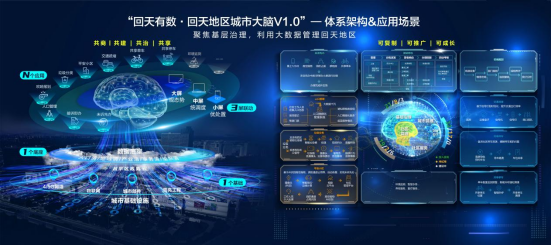
Accelerate digital and intelligent development, develop the public sentiment index, build a think tank focused on people's well-being, support sound decision-making and efficient performance of duties, and empower the modernization of urban governance.

About

Cities serve as the spaces of civilizational development and the carriers of modernization. As global urbanization accelerates, it is estimated that by 2050, nearly 70 percent of the world's population will reside in urban areas. Challenges such as population expansion, resource scarcity, and complexities in governance are becoming increasingly prominent. Improving urban governance and livability has thus become the shared task for cities worldwide. The rapid evolution of digital and intelligent technologies offers new pathways toward inclusive, green, and sustainable urban development, contributing to the profound transformations in urban governance. Faced with unprecedented opportunities and challenges, cities around the globe have pressed ahead with reforms and bold innovation, producing valuable experiences. Currently, strengthening global dialogue, deepening cooperation in digital and intelligent domains, and jointly advancing the modernization of urban governance have become shared missions for cities worldwide, essential for addressing common challenges and promoting the progress of human civilization.

Beijing, famous for its historical and cultural heritage, is a dynamic, modern international metropolis of over 21 million permanent residents in an area of more than 16,000 square kilometers. In 2019, to address urban governance challenges, Beijing launched the "Swift Response to Public Complaints" reform initiative, leveraging its 12345 citizen service hotline as the main channel to receive public complaints and respond to each of them with speed and efficiency. In keeping with the trends in digital and intelligent transformation, Beijing has integrated smart technologies into urban governance, by analyzing public livelihood data to identify patterns and address the most-raised, common, and difficult issues with targeted solutions. It has also developed a public sentiment index and built a think tank for people's well-being. Over the past seven years, the platform has received 180 million public requests, inquiries and complaints, with both the resolution rate and the satisfaction rate exceeding 97 percent. A complete and effective closed-loop management system for public services has been established. The city has therefore developed a new path for modernizing megacity governance, one driven by citizens' feedback.

To promote global exchanges and mutual learning in urban governance, the Chinese Academy of Social Sciences, the China Media Group, the CPC Beijing Municipal Committee, and the People's Government of Beijing Municipality jointly launched the Beijing Forum on Swift Response to Public Complaints. Under the permanent theme "People's City, Better Future", the forum has been successfully held three times since its debut in 2021.

The 2024 edition, themed "Modernizing for People-Centered Urban Governance", welcomed over 3,100 guests, including more than 170 international participants from 40 countries. Multiple achievements were released. The documentary film "Hotline Beijing", which premiered during the event, was released nationwide and screened in multiple cities outside China. It has won several awards, including the Golden Rooster Award for Best Documentary, the Golden Panda Award for International Communication of ChineseStories, and the Best Documentary of the Year award at the Chinese American Film Festival.

The forum is held every two years. The 2026 edition is tentatively scheduled to take place in Beijing from October 12 to 13, under the annual theme "Digital Intelligence Era and People's Cities". The event will include an opening ceremony, a main forum, parallel forums and salons, and a closing ceremony. Several publications will be released, including a collection of theoretical findings on the "Swift Response to Public Complaints" reform, an English monograph on the reform, an English special issue on the reform, an evaluation report on global cities' hotline services and governance effectiveness, and a collection of typical cases in global urban governance. Additionally, a new documentary on the reform's progress will be screened.

We sincerely invite representatives from academic institutions and government agencies worldwide to join us at the event. Let us work together to explore the directions and pathways for modernizing urban governance through digital intelligence and create a bright future for human urban civilization.

Agenda

1. Opening Ceremony and Main Forum

2. Parallel Forums and Salons

Parallel Forum 1:  Precision and Excellence: Refined Governance for Sustainable Urban Development

Time: 14:30–17:30, Oct. 12, 2026

Host: Dongcheng District, University of Chinese Academy of Social Sciences

Venue: Meeting Rooms 235 & 237, 2F, China National Convention Center (Phase II)


Parallel Forum 2:  Progress and the Common Good: Advancing Good Governance and Urban Civilization

Time: 14:30–17:30, Oct. 12, 2026

Host: Xicheng District, Renmin University of China

Venue: Meeting Rooms 231 & 233, 2F, China National Convention Center (Phase II)


Parallel Forum 3:  Smart Solutions, Shared Benefits: Digital Intelligence for Modern Urban Governance

Time: 14:30–17:30, Oct. 12, 2026

Host: Haidian District, Tsinghua University

Venue: Meeting Rooms 221 & 223, 2F, China National Convention Center (Phase II)


Parallel Forum 4:  Exchange and Integration: Collaborative Governance for Open and Inclusive Cities

Time: 09:00–12:00, Oct. 13, 2026

Host: Chaoyang District, Capital University of Economics and Business 

Venue: Meeting Rooms 221 & 223, 2F, China National Convention Center (Phase II)


Parallel Forum 5:  People First, Better Lives: People-Centered, Needs-Driven Urban Governance

Time: 09:00–12:00, Oct. 13, 2026

Host: Tongzhou District, Peking University

Venue: Meeting Rooms 231 & 233, 2F, China National Convention Center (Phase II) 


Parallel Forum 6:  Consultation and Co-Governance: Diverse Participation and Shared Urban Governance

Time: 09:00–12:00, Oct. 13, 2026

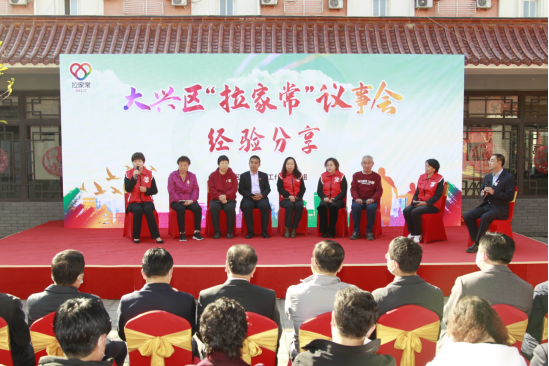
Host: Daxing District, Beijing Radio & Television Station, Qianxian Magazine

Venue: Meeting Rooms 235 & 237, 2F, China National Convention Center (Phase II)


Salon No. 1: The Human Touch and Boundaries of City Hotlines

Time: 14:30–17:30, Oct. 12, 2026

Host: Beijing Citizen Hotline Service Center, Fengtai District

Venue: Sunshine Reception Hall, Beijing Citizen Hotline Service Center


Salon No. 2: Community Governance Through the Participation of Diverse Groups

Time: 14:30–17:30, Oct. 12, 2026

Host: Chaoyang District, Capital University of Economics and Business

Venue: Liangma Dongyuan, along the Liangma River


Salon No. 3: Consultative Democracy in Primary-Level Governance

Time: 8:30–11:30, Oct. 13, 2026

Host: Xicheng District, Renmin University of China

Venue: White-Tower Art Center, Baitasi Area, Xicheng District


Salon No. 4: Empowering Primary-Level Governance with Digital and Intelligent Technologies

Time: 8:30–11:30, Oct. 13, 2026

Host: Haidian District, Tsinghua University

Venue: AI Genesis Community, Haidian District

Previous Sessions

Typical Cases

  • Devote great energy to reform of swift response to public complaints and fulfill responsibility as state-owned enterprises — Practice and explorations of municipally-owned enterprises in Beijing
  • Address both symptoms and root causes and join hands to tackle issues frequently raised by people — Explorations and practice of the "Issue of the Month" mechanism
  • Coordinate reform of swift response to public complaints and democratic consultation — Practice of Beijing Municipal Committee of the China Democratic League
  • Leverage advantages in public communication to contribute to primary-and community-level governance — Participation of municipally-owned media in reform of swift response to public complaints
  • Businesses of new forms and people engaged in new types of employment: From "variables in management" to "contributors to governance" — Role of emerging forces in Party-building-led city governance
You May Need
Hotline 12345

With beneficial policies, high-quality and convenient services, sincere and efficient interactions, smart governance brings you closer to Beijing.