483 First Stores + 520 Debut Events: Beijing Unveils Mid-Year Debut Economy Report

In the first half of 2026, Beijing's debut economy reached new heights, with 483 physical first stores opened across the city, and 520 sessions of debut launches, premieres, and first exhibitions and performances held.
The synergy between technology and commerce was the most striking feature of the debut economy in the first half of this year. The China (Beijing) Aerospace Science Center pushed beyond the boundaries of traditional science education venues with a 3,700-square-meter immersive complex. Unitree's direct-sale store created a direct channel for consumers to experience humanoid robots firsthand. The smart-robot-themed restaurant (version 2.0) in the Beijing E-Town redefined smart dining through services fully provided by robots.
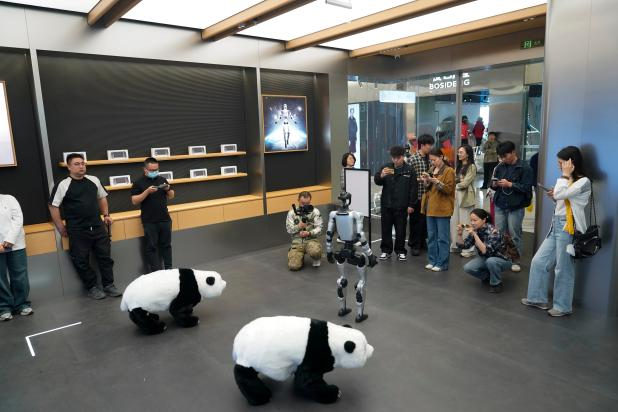
Unitree Robotics's direct-sale store
[Photo provided by an interviewee]
Food and beverage brands remained highly active in opening first stores, spanning every category from hotpot and fast food to fusion cuisines, coffee and tea. In areas including fashion apparel, high-end beauty, outdoor sports, gold and jewelry, and designer toys and creative goods, retail first stores showed a clear shift toward experience-driven and scenario-based formats. With the arrival of Andersson Bell's first store in China, HarborHouse's innovative concept store and more, the city's physical retail landscape is being reshaped.
Meanwhile, non-traditional commercial spaces have emerged as new platforms for brands to tell their stories in distinctive ways. To Summer's fragrance shop on Guozijian Street recreates the soothing atmosphere of an old-time apothecary within a Qing-Dynasty residence. At Yong Ding He Ji ("Yongding River Market") in Shougang Park, industrial heritage and tea culture sparked an unexpected fusion with the introduction of NOYO, a new-style tea brand.
The 520 debut launches, premieres, and first showcases and exhibitions have evolved beyond straightforward product promotion toward creating deeper emotional connections with consumers. Innovative formats—including AI-powered human-robot dance performances, debut shows highlighting China-chic apparel, and immersive runway shows for affordable-luxury brands—have transformed brand messaging into engaging, multisensory experiences.
Exhibitions were equally full of highlights. The debut exhibitions of intangible cultural heritage items including wood carving and lion dance gave traditional Chinese culture a contemporary appeal, while exhibitions of Renaissance masterpieces by Da Vinci and others brought in top-tier international art resources. Together, this diverse array of exhibitions catered to the cultural and intellectual interests of visitors of all ages.
In terms of locations, the four major commercial districts (Wangfujing, Sanlitun, CBD and Shuangjing) led the city in terms of the number of newly opened first stores, while other areas such as Xidan Financial Street, Changying, Chaoqing, Wangjing and Dongzhimen also maintained steady momentum. As the debut economy's clustering and spillover effects unfold in tandem, Beijing continues to energize urban consumption through an increasingly multidimensional commercial ecosystem.
(Source: The Beijing News)