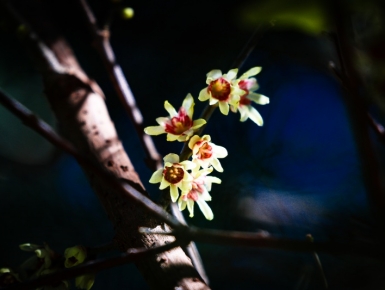
Wintersweet in Full Bloom at Xiangshan Park as Peak Viewing Period Begins

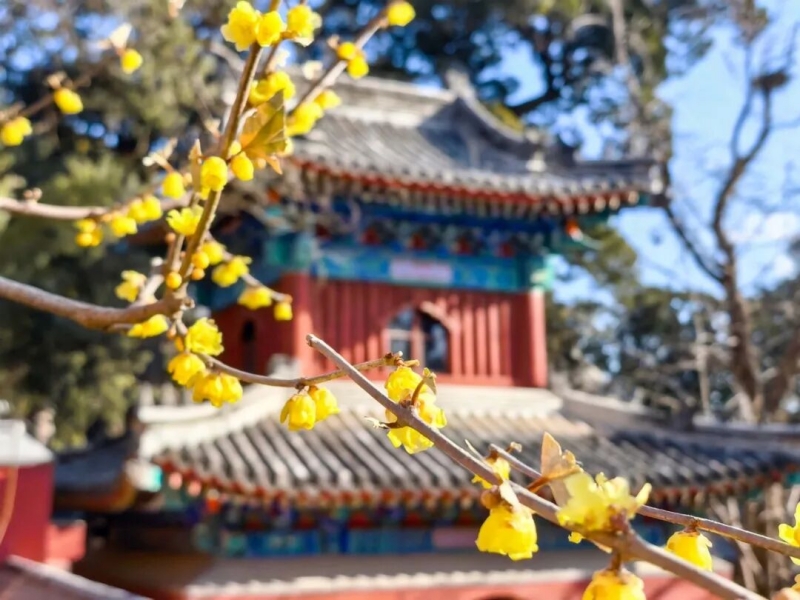
Recently, wintersweet has come into bloom at Xiangshan Park, with the flowering season expected to continue through early March.
The park's wintersweet trees are primarily concentrated in two distinct areas, each offering its own unique charm to suit different aesthetic preferences.
Wintersweet Valley is home to the largest and most diverse collection of wintersweet at Xiangshan. More than 100 trees are planted here, forming a distinctive hillside grove. The blossoms in the valley have now reached their peak. Stroll along the winding wooden boardwalk, where flowering branches stretch within arm's reach on either side — an ideal setting for capturing stunning photographs.
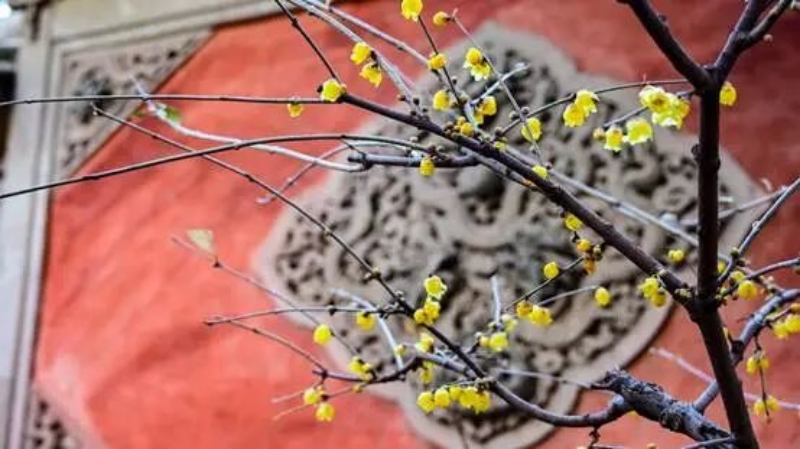
If you prefer tranquility or enjoy scenery where ancient buildings and flowers blend harmoniously, then Biyun Temple, with a history of nearly 700 years, is a must-visit. The temple's wintersweet trees can be primarily found in the Meditation Hall Courtyard and the Pagoda Courtyard. Currently, the wintersweet in front of the Meditation Hall Courtyard is in bloom, while those in the Pagoda Courtyard remain mostly in plump buds, ready to unfold.
Reminder: A separate ticket is required for entry to Biyun Temple, and the annual pass for Beijing municipal parks is not valid for this venue.
Recommended Routes for All Ages
Two easy and family-friendly routes are available, suitable for visitors of all ages.
Route One: Enter from the North Gate
Begin your visit at Biyun Temple to admire the wintersweet set against the backdrop of the ancient monastery. Afterwards, follow the gently sloping main road toward Wintersweet Valley.
Route Two: Enter from the East Gate
Pass through the lively Songlin Market, Jianxin Courtyard, and Yanjing Lake before arriving at Wintersweet Valley. Along the way, you can take in the tranquil mountain scenery while still enjoying the lingering festive atmosphere of the Spring Festival.
(Source: Beijing Fabu)