Swift Response to Public Complaints: Beijing Builds a Multilevel Bike Parking Facility at Shahe Subway Station

Shahe Subway Station in Changping District is a major regional transportation hub. It ranks second among Beijing's subway stations in terms of passenger flows, handling up to 95,000 passenger trips a day. Many commuters rely on bicycles (including electric bikes) to get to and depart from the station, with around 10,000 non-motorized vehicles parked in the surrounding areas daily. However, with insufficient official parking spaces, many vehicles were left haphazardly parked, occupying roads, thereby severely obstructing pavements and affecting the passage of motor vehicles and pedestrians.
Since 2021, Beijing's 12345 service hotline has received a growing number of complaints and requests concerning parking of bicycles. This number peaked in 2024, with 88 related cases recorded over the year. In response to residents' concerns, relevant authorities in Beijing have worked through the city's "Swift Response to Public Complaints" mechanism to proactively seek solutions to the problem.

To better understand residents' actual needs, authorities have drawn on feedback collected through the 12345 service hotline and questionnaire survey data. A large multilevel parking garage for non-motorized vehicles was subsequently built and opened at the east of Shahe Station. The facility can accommodate up to 6,000 non-motorized vehicles, with designated parking areas arranged across multiple levels. Its third floor connects directly to the subway station, allowing commuters to park their bikes and enter the station via a connecting passage, making their daily trips even more convenient.
Beyond addressing parking shortages, the garage also includes a service station offering practical amenities for outdoor workers, such as charging facilities and a place to heat meals. Bus stops and convenience stores have also been incorporated into the plans for its surrounding areas, extending the range of services available to the public.
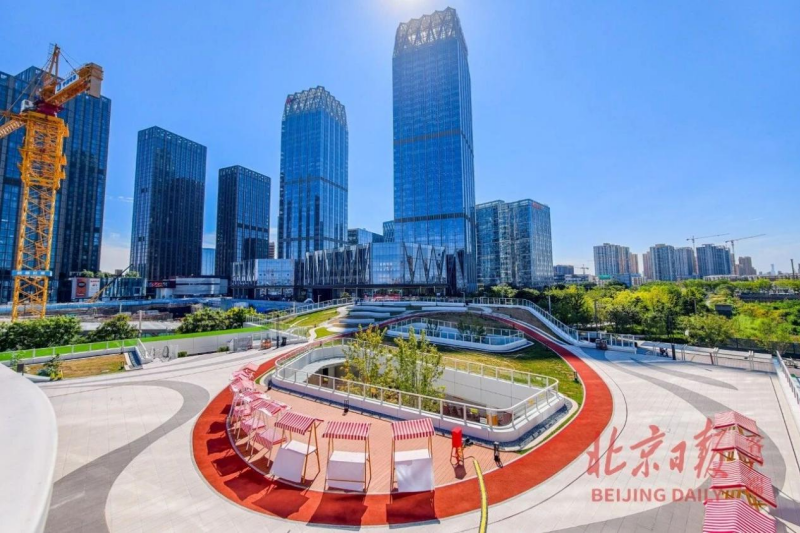
The success of the Shahe Station project has also provided a replicable model for urban governance. The approach has since been adopted in the Beijing Municipal Administrative Center, where smart parking facilities for non-motorized vehicles have been built at stations including Tongzhou Beiguan and Beiyunhe Xi (W). These efforts will continue to address the challenges of bike parking and subway connections in multiple areas, benefiting an increasing number of commuters in Beijing.
(Source: Beijing Daily)