40,000 Migratory Birds! Miyun Reservoir Welcomes Spring Migration Peak

With temperatures on the rise, last week, the Miyun Reservoir entered the peak period of its spring migratory bird season, seeing the arrival of nearly 40,000 migratory birds. As a key stopover site and refueling station along the East Asian-Australasian Flyway, this natural spectacle of countless birds soaring through the sky will continue at the reservoir for about half a month.
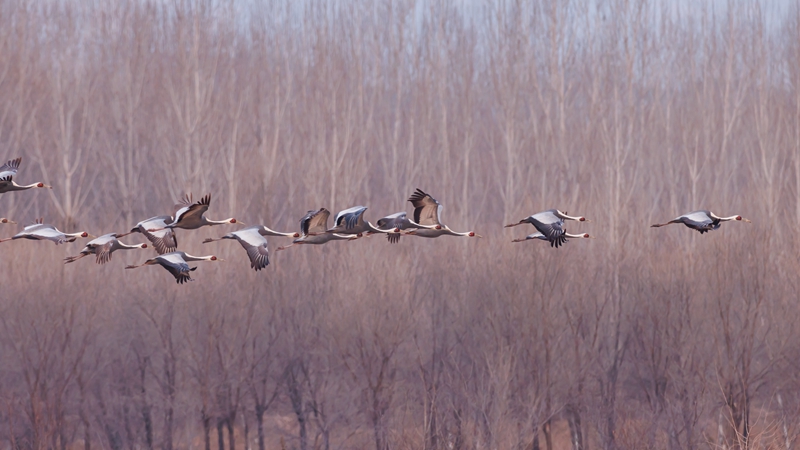
White-naped cranes
[Photo by Song Huiqiang]
Meanwhile, at the Xiaocao Village Wetland, over 100 white-naped cranes, five snow cranes (both are under the national first-class protection) and 40 common cranes (which are under the national second-class protection) have been spotted. The wetland is Beijing's only observation area where seven species of cranes have been consistently found. It is extremely rare to find such a location nationwide, where such a wide variety of crane species can be observed.
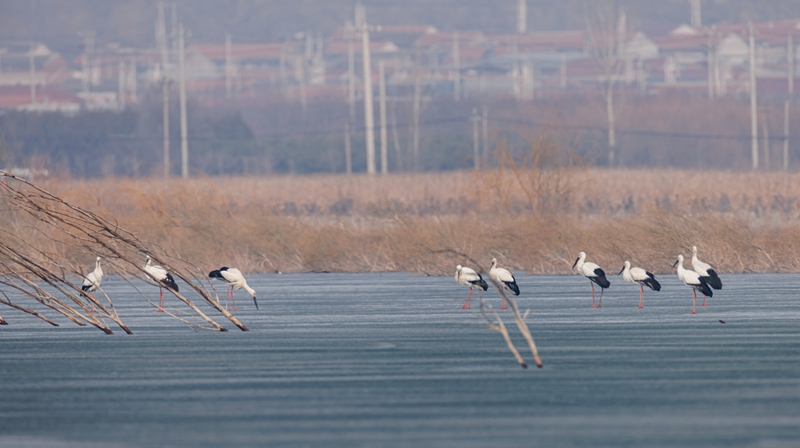
Oriental storks
[Photo via Song Huiqiang]
At the Bulaotun waters, over 60 Oriental storks (which are under the national first-class protection) have been observed this year, marking a record high since the monitoring began and showing a steady annual increase, compared with only one spotted back in 2023, six in 2024, and 10 last year. The increase clearly evidences these national treasures' fondness for the waters.
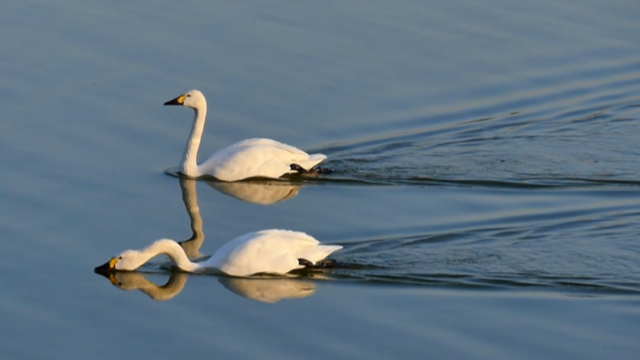
Along the banks of the Qingshui River, flocks of three wild species under the national second-class protection in China, respectively whooper swans, tundra swans, and mute swans, gather in the waters, forming a picturesque scene against the clear, blue waters. The simultaneous appearance of these three swan species not only serves as an iconic ecological spectacle of the Qingshui River but also fully attests to the clean waters, abundant food sources, and peaceful environment of the Miyun Reservoir.
The Miyun Reservoir serves as a natural stopover site for migratory birds, with its vast waters, extensive mudflats, lush vegetation, and abundant food sources. In recent years, its water quality consistently met the second-class surface water standards, with a forest coverage rate of nearly 90 percent. The reservoir ranks among the highest in the city in water ecological health index, and is frequented by nationally protected wildlife species of the first and second classes. Overall, the local ecosystem maintains a healthy status with continued improvement.
The spectacle of countless birds results from the persistent and systematic ecological conservation. For years, the water authorities have been making coordinated efforts to improve water resources, aquatic environments, and aquatic ecosystems, with several measures taken:
1. Establishing a water conservation system and promoting joint prevention and control across the river basins in Beijing and Hebei.
2. Conducting ecological restoration of the water level fluctuation zone, restoring and reconstructing over 400 mu (about 26.67 hectares) of wetlands, and planting aquatic plants to enhance water quality.
3. Establishing an integrated smart monitoring system covering land, water, and air, and utilizing technological means such as AI, drones, and digital twins to routinely manage and protect 13 bird-watching sites. These are aimed at fully ensuring the accuracy and reliability of baseline data on avian resources, and continuously strengthening the Beijing-Tianjin-Hebei Region's critical migration corridors and ecological security barriers for various migratory birds.
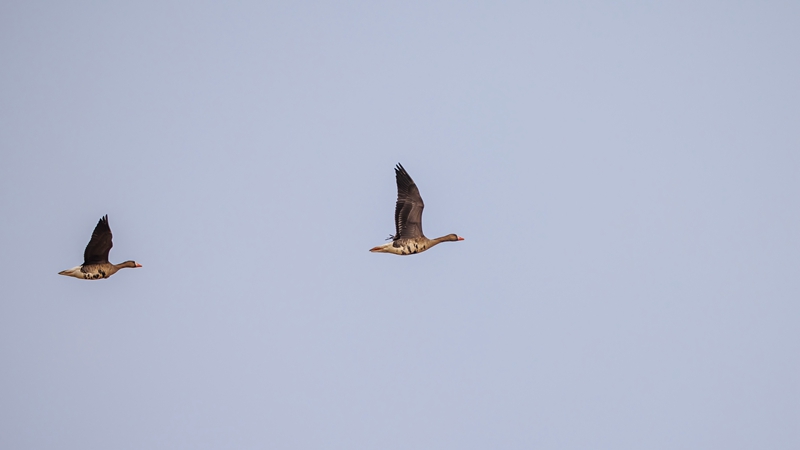
Greater white-fronted geese
[Photo by Song Huiqiang]
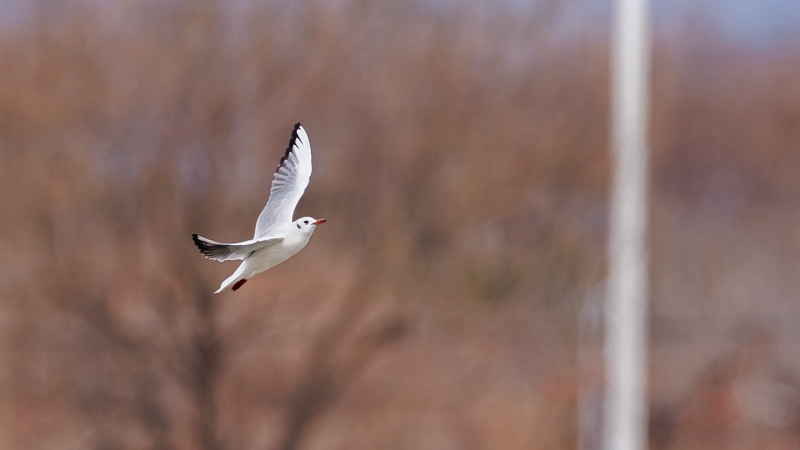
A black-headed gull
[Photo via Song Huiqiang]
(Source: Official WeChat account of the Beijing Water Authority)