Beijing Releases China's First Fully Autonomous and Unmanned Humanoid Robot Tour Guide Solution

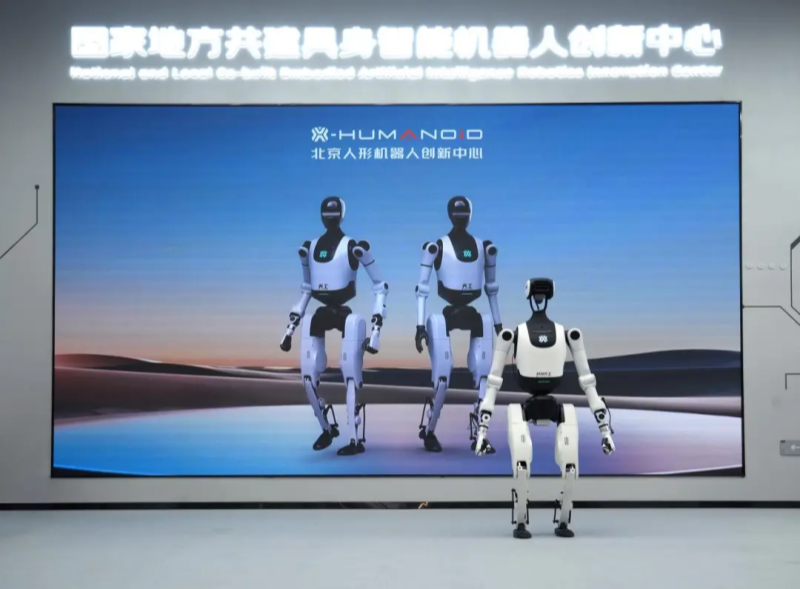
On December 11, the Beijing Innovation Center of Humanoid Robotics released China's first fully autonomous and unmanned humanoid robot tour guide solution.
This solution is built on the "HuiSi KaiWu" universal embodied intelligence platform, which integrates core capabilities such as fully autonomous tour guiding, human-like interaction, multi-robot scheduling, and global IoT coordination. The tour-guide robot can seamlessly transition between guiding and demonstrating without any manual intervention. When it leads guests into a core exhibition area, the platform autonomously triggers commands of controlling the area's lighting, switching videos on the large screen, and synchronously starting scenario demonstrations. The entire coordination process has a response latency of less than 50 milliseconds.
The tour guide robot can also autonomously call upon other demonstration robots based on the situation of the tour, which improves the experience from just a robot doing a singular explanation into a multi-purpose operator that can almost do everything a human tour guide could. Furthermore, the solution is compatible with various robot models, including "Embodied Tian Gong 2.0" and "Tianyi 2.0", enabling them to perform different tasks across multiple scenarios, such as tour guiding, material handling, material transfer, and material sorting.
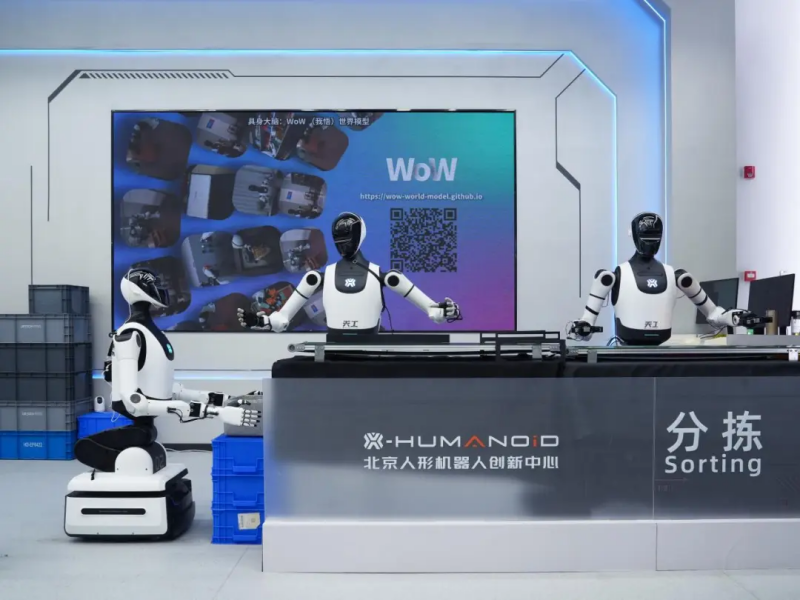
The release of this solution not only highlights the potential for large-scale application of humanoid robots in tour guiding and shopping assistance scenarios but also validates the platform capabilities of "HuiSi KaiWu" as a key hub for arranging schedules. It marks the official entry of humanoid robot tour guiding into a new phase of being "fully autonomous and unmanned." In the future, this solution can be widely applied in scenarios such as exhibition hall tours, shopping mall guidance, business presentations, and cultural tourism attractions, bringing users a more professional and vivid intelligent service experience through multi-robot collaboration and comprehensive domain coordination.
(Source: Beijing Fabu)