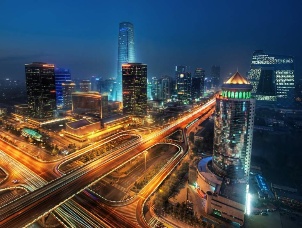
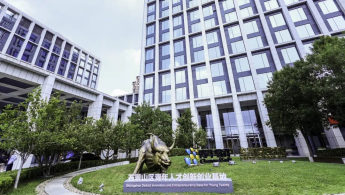
According to the newly released Nature Index 2025 Science Cities (NISC 2025) and the Global Innovation Hubs Index 2025 (GIHI 2025), Beijing has remained the world's leading science city for the ninth consecutive year and has held third place in the Global Innovation Hubs Index for four years running.
The NISC 2025 evaluates the changes in the scientific output of major cities and metropolitan areas worldwide based on the number of articles and papers published in high-quality journals tracked by the Nature Index in 2024. The data shows that Beijing's research output rose by more than 9 percent. The city has topped the NISC rankings since 2016.
The report also examines city performance across five major fields: chemistry, physical sciences, earth and environmental sciences, life sciences, and health sciences. Chinese cities dominate the rankings in chemistry, physical sciences, and earth and environmental sciences. Notably, for the first time, all the global top 10 cities in chemistry are in China, with six Chinese cities featured in the top 10 in the other two fields. Beijing ranks first in all three.
In the GIHI 2025, Beijing also continues its strong performance, placing third for the fourth year in a row and joining San Francisco-San José and New York in the top tier.
The GIHI 2025 notes that China has established strong sourcing capability for science to drive industrial upgrading and innovation ecosystem refinement. China's overall average performances in both dimensions—scientific research innovation and innovation economy—are now close to those of the United States. Specifically, the Beijing-Tianjin-Hebei region, with Beijing as its core, spills over to surrounding cities with strong research knowledge creation.
Launched in 2020, the GIHI assesses 125 cities worldwide using three indicators—research innovation, innovation economy, and innovation ecosystem—to capture the latest trends in global innovation and inform policymaking and innovation practice. This year's report indicates a continued rise in Chinese cities’ standing in the global innovation landscape, with Beijing topping the research innovation category for the first time.
(Source: Beijing Daily)