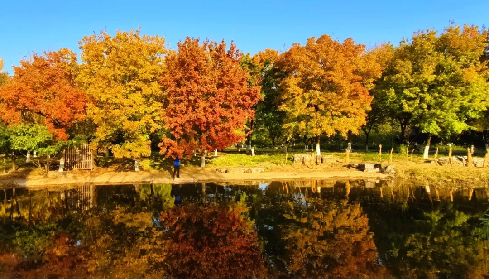
As Beijing ushered into late autumn, more and more ginkgo trees in the city have become coated in golden leaves, making many corners of this city dreamlike places of shimmering yellow. Here are six unmissable spots to admire Beijing's ancient ginkgo trees in all their glory — check if you have visited any!
Tanzhe Temple
[Photo via Beijing Daily App]
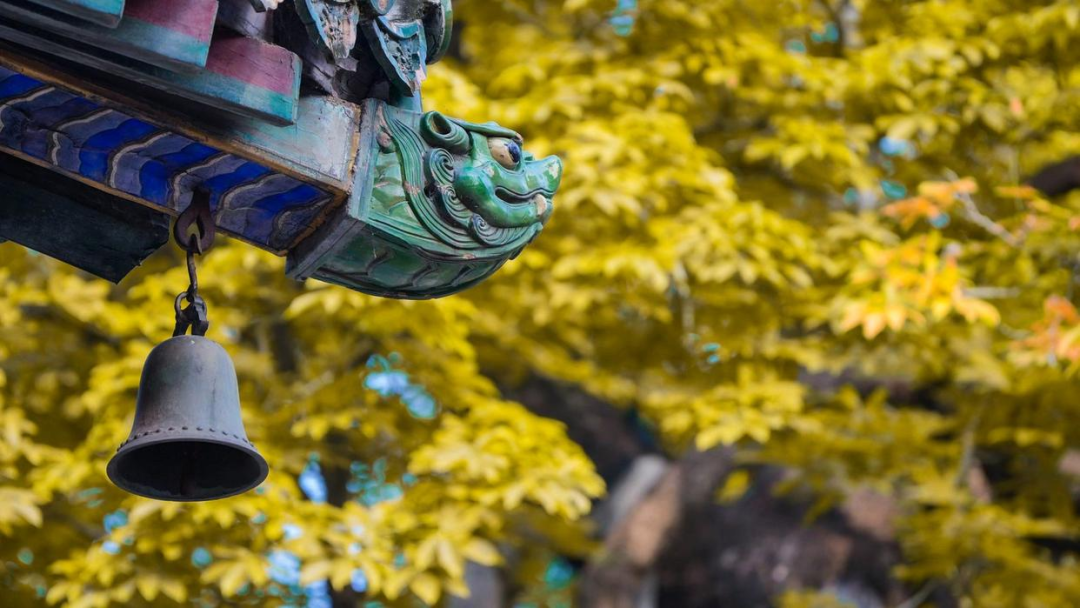
The temple is home to a ginkgo tree planted during the Tang Dynasty. This giant of nearly 1,400 years old is now in its prime period.
Recommended Route for Praying and Sightseeing
Entrance of the scenic area → Liubei Pavilion (流杯亭) → Emperor Tree Square (帝王树广场) → Pear Orchard (梨树园) → Purple Bamboo Courtyard (紫竹院) → Yuanbao Mountain (元宝山)
Ginkgo Season: October 25 to November 9, 2025
How to Get There
By car: Navigate directly to "Tanzhe Temple Scenic Area" (潭柘寺景区).
By public transport: Take the subway to Pingguoyuan Station, then transfer to Bus 931 to reach the temple.
Jietai Temple
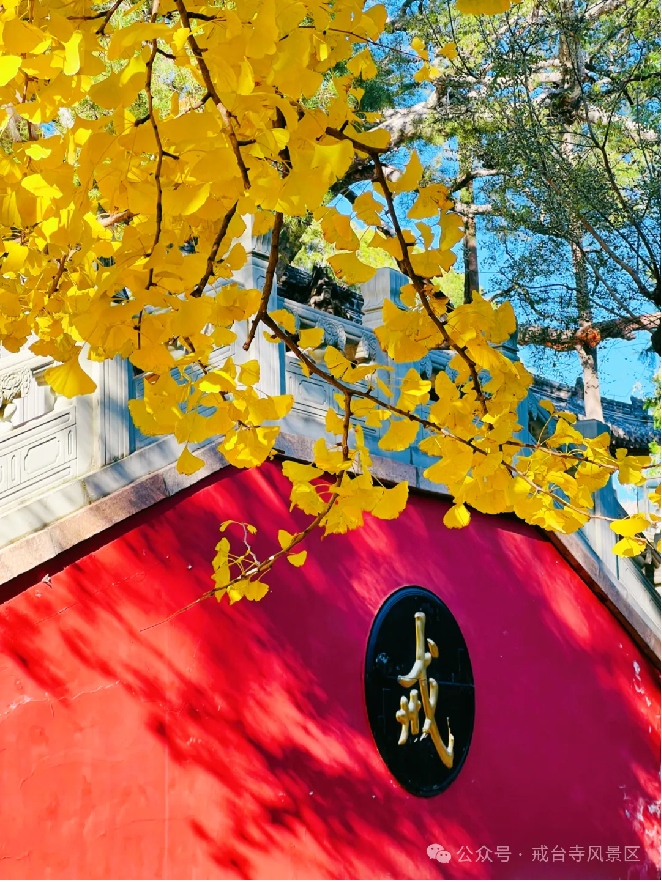
In the rear garden stands a ginkgo tree dating back over 910 years — a rare monoecious one. The male branches bloom but do not fruit, while the female ones produce golden nuts each autumn. As the season deepens, the female leaves turn yellow and fall earlier than the male ones, creating the captivating sight of "two views on one tree".
Cultural Tourism Season: Late October to early November
How to Get There
By car: Navigate to "Jietai Temple's No. 2 Parking Lot" (戒台寺景区第二停车场).
By public transport:
① Take Subway Line S1 to Shichang Station, then transfer to Bus 948 or M44 to Jietaisi Stop.
② Take Tourist Bus 21 (通游专线21路) from Liuliqiaodong Stop to Jietaisi Stop (available on public holidays and the 1st and 15th days of every month of the traditional Chinese calendar).
Dajue Temple
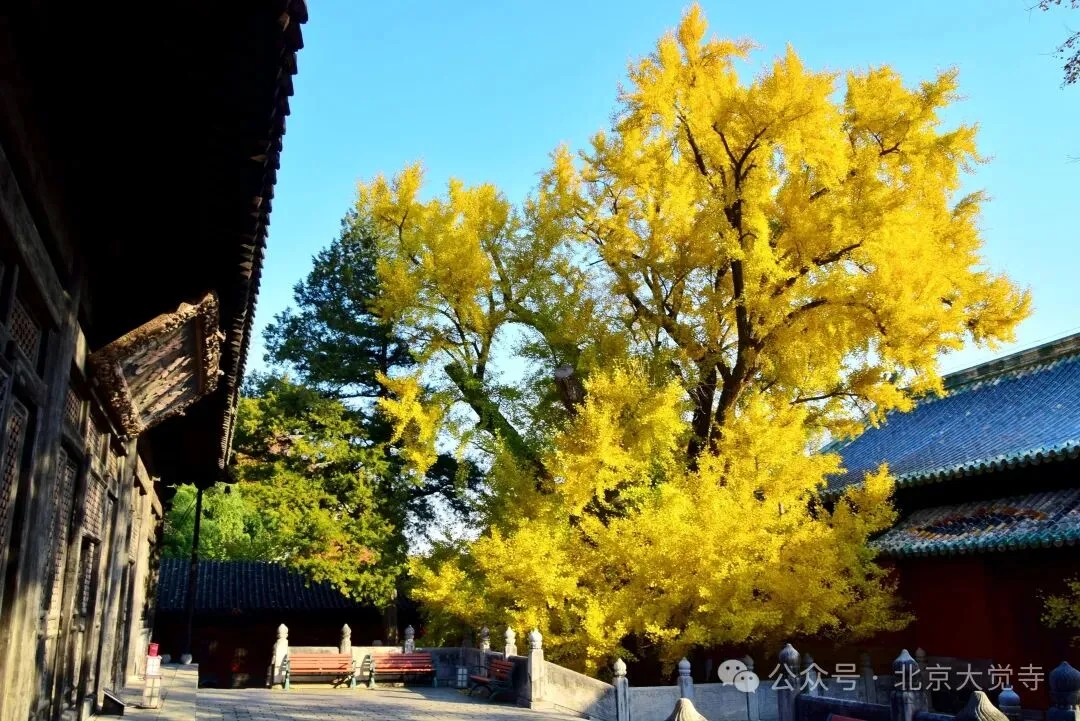
Dajue Temple houses four ginkgo trees. In front of Amitabha Hall (无量寿佛殿) stand two trees, with the one in the north dating back over 1,000 years, revered as the "King of Ginkgo Trees of the Western Hills". Its golden leaves are truly breathtaking. The tree in the south, a female, bears abundant fruit every autumn.
In the northern courtyard, a ginkgo tree of over 500 years old is encircled by nine smaller ones — like children around their mother — a sight lovingly known as "Nine Children Embracing Their Mother" (九子抱母). Near the temple gate grows another rare one with both male and female branches, poetically named the "Dragon and Phoenix Tree" (龙凤树).
Notice: The 2025 Dajue Temple Ginkgo Culture Festival is ongoing.
How to Get There
By car:
① Take the Badaling Expressway, exit at Bei'anhe, then follow Beiqing Road westward to the sign for Dajue Temple.
② From Fushi Road or Lianshi Road, enter the West 6th Ring, take Exit 49, then turn right to reach the temple.
By public transport:
① Take Subway Line 4 to Beigongmen Station. Then take Bus 346 to Wenquancun Stop, transfer to Bus 633 to Dajuesi Stop.
② Take Subway Line 16 to Wenyang Lu Station, then transfer to Bus 633 to Dajuesi Stop.
③ Take Bus 651 to Wenquanbei Stop, then transfer to Bus 633 to Dajuesi Stop.
Wuta Temple (Beijing Stone Carving Art Museum)
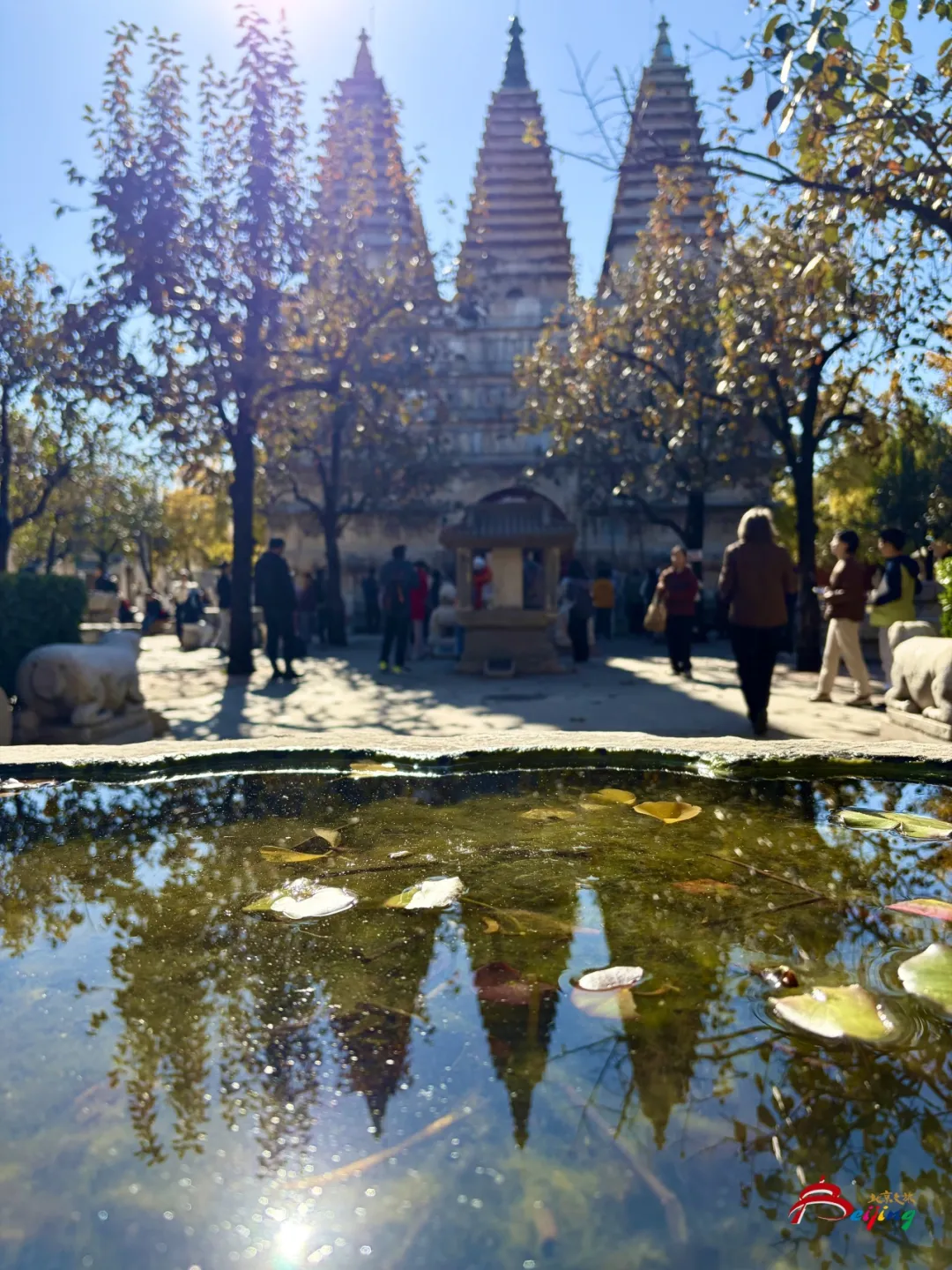
In front of the Diamond Throne Pagoda (金刚宝座) stand two ginkgo trees of nearly 600 years old, now in their peak periods. The pairing of ancient trees and pagodas creates a poetic scene, as if they were in silent companionship.
How to Get There
By car: Navigate to the parking lot near the museum.
By public transport:
Take the subway or bus to Guojia Tushuguan (National Library) Station (a subway station), depart from the station's Exit C (in the southeast), walk 30 meters south, turn left onto Wutasi Road, walk about 500 meters east, and the museum is right to the north.
Alternatively, enter Beijing Zoo and exit from its northwest gate, then cross the bridge to reach the museum.
Wofo Temple
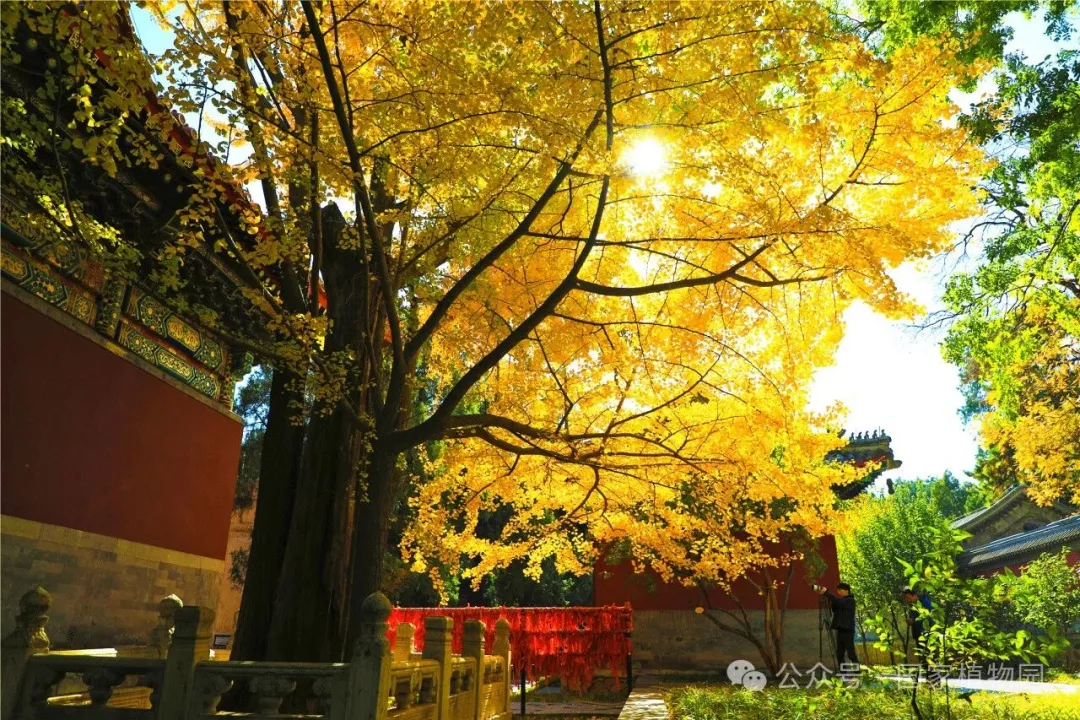
In the North Garden of the China National Botanical Garden, two ginkgo trees about 800 years old stand on either side of the Hall of the Three Buddhas (三世佛殿). As autumn deepens, their fan-shaped leaves turn a brilliant yellow, glowing against the red temple walls — a timeless scene of autumn beauty.
How to Get There
By car: Navigate to "China National Botanical Garden" (国家植物园); park at Xiangquan Roundabout Parking Lot.
By public transport:
① Take Bus 563, 932, 318, 360, 360 Express, 698, or 505 to Guojiazhiwuyuan Stop.
② Take Subway Line 10 to Bagou Station, transfer to Xijiao Line, and alight at China National Botanical Garden Station.
Hongluo Temple
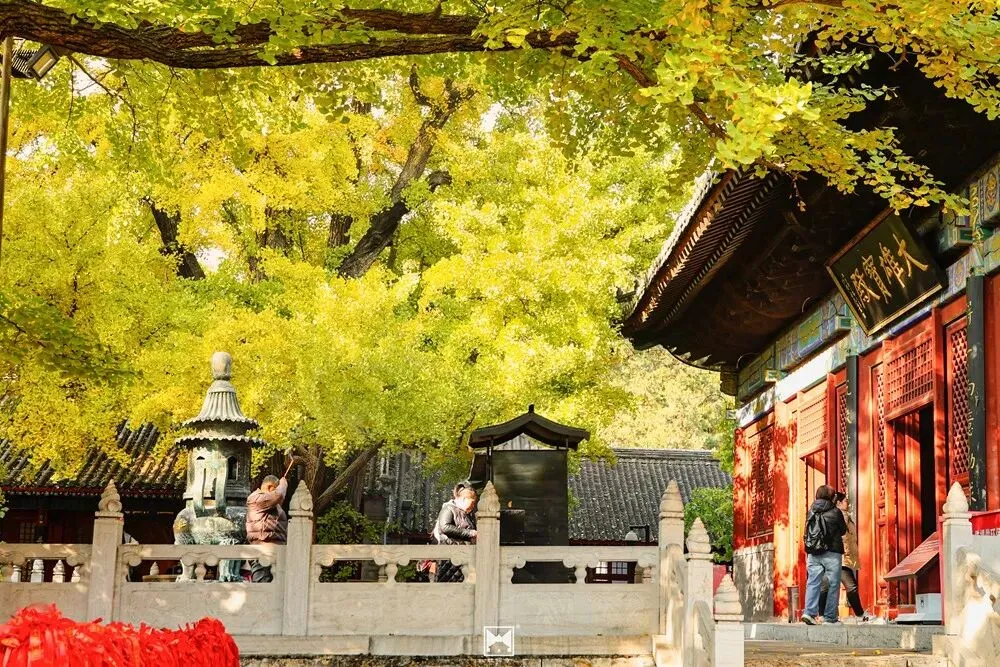
In front of Mahavira Hall (大雄宝殿) stands a pair of male and female ginkgo trees, which constitute one of the temple's famous "Three Wonders".
Each tree rises over 30 meters tall and is more than 1,100 years old, yet both remain full of vitality, now in their most stunning golden hue.
How to Get There
By car:
① Take the Beijing-Chengde Expressway and head for the exit to Huairou's urban area (怀柔城区出口; Exit 14) → overpass → Fanqi Road (turn left at the crossroads right by Yanqi Lake International Convention Center) → Hongyan Road → turn right after the bridge to reach Hongluo Temple.
② Take Jingshun Road (National Highway 101) → Huairou's urban area → Qingchun Road (go northward for 3 kilometers to reach the temple).
By public transport:
① From Dongzhimen, take Bus 916 to Huairou Bus Terminal, then transfer to Bus H57 (Huairou Bus Terminal – Hongluosi Stop) to reach the scenic area. (Notes: The departure interval is about 40 minutes. For more information, please dial +86-10-61615637.)
② Take the Tourist Express Line from Dongzhimen directly to Hongluo Temple (which operates daily).
(Source: Official WeChat account of the Beijing Municipal Bureau of Culture and Tourism)