Beijing's Digital Power Supports China-Egypt Joint Archaeological Project at Saqqara and Cultural Heritage Conservation at Yunju Temple

In 2020, more than 100 brightly painted wooden coffins dating back around 2,500 years, along with a large number of other cultural relics, were unearthed at the Saqqara archaeological site in Memphis, the ancient capital of Egypt. The discovery was named one of the world's top 10 archaeological discoveries that year. Subsequently, technicians and scholars from the PKU (Peking University) Image Lab, New Dimensional Imagination Digital Technology (Beijing) Co., Ltd. ("New Dimensional Imagination" for short), and the World Arthistory Institute of Shanghai International Studies University formed a joint archaeological team, bringing China's expertise in digital preservation of cultural heritage to Saqqara.
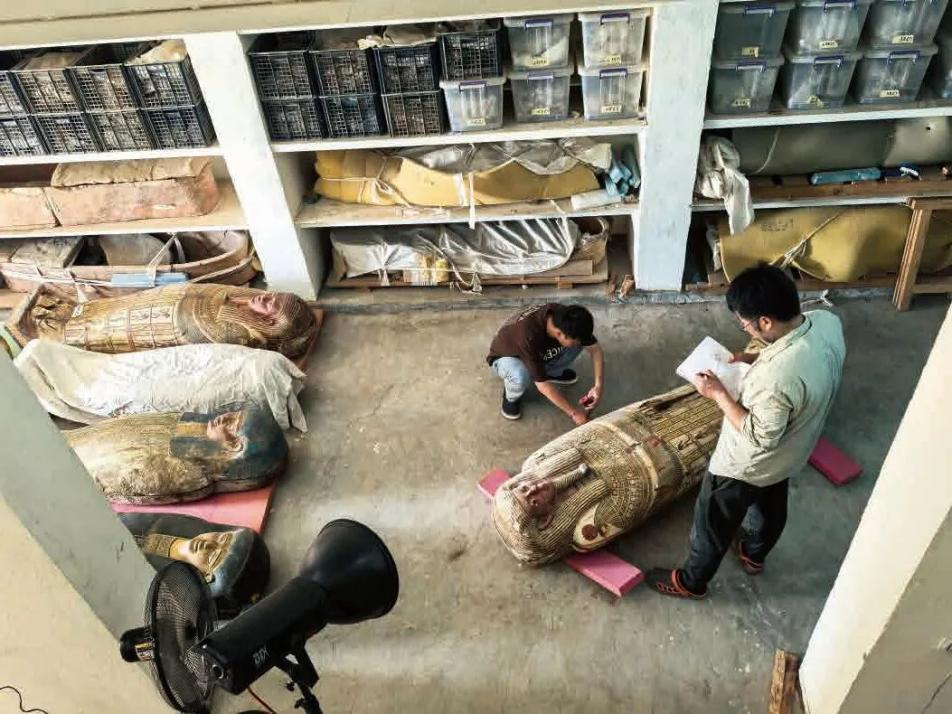
Two members of the China-Egypt joint archaeological project on duty
Unlike conventional archaeological methods such as manual drawing, photography and documentation, several advanced digital technologies were used at the proposal of the Chinese archaeological team for high-precision scanning and conservation of Saqqara's relics, following approval from Egypt's Supreme Council of Antiquities (SCA). The digital microwear technology developed by New Dimensional Imagination has provided strong technical support for the project. Ultra-high-resolution scanning and microwear-enhanced imaging allow researchers to study the ancient Egyptian civilisation in greater detail, while also supporting the long-term preservation and display of cultural relics.
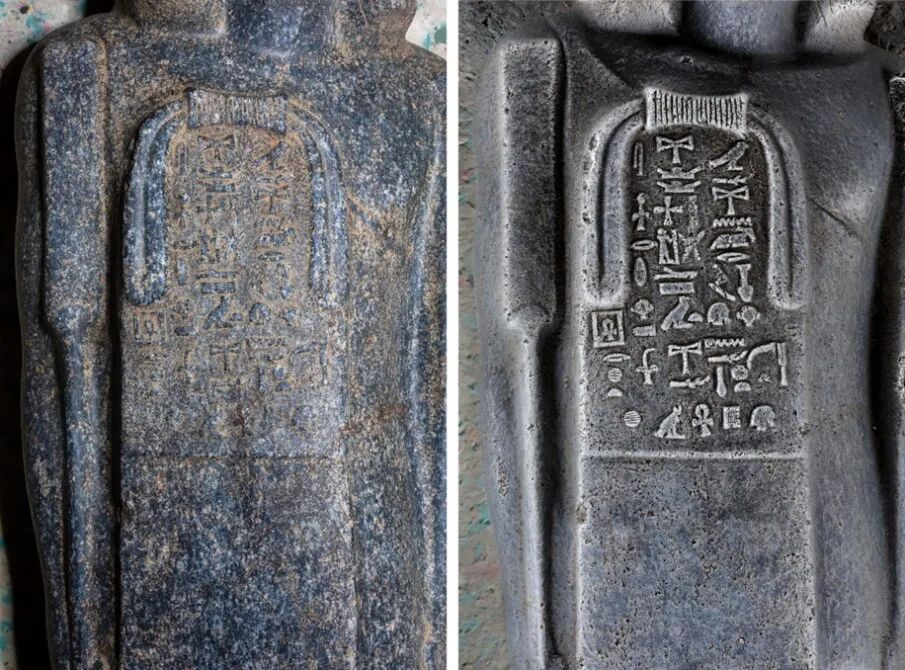
Comparison of Saqqara relics before and after digital restoration
In 2026, the China-Egypt joint archaeological project at Saqqara was included in Typical Cases on Protecting and Promoting the Diversity of Cultural Expressions in the Digital Environment launched by the International Centre for Creativity and Sustainable Development (ICCSD) under the auspices of UNESCO.
At the Creativity 2030 - 5th International Forum held in March 2026, Hui Pengyu, founder and chairman of New Dimensional Imagination, presented the achievements yielded through the application of Chinese digital technologies in the China-Egypt joint archaeological project at Saqqara and in the preservation project of stone-carved Buddhist sutras at Yunju Temple in Beijing's Fangshan District. The presentation was made to Chinese and international guests from organizations including UNESCO.
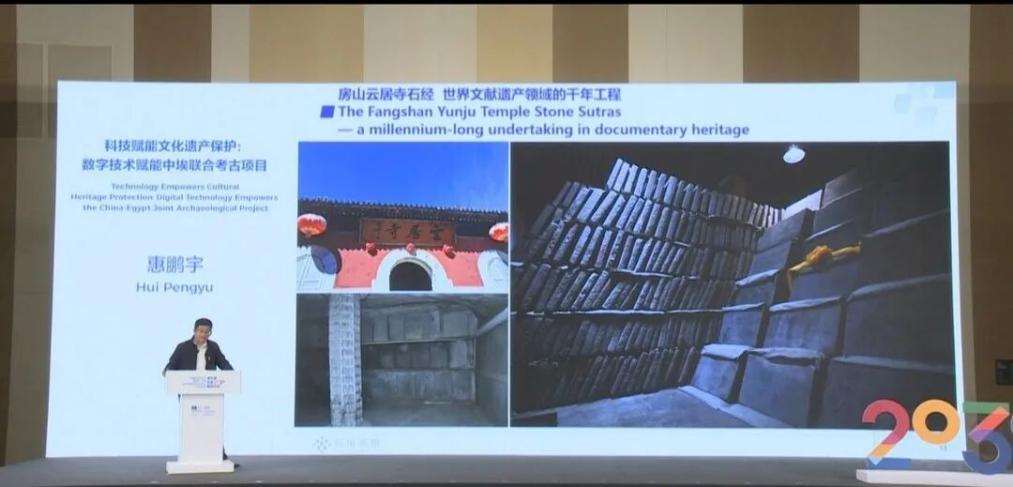
Presentation on the digital preservation of Yunju Temple's stone-carved sutras at the Creativity 2030 - 5th International Forum
Yunju Temple houses 14,278 stone slabs inscribed with 3,572 volumes of 1,122 divisions of the Buddhist Canon, comprising more than 35 million Chinese characters. Natural erosion has caused inscriptions on some slabs to fade or disappear entirely, calling for urgent preservation efforts.
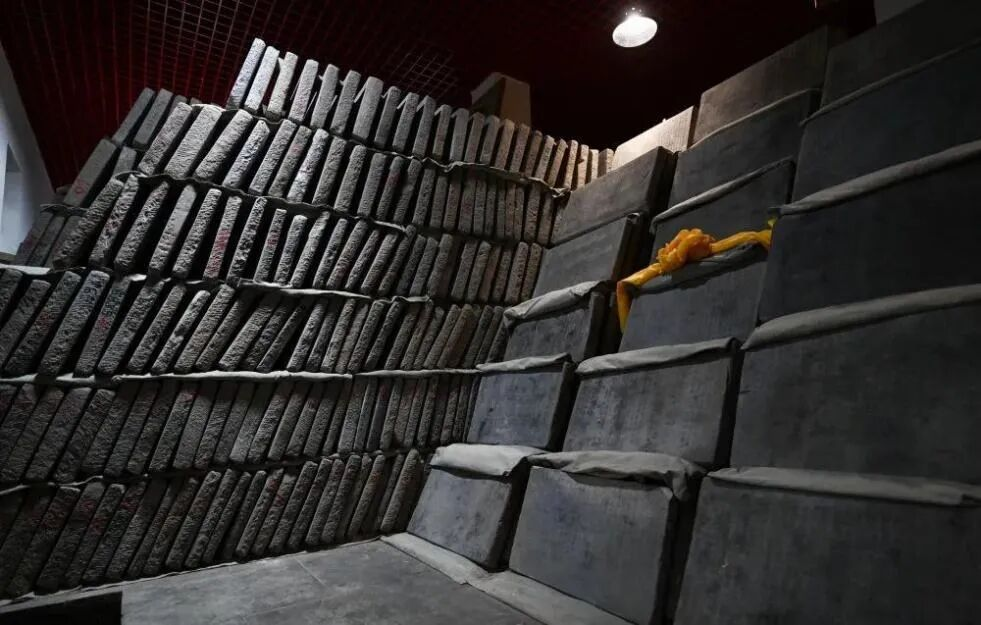
Buddhist sutras engraved on the stone slabs at Yunju Temple
[Photo via Xinhuanet]
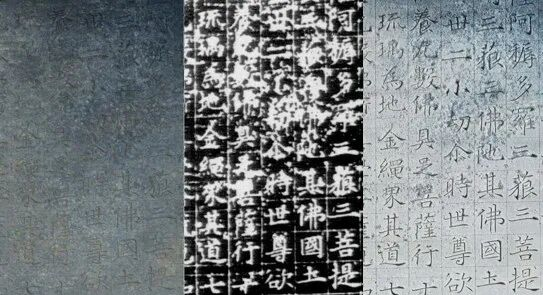
Comparison of the original inscriptions, the image made through traditional rubbing, and the microwear-enhanced image of part of the stone-carved sutras at Yunju Temple
[Photo via Xinhuanet]
New Dimensional Imagination collected digital data on the carving marks of the stone slabs under multiple lighting conditions, capturing more than 500 micron-level images with resolutions of up to 150 megapixels. Through visual computing, the team analysed the information following enhancement, including carving depths, colours and artefact forms, enabling micron-level identification and restoration of the inscriptions. The project also digitally reconstructed the paths made by tools used to carve the sutras, further helping "revive" these millennia-old stone sutras through digital means.
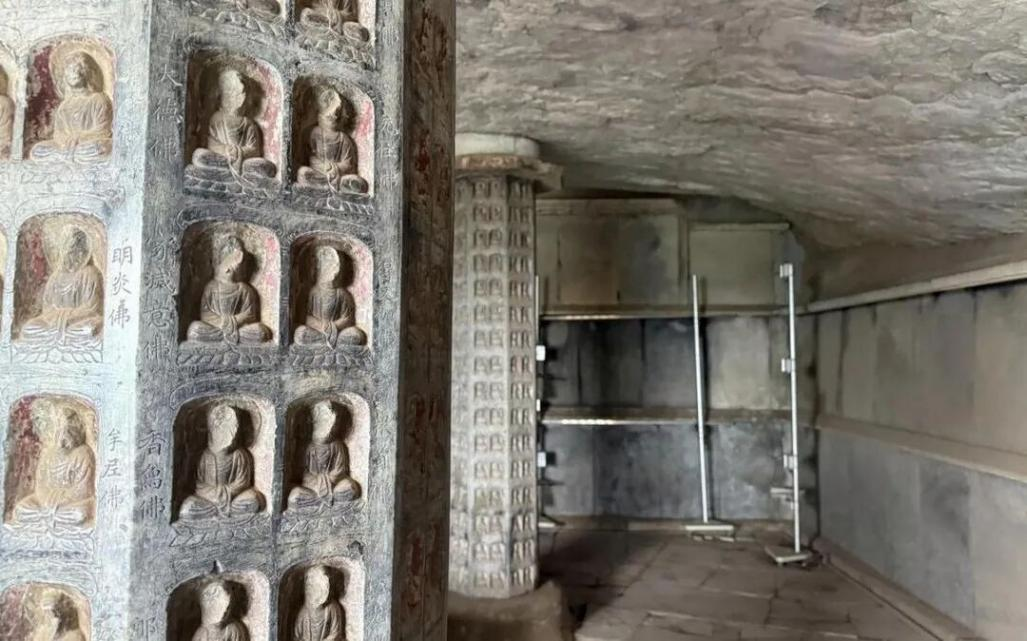
Stone sutras in Leiyin Cave at Yunju Temple
[Photo via The Beijing News]
Beijing is currently advancing the nomination of Yunju Temple's stone sutras for inclusion in UNESCO's Memory of the World Register. In the future, advanced digital microwear scanning technology will support the digital reconstruction of these stone-carved cultural relics. After being digitized, they will be able to reach a global audience and showcase the distinctive cultural heritage of Beijing as a historic capital.
(Source: Official WeChat account of the International Centre for Creativity and Sustainable Development under the auspices of UNESCO)