Beijing Designates 11 Coordinated Development Areas for China (Beijing) Pilot Free Trade Zone

[Photo via Beijing Huairou]
On August 31, the Information Office of the Beijing Municipality held a press conference to announce the establishment of development areas that coordinate with the China (Beijing) Pilot Free Trade Zone, and the issuance and implementation of the Work Plan for Developing the Coordinated Development Areas of the China (Beijing) Pilot Free Trade Zone. Eleven coordinated development areas have been designated across the city. Through institutional alignment, industrial connectivity, and platform integration, they will amplify the spillover effects of the China (Beijing) Pilot Free Trade Zone's opening-up and innovation, and help establish Beijing as a new hub for openness, innovation and industrial upgrading.
According to officials, Beijing has pioneered an "industry-and-region" coordination framework—the first of its kind among the coordinated development areas of pilot free trade zones nationwide. Four industries with international competitiveness—healthcare, artificial intelligence, integrated circuits, and commercial space—have been selected as the core of this coordination. Eleven areas have been designated as coordinated development areas, covering Yizhuang (E-Town) and the districts where the other six free trade zone clusters are located, namely Haidian, Changping, Chaoyang, Shunyi, Tongzhou, and Daxing, together with one area each in Fengtai, Shijingshan, Mentougou, and Huairou, with a total area of 119.2 square kilometers.
Through the development of these coordinated development areas, Beijing will further break down regional and resource barriers, promote the free flow of innovation factors and the efficient allocation of industrial resources, and unlock new momentum for the growth of its high-end, precision, and cutting-edge industries.
Among them, the Haidian Coordinated Development Area covers 8.65 square kilometers and includes six distinctive parks: the ZGC AI North Latitude Hub, the AI Genesis Community, ZGC Software Park, Shangdi Information Industry Base, Dongsheng Science & Technology Park, and Xi San Qi Science & Technology Park. Together, they form a complete chain spanning basic research and development, pilot-scale testing and validation, and real-world application, driving the industry's transformation from "point-based clustering" to "value-chain collaboration".
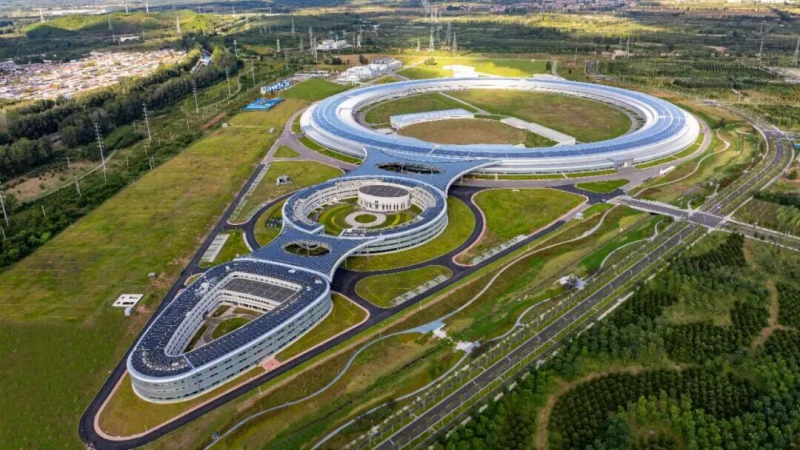
Huairou Science City will build a range of platforms for proof of concept, small-scale and pilot-scale testing, and inspection and testing, focusing on integrated circuit materials, devices, packaging, and testing. Working in concert with related zones, it will bridge the "last-mile gap" from laboratory research to commercialization.
Leveraging its cluster of satellite and rocket R&D enterprises, the Yizhuang (E-Town) Coordinated Development Area will deliver stable and reliable commercial launch services on a regular basis, promote the wider application and commercialization of satellite and rocket R&D achievements, and connect cross-district innovation chains. In partnership with relevant free trade zone clusters and coordinated development areas, it will open up application scenarios such as satellite remote sensing, communications, and navigation, extending the transformation and application of these R&D achievements to a much broader scope.
As one of the "twin engines" of Beijing's innovative development, the medicine and health industry is a trillion-yuan strategic pillar industry of the capital. The establishment of development areas that coordinate with the China (Beijing) Pilot Free Trade Zone will further help bridge the "last-mile gap" in the development and commercialization of innovative drugs.
Following the establishment of the coordinated development areas, the Changping Coordinated Development Area will focus on innovative drugs, medical devices, synthetic biology, and beauty and wellness, carrying out differentiated explorations in areas such as review and approval, data flows, and customs facilitation.
The Mentougou Coordinated Development Area will draw on the technological resources of the State Key Laboratory of Cardiovascular Disease to advance the construction of the Baheal Pharma-Fuwai Hospital Joint Innovation Center, building a full-chain service platform that provides one-stop services covering R&D, ethics review, and clinical research, thereby accelerating the development and commercialization of innovative drugs and medical devices and shortening their time to market.
(Source: Beijing Daily)