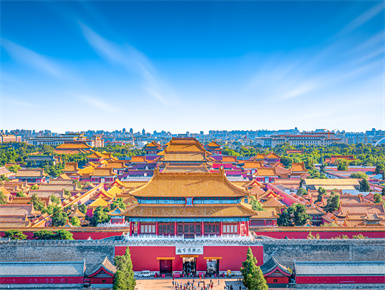
Adhering to the principle of "relieving to advance", the efforts to relieve Beijing of functions nonessential for the capital have become more resolute and orderly. Strict control has been imposed on the incremental expansion of non-capital functions, with over 25,000 registration applications inconsistent with the city's strategic role as "Four Centers"—national political center, cultural center, international exchange hub, and scientific innovation hub—rejected. The share of newly established market entities in technology and commerce sectors rose from 40.7 percent in 2013 to 67.7 percent in 2024, expanding space for advanced and sophisticated industries. The special campaign for decongestion, renovation, and upgrading has been intensified, relocating and upgrading 104 general manufacturing enterprises in 2024. Outcomes of public service optimization included new university campuses like Phase II of Beijing Technology and Business University's Liangxiang Campus and new hospital branches such as Anzhen Hospital's Tongzhou facility. Urban planning advancements featured the refined functional layout of the city's core areas. The Beijing Central Axis was inscribed as UNESCO World Heritage, becoming a world-class cultural landmark of the capital.