2026 World Robot Conference Concludes: 'Beijing Robot Domain' Charts a New Blueprint for Embodied AI

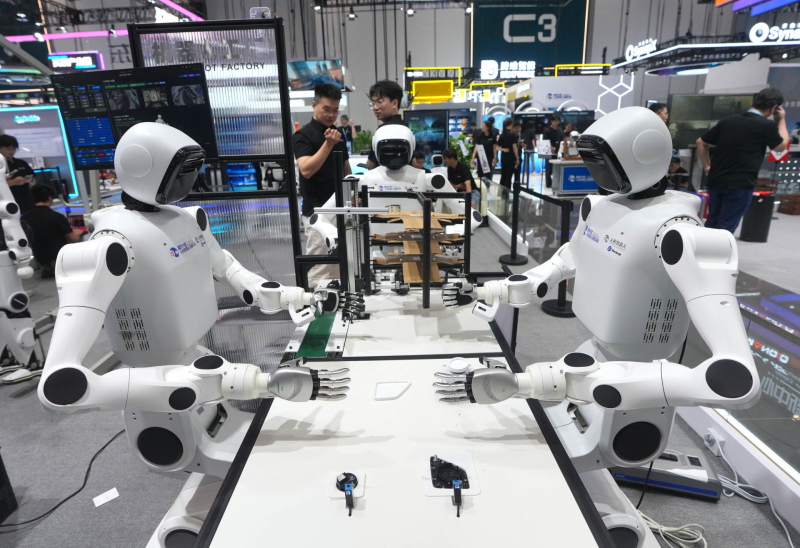
[Photo via World Robot Conference]
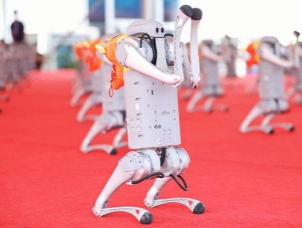
The five-day 2026 World Robot Conference concluded on August 23 in the Beijing Economic-Technological Development Area (Beijing E-Town). This year's conference presented related products and new achievements while serving as a platform for idea-sharing and public science education, comprehensively showcasing the vigorous development momentum of humanoid robotics and embodied AI.
The conference featured seven main forums and 71 concurrent events, with 44 new technologies and solutions unveiled, including embodied world models and brain-cerebellum fusion chips. Supported by 30 international organizations, the conference welcomed 40 overseas enterprises to join the exhibition and attracted over 10,000 foreign visitors. In addition, 11,418 teams and 17,802 competitors from 26 countries took part in the on-site competitions, while delegations from the United States, Saudi Arabia, South Korea, Ecuador, and other countries were drawn to the exhibition and exchanges. The on-site attendance reached 557,000, a 106-percent increase over the previous session; live-streaming sessions recorded 110 million views, up 94 percent; and views of related topics on short-video platforms hit 730 million, up 62 percent.
More than 3,000 innovative robot-related exhibits were showcased at this year's conference, covering fields including industrial manufacturing, emergency rescue, public services and safety precautions. During the public open days, visitors showed unprecedented enthusiasm as they discovered, in an immersive way, the possibilities robots could bring to future life.
The conference also saw the release of a series of major reports, industry initiatives, and development plans. The 2026 Report on Development of Humanoid Robot Industry (2026年人形机器人产业发展报告) published during the main forum provides a systematic overview of the humanoid robot industry and its development trends, with a focus on the development in five countries: China, the United States, Germany, South Korea, and Japan. The report shows that in the first half of 2026, the number of China's humanoid robots shipped exceeded 40,000, indicating that the country's global share further rose to 97 percent.
The Chinese Institute of Electronics and the World Robot Cooperation Organization, together with 268 international institutions and enterprises, jointly released the Initiative for Intelligent Robots for Good (智能机器人向上向善发展倡议), advocating for upward and benevolent development, openness and inclusiveness, and co-building and sharing.
The "Global Robot Application Exploration Plan" was also launched during the conference to collect needs associated with application scenarios from around the world. Each year, 1,000 scenarios will be selected for free trials and secondary development of robots, aimed at building an open and mutually beneficial innovation ecosystem for the global robot industry.
The Beijing E-Town also released the "Beijing Robot Domain" (北京机域) — a vision for building a new society of human-machine symbiosis powered by embodied AI. According to the plan, it will accelerate the development of 100 practically deployable specialty robot products, drive the application of these products across 1,000 specialized fields, expedite efforts to achieve the mass production of embodied AI robots, with a goal of 100,000 units/sets, and achieve a production capacity of 1 million sets of core components. Moving on, a 12-square-kilometer pioneering zone for embodied AI manufacturing of the "Beijing Robot Domain", which is designed to provide the systematic support in four key areas (research, manufacturing, application and safety), will serve as a core carrier of the Beijing E-Town.
(Source: Beijing Daily)