[Photo via VCG]
The Space Compute Summit convened on June 29 as part of the 2026 Global Digital Economy Conference (GDEC).
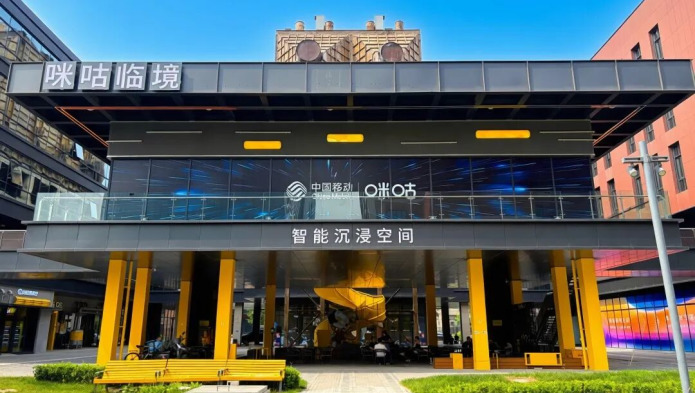
The Beijing Space Computing Innovation Center (the "Center" for short) was officially inaugurated during the summit. Located in the Star-Town in Haidian District, it is positioned as China's first space computing innovation center with the core mission of connecting the industry chain and coordinating upstream and downstream players. It will operate under a "company + alliance" model.
The Center will pursue breakthroughs in six key areas: the design and R&D of space-native computing chips, high-performance and ultra-bandwidth space computing payloads, satellite platforms and ground verification infrastructure, large model deployment and software-hardware co-optimization, key technologies for space-ground integrated cloud platforms, and innovation and scenario validation for satellite application technologies. It aims to drive a shift in space computing from isolated technological breakthroughs to coordinated, chain-wide innovation.
The expert committee of the Center was established at the same time, comprising 30 experts, including 12 academicians from the Chinese Academy of Sciences and the Chinese Academy of Engineering. Focusing on core technological fields such as 6G integrated space-air-ground communications, microprocessors and integrated circuits, and high-performance computing, the committee will provide high-level strategic assessments and technical guidance for industry development.
Also simultaneously established was the Beijing Space Computing Innovation Alliance, with 108 initial prospective members spanning universities, research institutions, state-owned enterprises (including central ones), private companies, and other innovation entities. The alliance will pool resources across industry, academia, research institutions, and end-users to advance breakthroughs in key space computing technologies, coordinated innovation across the industry chain, standard development, public service capacity building, and real-world application scenarios.
A number of key achievements were also unveiled at the summit.
The Center's overall development plan was presented systematically for the first time, which integrates R&D verification, industry incubation, and standard development to create a one-stop, full-chain support system.
The open-source standard framework for space operating systems was officially released, providing unified interfaces and an open framework for future large-scale computing satellite-based constellation networks. It will help standardize space computing scheduling interfaces, improve resource allocation, support cross-satellite task coordination, and deliver standardized services.
Two new ground stations for the Tiansuan Constellation, located respectively in Beijing and Hefei, officially entered operation. Together with the existing stations in eastern and southern China, they have laid the initial foundation for a multi-region collaborative support system for satellite-ground communications and computing services.
The beta version of the Space Computing Service Platform was also officially launched at the summit. As an integrated platform designed for the on-orbit use of space computing, it connects satellites, payloads, ground stations, and simulation resources, lowering the threshold for on-board verification for enterprises and consequently improving their R&D efficiency.
(Source: The Beijing News)