Beijing’s Humanoid 'Embodied Brain' Tops Industry Data Engine Leaderboard

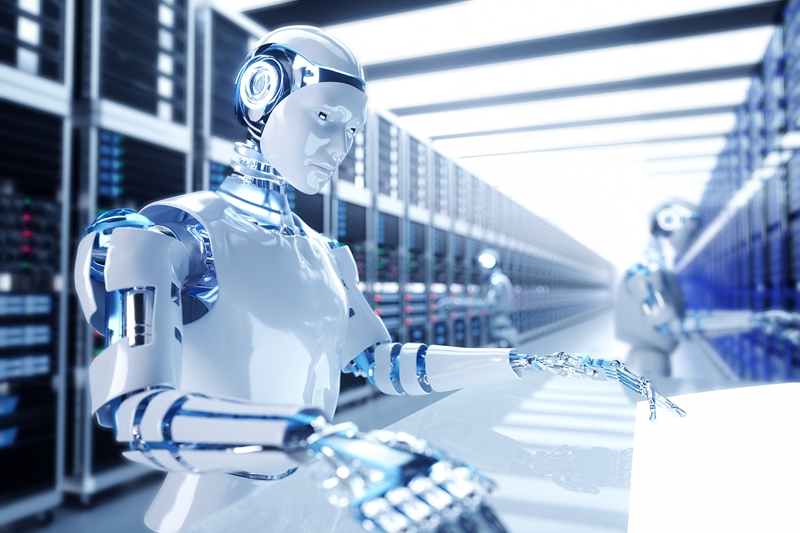
[Photo via VCG]
Recently, the WoW Embodied World Model developed by the Beijing Innovation Center of Humanoid Robotics reached the top of the WorldArena Challenge Track 2 (Data Engine) evaluation leaderboard. In a global real-world AI benchmark involving assessments by leading domestic and international universities, this "robot brain" from Beijing's E-Town achieved industry-leading performance in understanding the real physical world and generating data.
WorldArena is the first unified and comprehensive benchmark platform jointly launched by Tsinghua University, Peking University, Shanghai Jiao Tong University, Princeton University, and others to evaluate the perception and functional applicability of embodied world models. In the WorldArena Challenge, the evaluation criteria of Track 2 (Data Engine) mainly focus on whether the synthetic data generated by the model can effectively improve the training performance for downstream robotic policies.
The WoW Embodied World Model provides robots with a "brain" that understands and predicts how the physical world functions. It can simulate real-world physical principles and autonomously generate high-quality, physically consistent interaction data, addressing the data scarcity issue in the embodied intelligence industry. The model that achieved the top ranking is the smallest in the WoW series, with 1.3B parameters. Despite its lightweight architecture, WoW 1.3B outperformed many larger general-purpose video models and specialized embodied models.
On the technical front, the WoW model has achieved three major breakthroughs. It possesses physics-engine-level generation capabilities, enabling it to learn robot interaction trajectories and accurately simulate future scenarios. Through the pioneering SOPHIA self-reflective paradigm, it forms a "self-evolving" data loop that can generate millions of high-quality interaction data samples from just a few real-world trajectories. It also enables closed-loop reasoning "from pixels to actions", effectively giving algorithms the ability to interact with the physical world. In experiments where the data generated by WoW was used to drive robots to complete tasks such as grasping, placing, and long-horizon tasks, its performance was significantly superior to that of leading baseline models from China and abroad.
(Source: ETown Times)