
On July 5, the two-day Ming Dynasty Culture Forum 2026 concluded in Beijing's Changping District. As one of the forum's key supporting events, the themed exhibition "Splendor of World Heritage and Cultural Renewal: A Themed Exhibition of Ming Dynasty Artifacts" (世遗华章 文化焕新——明代文物主题展) opened concurrently, featuring more than 70 exquisite artifacts and artifact sets of the Ming Dynasty. The exhibition is underway at the Ming Tombs Visitor Center and the No. 1 exhibition hall of the Dingling scenic area, and will run for one month. Visitors can book free tickets online through the scenic area's Douyin account or its official mini-program.
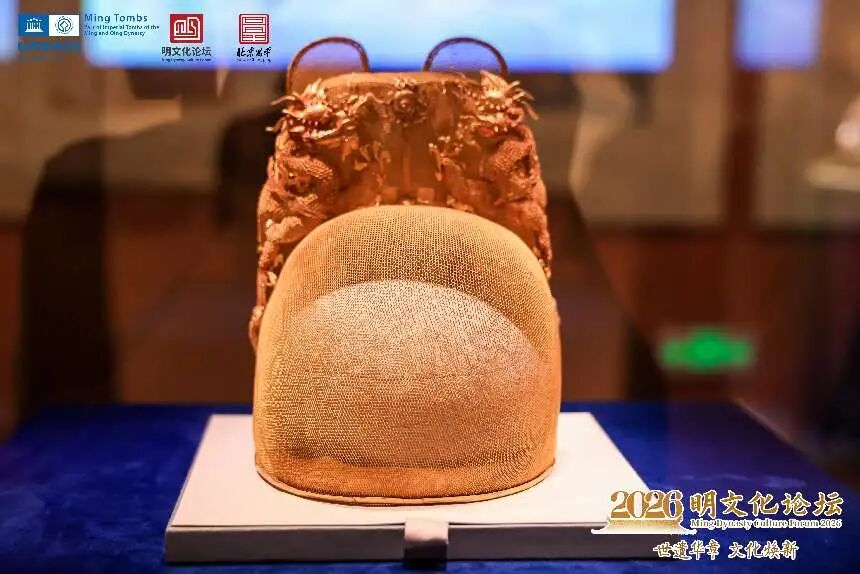
Organized in conjunction with the Palace Museum, the Capital Museum, and the heritage institutions of four imperial mausoleums of the Ming Dynasty (Zuling, Xiaoling, Huangling and Xianling), the exhibition features the cultural treasures from these institutions alongside the Dingling collection to present a comprehensive picture of the Ming Dynasty's history.
The exhibition's main highlight is the "Gathering of the Five Crowns" (五冠聚首) section, where five imperial crowns excavated from the Dingling Tomb are displayed together, pairing the original artifacts with digital restoration technologies to recreate the ceremonial splendor of the dynasty's imperial crowns and court attire. The "Imperial Mausoleums Across Five Locations" (五地皇陵) section brings together representative artifacts and audiovisual materials from the dynasty's imperial tombs across China, offering a full picture of the unity and diversity of the imperial ritual culture back then. The exhibition also reveals the deeper cultural significance of these artifacts, with a holistic approach taken for presenting the dynasty's system of rites and music.
Leveraging heavily digital technologies such as 3D scanning and digital twins, the exhibition features immersive installations, including those for animated demonstrations of the five crowns and touch screens for artifact lookups. Themed souvenirs went on sale alongside digital collectibles, turning the relics from static exhibits into something that can be "viewed, touched and taken home."
(Source: Beijing Fabu)