
[Photo via VCG]
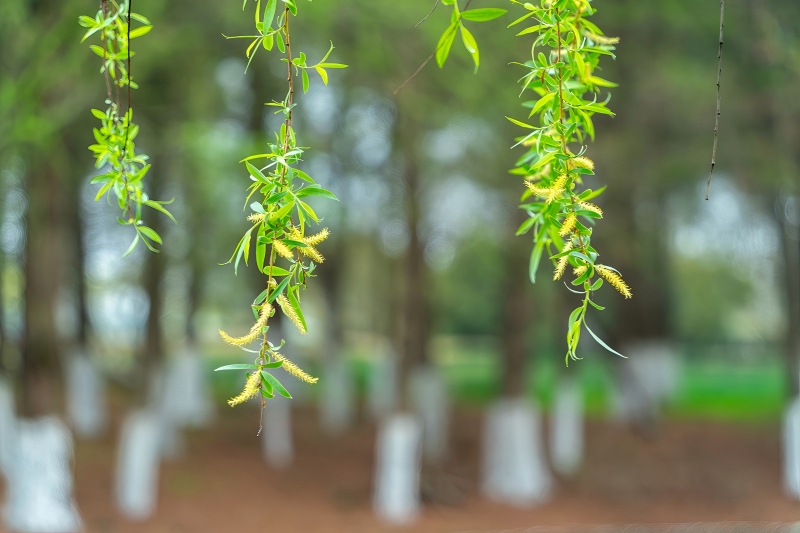
According to Beijing's meteorological station, the city's poplar and willow catkin season is expected to begin around April 6 to 9. The earliest catkins will appear within the Fifth Ring Road, mainly from white poplars (Populus × tomentosa).
Expected start dates by area:
Central urban areas: April 6–8
Southwestern urban areas: April 7–9
Southeastern urban areas: April 7–9
Northeastern urban areas: April 8–10
Northwestern urban areas: April 8–10
Common health effects include:
Respiratory symptoms: itchy nose and throat, frequent sneezing, runny nose, breathing difficulties
Eye irritation: redness, swelling, itching
Skin reactions: itching upon contact
How to tell if you are allergic to catkins?
Catkins themselves are not allergens. Allergic reactions are mainly triggered by pollen, dust and other particles that attach to catkins as they drift. If symptoms such as itchy nose or eyes, repeated sneezing and clear nasal discharge occur regularly around April each year, it is advisable to seek medical advice to check for spring tree pollen allergy.
How to protect yourself during catkin season?
People prone to allergies should wear masks and glasses (instead of contact lenses) when going out, and wear light jackets to protect exposed skin.
The peak time for catkins is from 10:00 to 16:00 daily. Try to exercise outdoors in the early morning, evening, or after rain when catkins levels are lower.
After returning home, use a nasal irrigation device with saline rinse 2 to 3 times a day. If catkins contacts the skin, wash promptly with warm water. Seek medical attention if severe itching or rashes occur.
If catkins enters your eyes, do not rub them. Try to flush it out with tears or rinse with clean water. Seek medical help if it gets deep into the eyes.
During peak periods, reduce opening windows. Remove indoor catkins with a vacuum cleaner or by spraying water to settle it before cleaning. Avoid opening car windows while driving.
Currently, over 10,000 poplar and willow trees across the city have been treated on a trial basis with a nano-encapsulated poplar and willow catkins suppressant developed by China Agricultural University, achieving promising results.
The catkin suppression rate reached 90 percent after one year and remained above 80 percent after two years. The suppressant is environmentally friendly and safe, posing no adverse effects on tree growth.
(Source: Beijing Fabu)