

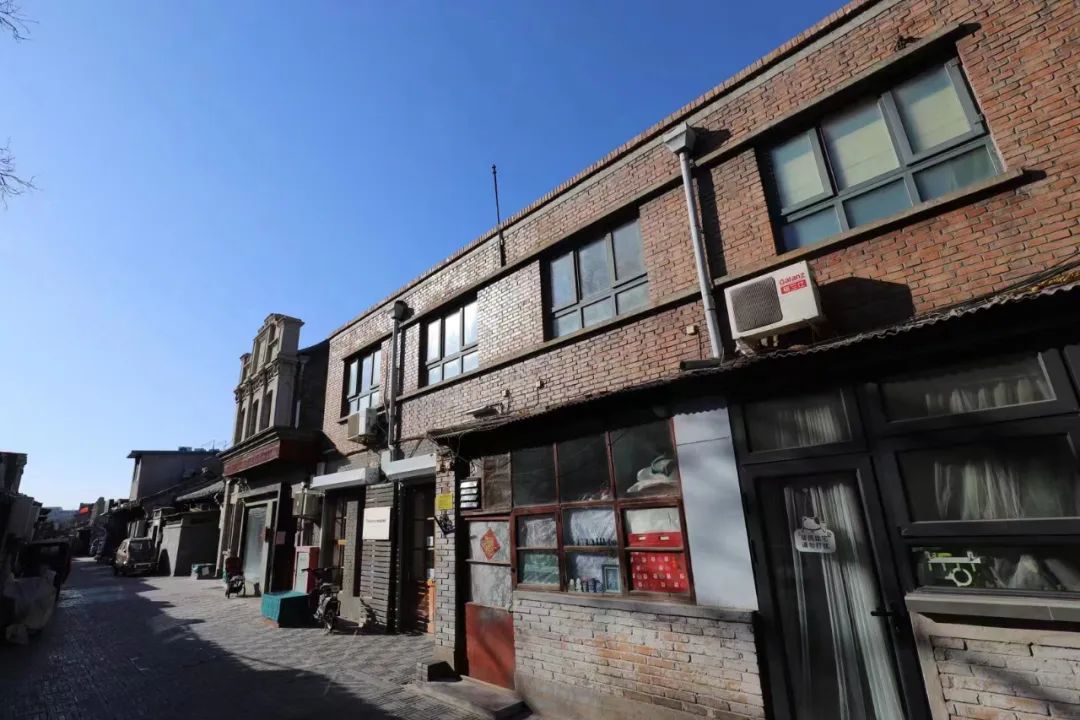
Yangmeizhuxiejie Street [Photo by Xue Yi]
Hutongs are not unique to Beijing, but the density, number and plethora of names of Beijing's hutongs make other cities in China not comparable to the capital in these regards. In recent years, with the commencement of the application of Beijing's central axis as a UNESCO World Cultural Heritage site and the progress in urban renewal, the protection and management of hutongs have become increasingly sophisticated.
Walking into Yangmeizhuxiejie Street located to the southwest of the region outside Qianmen Gate, you will encounter a dazzling array of cultural and creative stores, handicraft workshops featuring intangible cultural heritage items, and miniature museums. In the past, this area was dotted with bookstores. Nowadays, a variety of new cultural business formats have injected fresh vitality into the street.
Wang Jing, a resident who used to live near Dashilar, is deeply moved by the changes in this hutong (Yangmeizhuxiejie Street). "I used to pass through the street on my way to school. At that time, the hutong was covered with clotheslines and wires hanging overhead. In recent years, this hutong has gradually regained its historical appearance through restoration."
Today, at Qiankun Space located at 26 Yangmeizhuxiejie Street, Wang Jing and other entrepreneurs are dedicated to exploring the stories of the street and Dashilar in various periods, delving into traditional cultural elements and transforming them into cultural and creative items for everyday use.
Inside Lanman Hutong, you will find clean stone roads, artistic hand-painted graffiti, florist's stores, coffee shops, and many other eye-pleasing surprises. For the renovation of Lanman Hutong, a part of the renovation project of Fayuan Temple Historical and Cultural Block, the overhead power lines have been buried underground while the street has been improved. The rain-sewage diversion has also been achieved to completely solve the waterlogging problem the low-lying courtyards used to face.
The rich historical and cultural heritage of the hutongs has also contributed the development of Beijing's cultural industry. In Zhao Chunxiang Weimiao Art Museum located in No. 24 Courtyard of Zhaozhuizi Hutong, Tianqiao Street, Xicheng District, Zhao Chunxiang recreated the old local painting "Tavern" and the image of the Lord Rabbit (Tu'er Ye in Chinese) with the unique polymer clay kneading technique, combining the polymer clay from Europe with traditional cultural elements of China. Nowadays, the museum not only attracts a lot of artists but also becomes a space for residents in the hutong to relax and communicate.
(Source: Xinhua News Agency)