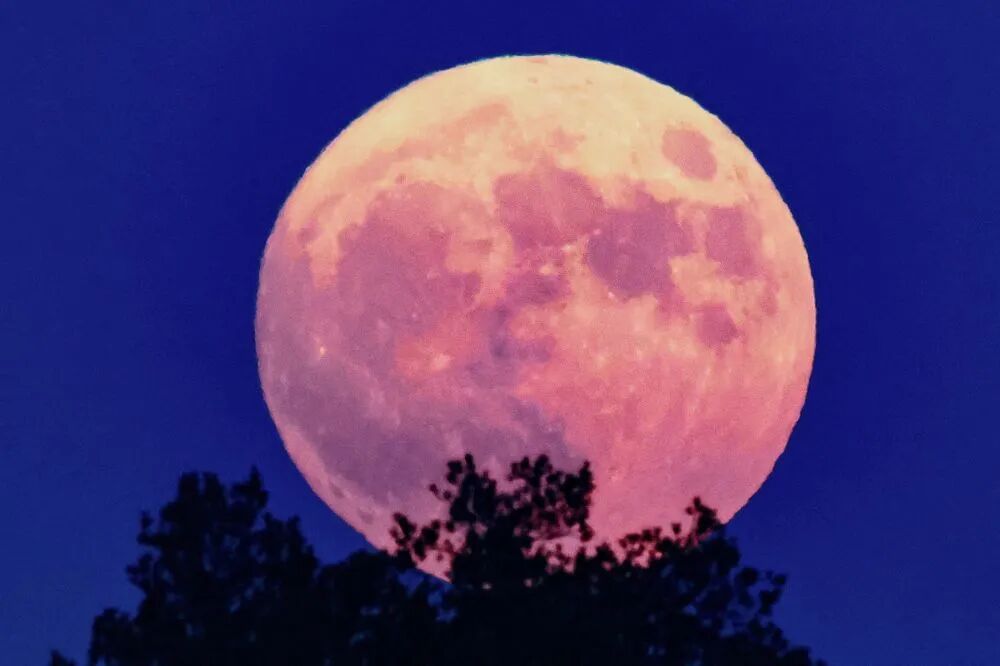
The largest full moon in 2022, photographed at Beihai Park in Xicheng District, Beijing, on July 13, 2022. [Photo by Wang Junfeng]
As 2025 draws to an end, a string of spectacular celestial events will light up the sky. In the early hours of December 5, we'll witness the year's final perigee full moon, also known as a "supermoon". Experts from the Beijing Planetarium advise that the evening of December 4 will offer the optimal viewing opportunity.
On December 8, Mercury will reach its greatest western elongation, appearing low in the southeastern sky before sunrise. Of the five planets in the solar system visible to the naked eye, Mercury is the most elusive. When the angular distance between Mercury and the Sun reaches its maximum — known as the "greatest elongation" — it provides the best chance to spot the planet from Earth. This will be the last opportunity to observe Mercury this year, with the next chance coming in February 2026.
As one of the three major meteor showers in the Northern Hemisphere, the Geminids are expected to peak from the night of December 13 to the early morning of December 14, with around 150 meteors visible every hour. Astronomers recommend viewing them before the moon rises to its peak, as after it rises on December 14, the view may be obstructed.
A lunar occultation of the Pleiades (a star cluster) will occur on the last day of the year. Between 21:00 and 22:00 on December 31, the moon will pass close to the Pleiades. However, the bright moonlight may outshine the stars in the cluster. Therefore, stargazers are advised to use telescopes for observation or photography.
(Sources: Beijing Fabu, China.org.cn, Xinhua News Agency)