
Special Archaeological Exhibition Commemorating 50th Anniversary of Hemudu Culture Discovery Opens at National Museum of China


A pottery bowl with a pig motif from the Hemudu Site
On November 7, "Prehistoric Lower Yangtze: Commemorating 50 Years of the Hemudu Culture Discovery - Special Archaeological Exhibition" opened at the National Museum of China.
The Hemudu Culture, dating back from 7,000 to 5,000 years ago, is named after the Hemudu Site in Yuyao and is mainly distributed in the eastern part of Ningbo-Shaoxing area and Zhoushan area in northeastern Zhejiang Province, constituting one of the most important Neolithic cultures in China's Yangtze River Basin.
The exhibition displays 324 pieces (sets) of artifacts unearthed from the Hemudu Site, the Tianluoshan Site, the Tashan Site, and the Jingtoushan Site, including pottery, stone, bone, shell and wooden artifacts, woven fabrics, as well as rich remains of rice cultivated back then, relics of stilt-style wooden buildings constructed through well-developed techniques, unique earthenware containing charcoal, exquisite handicrafts, and other significant archaeological findings of the Hemudu Culture.

A turtle-shaped pottery pitcher from the Tianluoshan Site
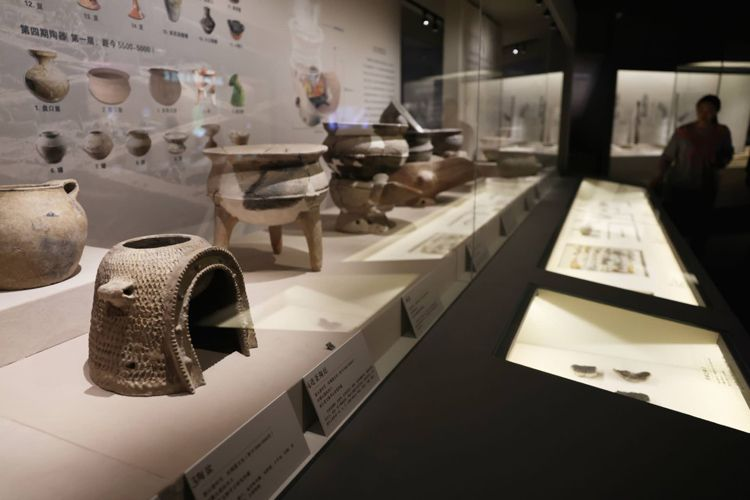
A variety of pottery artifacts on display

Wood pulps from the Tianluoshan Site

A bone spade made of an animal's scapula, which is from the Hemudu site

Through interactive multimedia means, visitors learn about Hemudu's advanced woodworking techniques adopting mortise and tenon joints, the most common structuring approach for the ancient Chinese wooden architecture and furniture.

A butterfly-shaped vessel with the patterns of a couple of birds looking at the sun, which is a fragment of ivory-carven artifact from the Hemudu Site

Bone hairpins from the Tianluoshan Site

A wooden feathered crown from the Tianluoshan Site
(Source: The Beijing News)