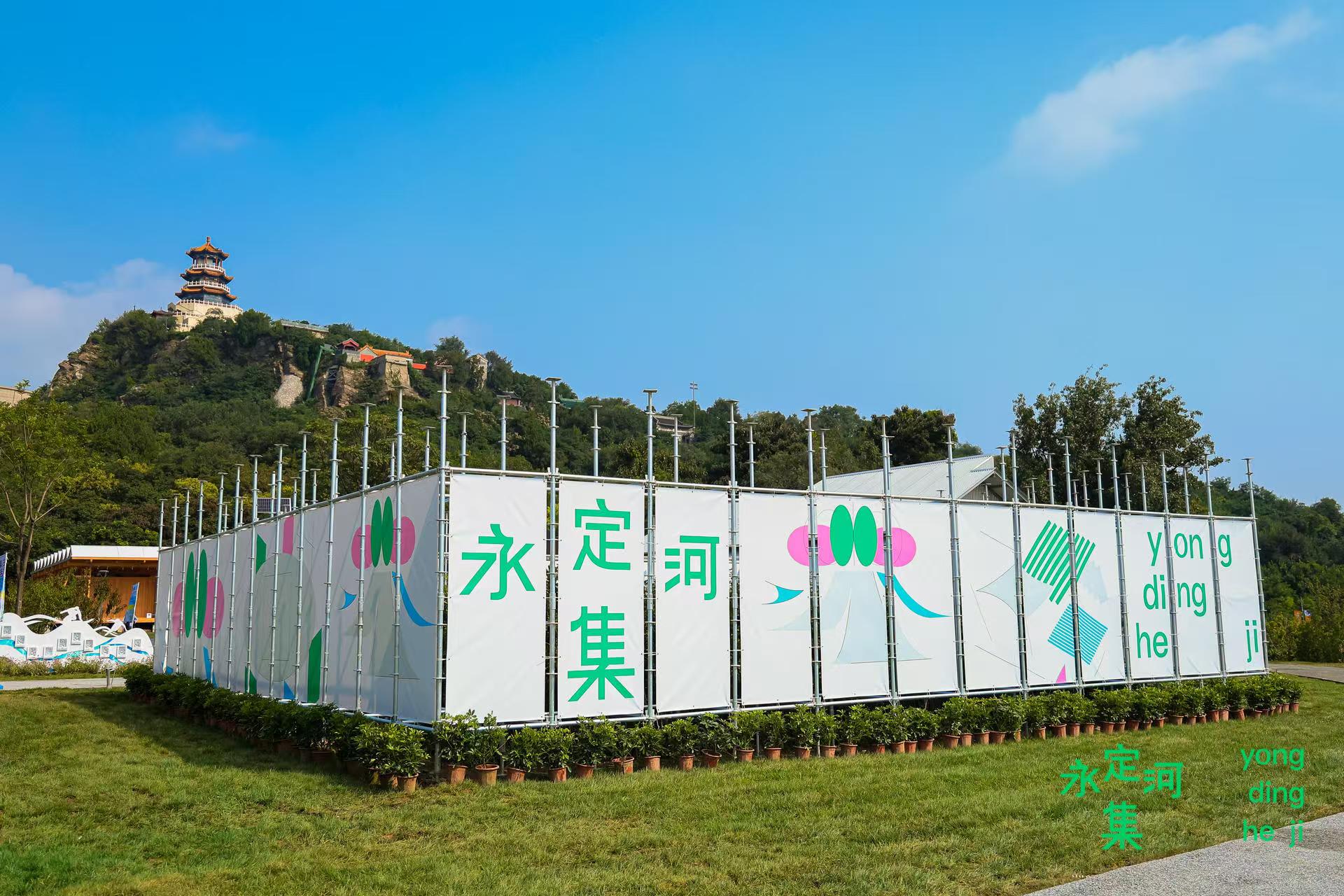
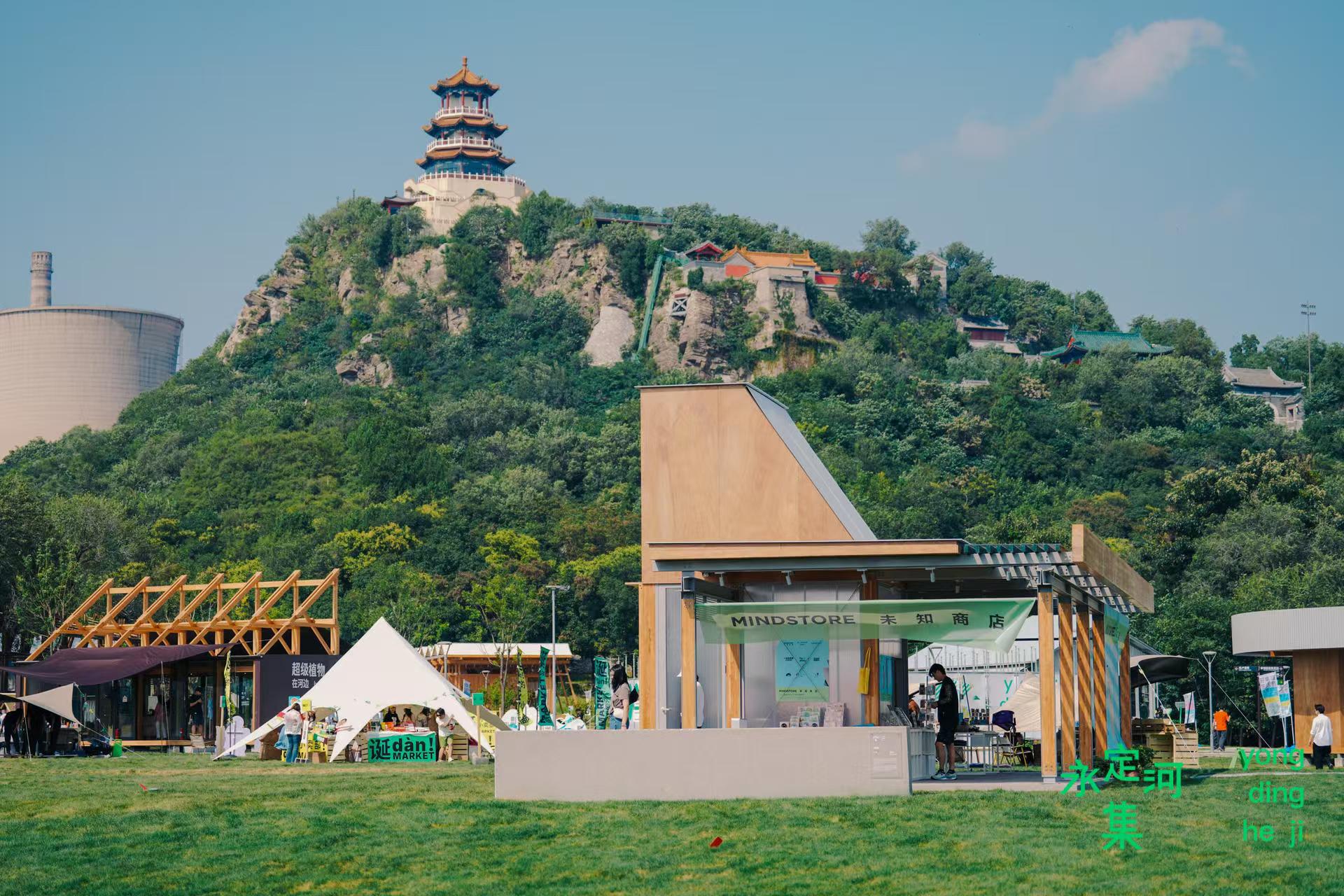
Yongding River Market is located at the foot of Shijingshan on the left bank of the Yongding River. It is a core benchmark project for implementing Beijing's "Two Parks and One River" strategy. The project is included among the city's 44 key projects with a total investment of approximately 44 billion yuan. Its core focus is to achieve "four connectivities"—water connectivity, road connectivity, green connectivity, and sightline connectivity. Yongding River Market consistently adheres to the development logic of "less interventions, more extensions", avoiding large-scale hard renovation and maximally preserving the original fabric of the riverbank and wetlands. The project has introduced Beijing's first cluster of non-standard curator-led specialty commercial formats, with approximately half of the brands being first stores in Beijing or Shijingshan. Phase I officially opened in September 2025 and was rated as a newly emerging popular destination in Beijing for 2025. It is divided into a lifestyle street (northern section) and a dining and social street (southern section). The Phase II expansion currently underway extends southward from the Olympic Ring to the New Shougang Bridge and is planned for full completion before the 2026 CIFTIS. Strolling through Yongding River Market, one can gaze at the ecological scroll of "mountain-water-park" where Shijingshan and the Yongding River merge, with the sunset over the Western Hills fully in view.
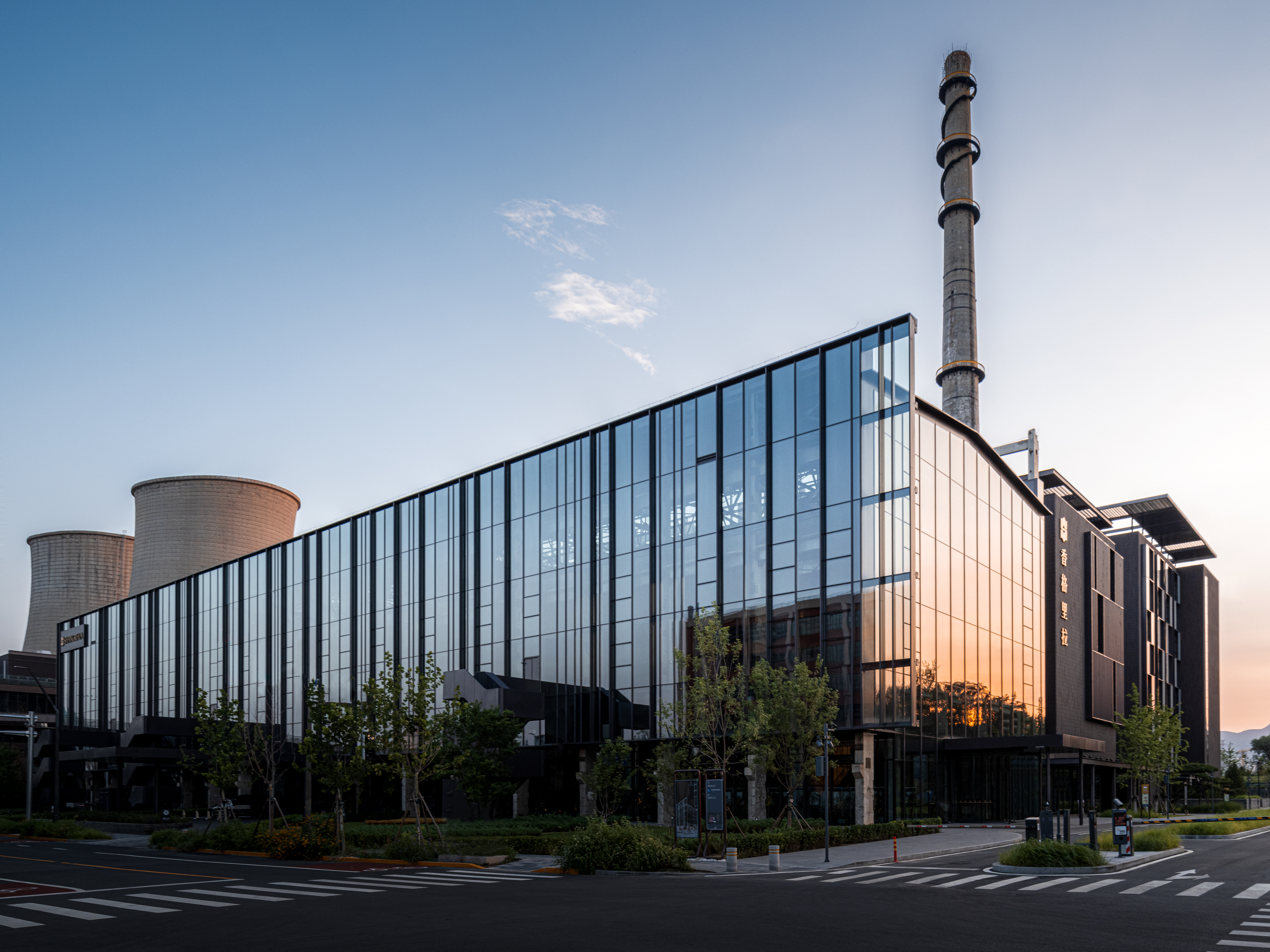
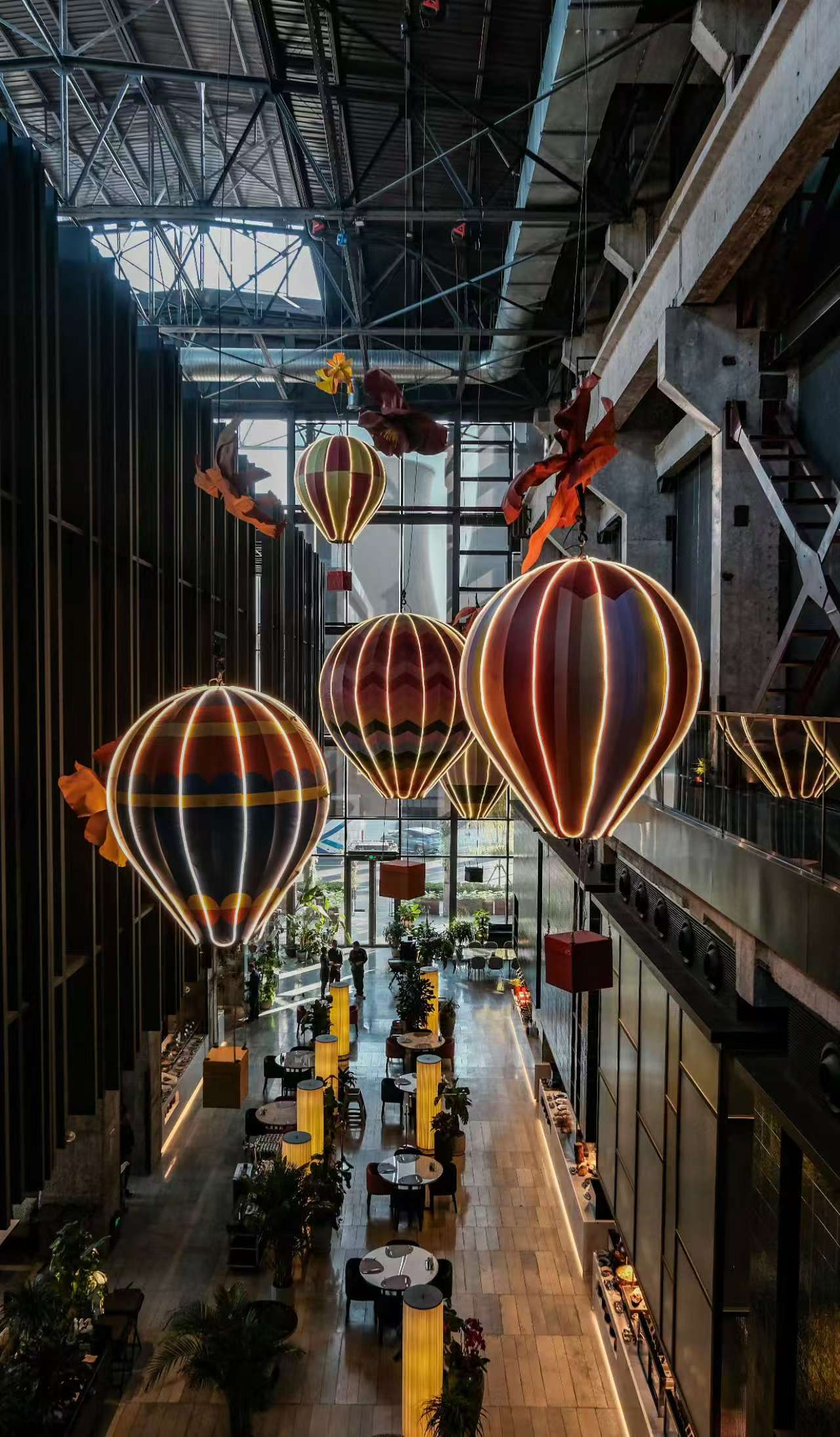
Shangri-La Shougang Park was converted from the former Shougang Power Plant and is located in the core area of Shougang Park. The hotel's renovation was designed by renowned Italian designer Piero Lissoni. The facade is covered with transparent glass curtain walls, while the interior fully preserves the original building's mottled concrete structure and steel trusses. The massive space with a 25-meter ceiling height and over 120 meters in width allows the rugged industrial framework and the refinement of modern design to collide and blend. Upon entering the lobby, the atrium art installation "Journey of Hope" draws inspiration from migratory birds that journey to the Yongding River, using innovative materials to create hundreds of white birds extending from the ground floor to the ceiling. Another iconic photo spot is the "China Red Spiral Staircase", cast in one piece from 28 tons of Shougang-produced steel. The hotel won three AHEAD Asia 2022 awards—"Hotel Conversion of the Year", "Lobby and Public Areas of the Year", and "Hotel of the Year, Asia"—and was included in the 2025 Michelin Key hotel list, recognized by the industry as a global benchmark for adaptive reuse of industrial heritage.
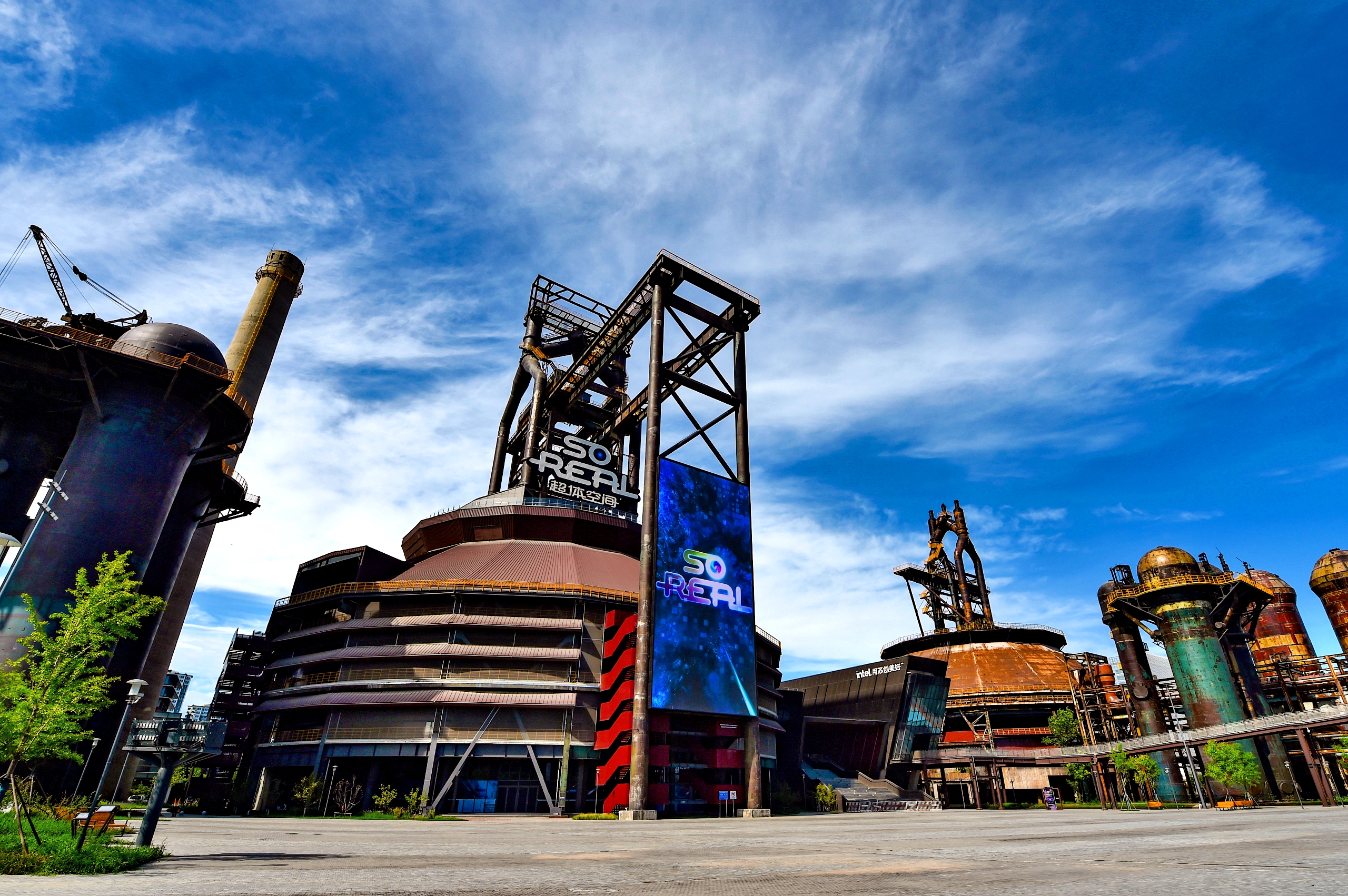
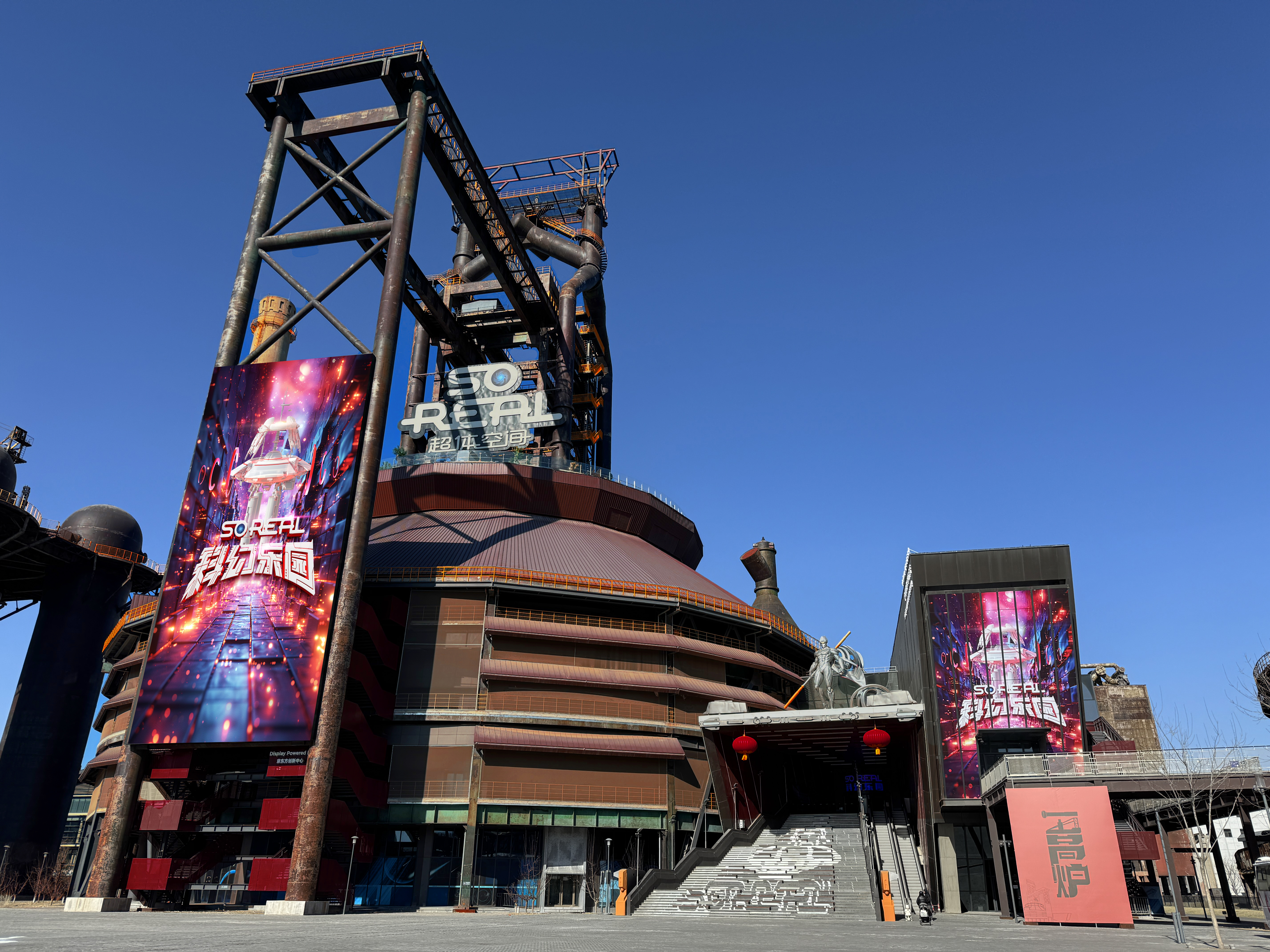
Blast Furnace No. 1 is known as the "Meritorious Furnace", honored with "Three Hs"—high smelting temperature, hundred-meter height, and century-long history. Today, this blast furnace carrying Shougang's century-old steel memories has been transformed into "SoReal Science Fiction Paradise", becoming the world's first case of converting industrial heritage into a super-large immersive science fiction experience space, with a building area of 22,000 square meters. The renovation fully preserved the original industrial structure and furnace core while extensively deploying cutting-edge technologies including 5G, edge computing, AR, VR, MR, AI, digital twins, and holographic imaging, integrating more than 40 technology experience projects. Visitors can "board a spaceship" inside the century-old meritorious steelmaking furnace and enjoy a special "mudslide" coffee in the furnace core that once reached 1,300 degrees Celsius, immersing themselves in a futuristic world.
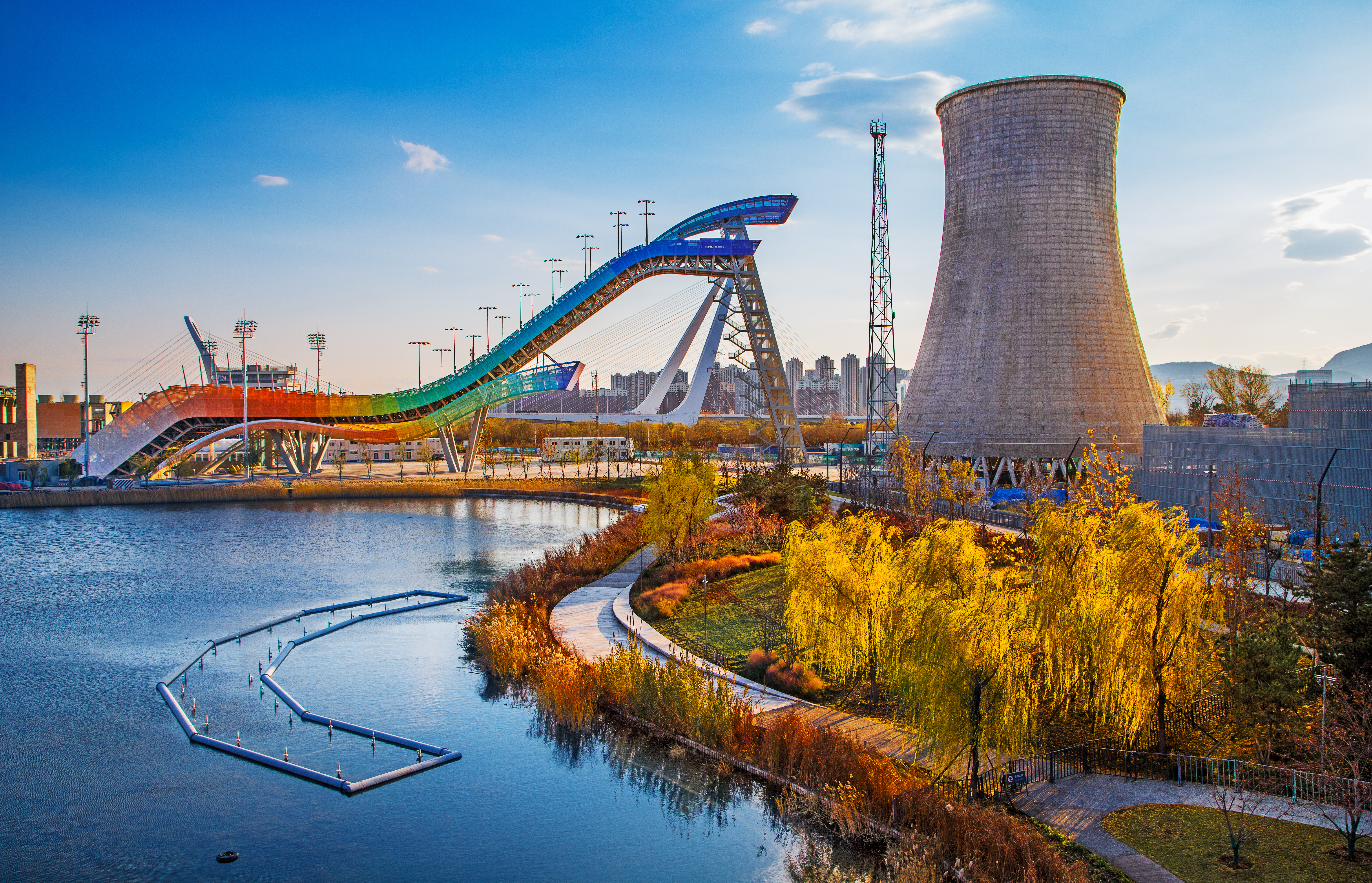
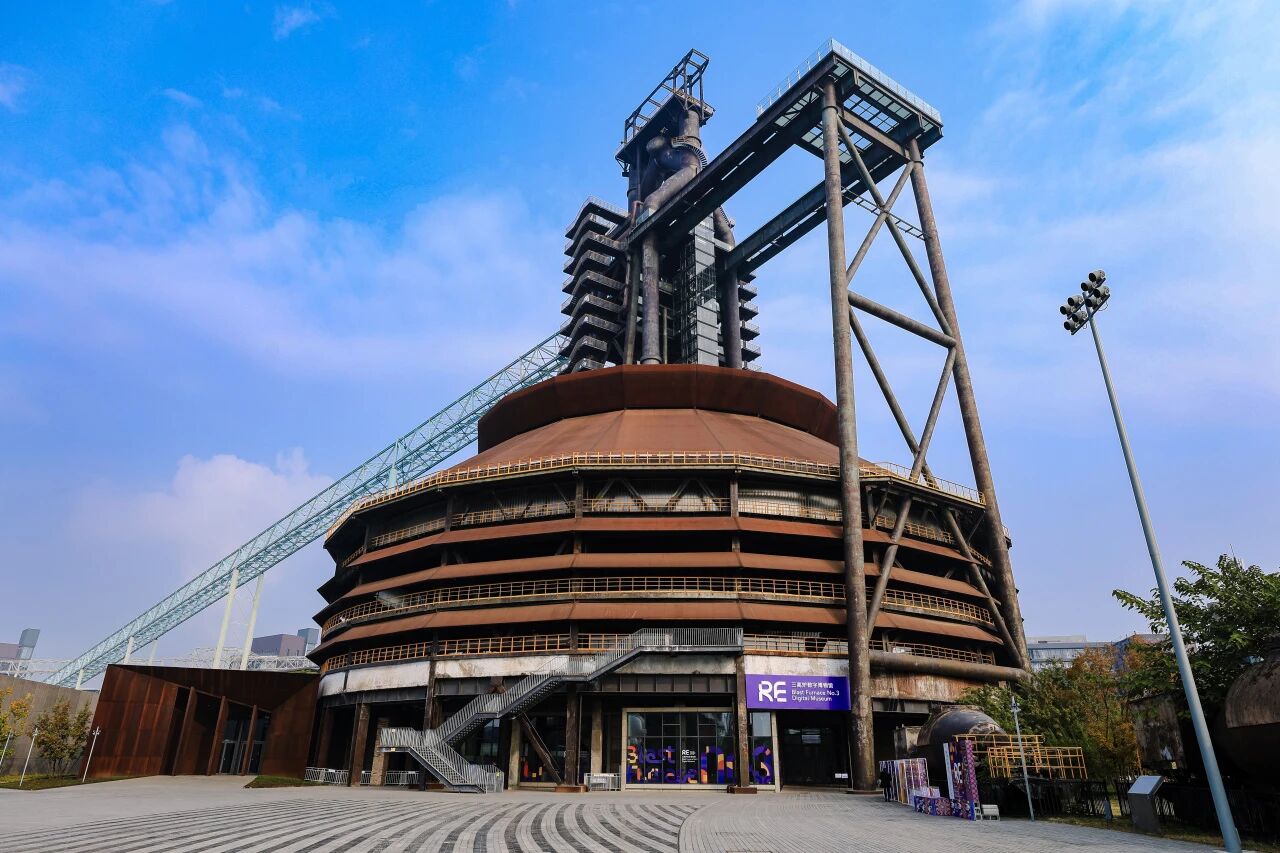
Shougang Park is located at the westernmost end of the west extension of Chang'an Avenue, at the foot of Shijingshan and by the bank of the Yongding River. Its predecessor was the Shijingshan Steel Plant founded in 1919, one of the earliest modern steel enterprises in North China. To fulfill the commitment of "Green Olympics", the park ceased production and relocated entirely in 2010. In 2015, the Beijing Winter Olympics Organizing Committee moved in, and the Winter Olympic flame was lit here in 2022. Shougang Park thus transformed into a "new landmark of urban revitalization" and is now one of the largest and best-preserved clusters of modern and contemporary industrial heritage in China.
During the park tour, guests will successively experience representative works of Shougang Park's industrial site transformation. Shangri-La Shougang Park, converted from the former power plant, features a striking contrast between rugged steel frameworks and modern design. The Big Air Shougang, whose shape is inspired by the flying apsaras ribbons of Dunhuang, witnessed the gold-medal moments of Winter Olympic athletes and is known as the "Double Gold Blessed Land". Qunming Lake was ecologically restored from an industrial cooling pond, and the High Line Park was transformed from an elevated pipe corridor into a two-tiered scenic walkway combining leisure and fitness functions. The permanent venue of CIFTIS carries modern exhibition functions within an industrial framework, with new and old buildings complementing each other to form a distinctive townscape. Blast Furnace No. 1 and Blast Furnace No. 3 face each other across the road—one has been transformed into SoReal Science Fiction Paradise, while the other serves a composite function housing the Global Launch Center and the RE · Blast Furnace No. 3 Digital Museum, together commemorating Shougang's century-long leap from steel memories to Winter Olympic glory and now to future technology. After the tour, we will step into Blast Furnace No. 1, this century-old meritorious furnace, to embark on an immersive science fiction exploration journey.
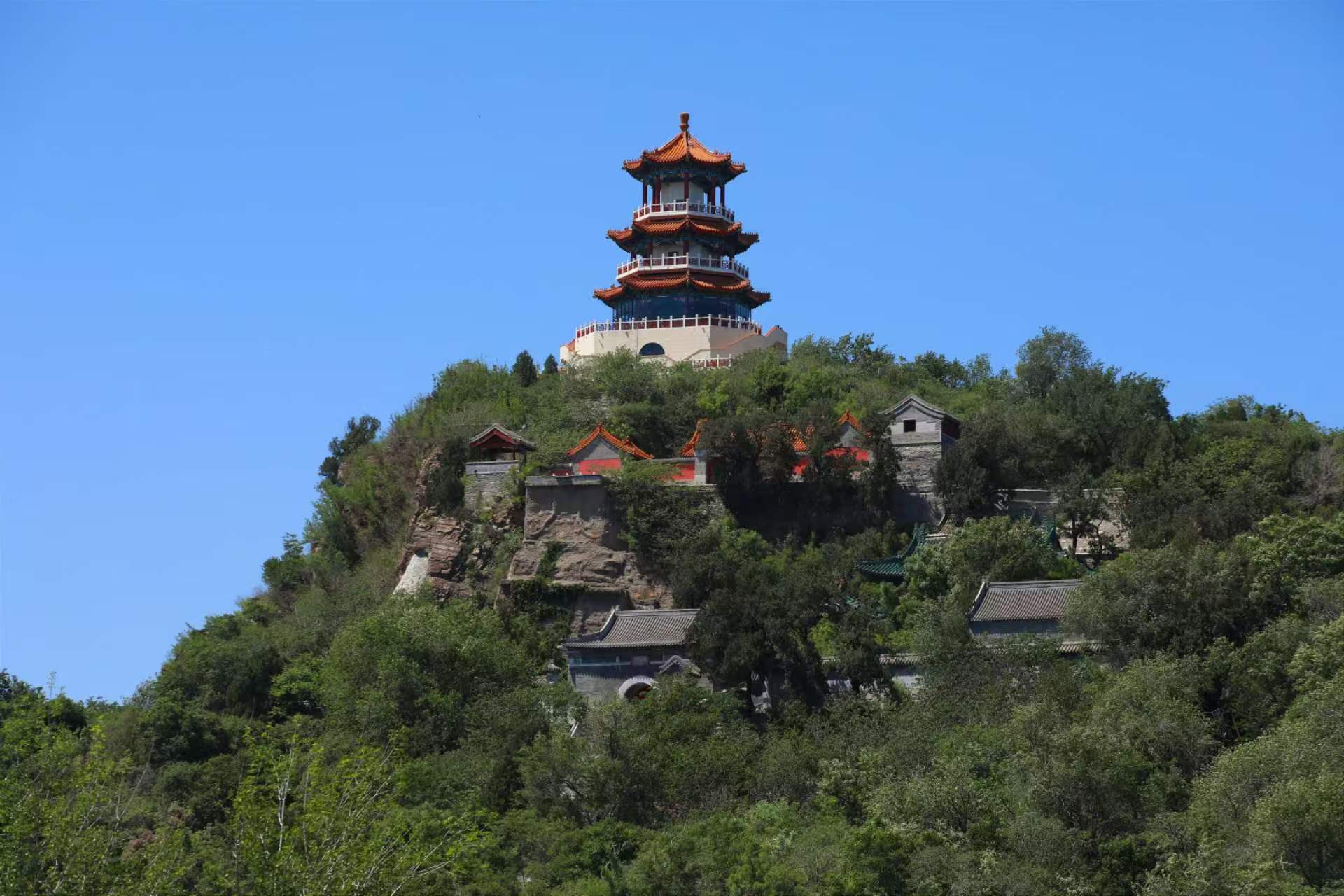

Gongbei Pavilion sits atop the summit of Shijingshan at an elevation of approximately 183 meters. As an offshoot of the Taihang Mountains, Shijingshan is the very source of the name "Shijingshan District". The original site of Gongbei Pavilion was the courtyard of the Ming Dynasty relic stupa of Jinge Temple. In 1993, Shougang Group reconstructed it in imitation of the Tower of Buddhist Incense (Foxiang Ge) on Longevity Hill in the Summer Palace. It is an octagonal, three-eaved pavilion-style structure standing about 55.25 meters tall. The three-tiered observation platform is the highest point of Gongbei Pavilion open to the public. To the east, one can see Shougang's Blast Furnace No. 3, Blast Furnace No. 1 and the CIFTIS exhibition halls, as well as the Beijing city skyline composed of the Central Radio and TV Tower, CITIC Tower, and the Olympic Linglong Pagoda. To the north, one can observe the S1 Maglev Train passing through and the former site of the Beijing Winter Olympics Organizing Committee. To the northwest, one can overlook the Yongding River meandering into the Beijing Plain, with the Yongding River's gorge exit directly below. To the west, one can gaze at the Taihang Mountains and Dingdu Peak, where Dingdu Pavilion is located. To the south, one can overlook the entire Shougang Park. Though Shijingshan is not particularly high, it is the commanding height of the millennium-old cultural heritage of western Beijing and an excellent vantage point for viewing the panoramic scroll of "mountain-water-park-city".
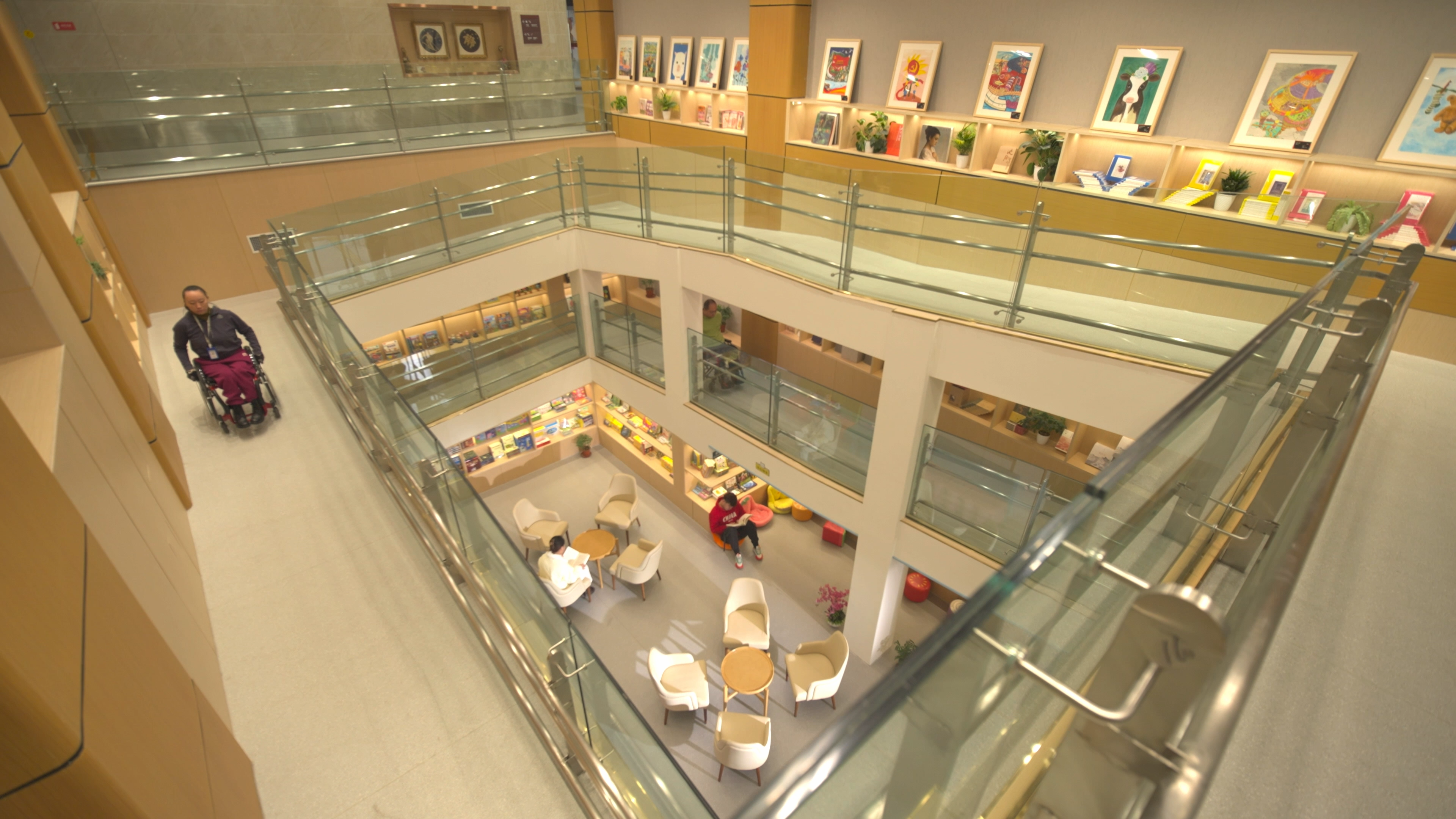
Beijing Demonstration Center of Service for Persons with Disabilities (Huiai Building) is the most comprehensive and professional provincial-level integrated service hub for persons with disabilities in China. It serves as a national model for barrier-free environment construction and a window for international exchange and cooperation in disability undertakings. The center serves persons with disabilities of all ages and all disability categories, providing over ten professional disability support services including vocational rehabilitation, short-term residential care, children's rehabilitation, adult rehabilitation, employment training, art therapy, inclusive film screenings, exhibitions, and exchanges. The center has hosted visits by Professor Peng Liyuan, foreign dignitaries like the Queen of Spain, as well as overseas media correspondents. To date, it has organized 37 international events, including thematic forums on Belt and Road disability affairs. The center is distinguished by its focus on technology-assisted disability support. It brings together over 70 cutting-edge domestic assistive technology products, including electronic guide dogs, intelligent bionic hands, and simultaneous interpretation subtitle glasses. It stands as an important window for showcasing China's humanistic image, the achievements of China's disability undertakings, and the capital's service and support standards to the international community.

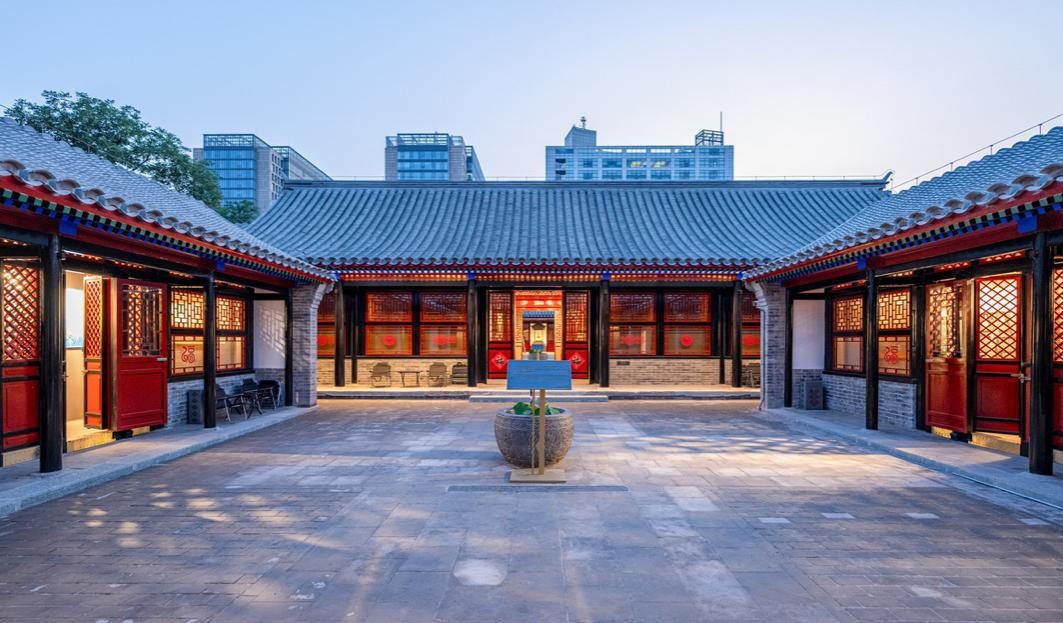
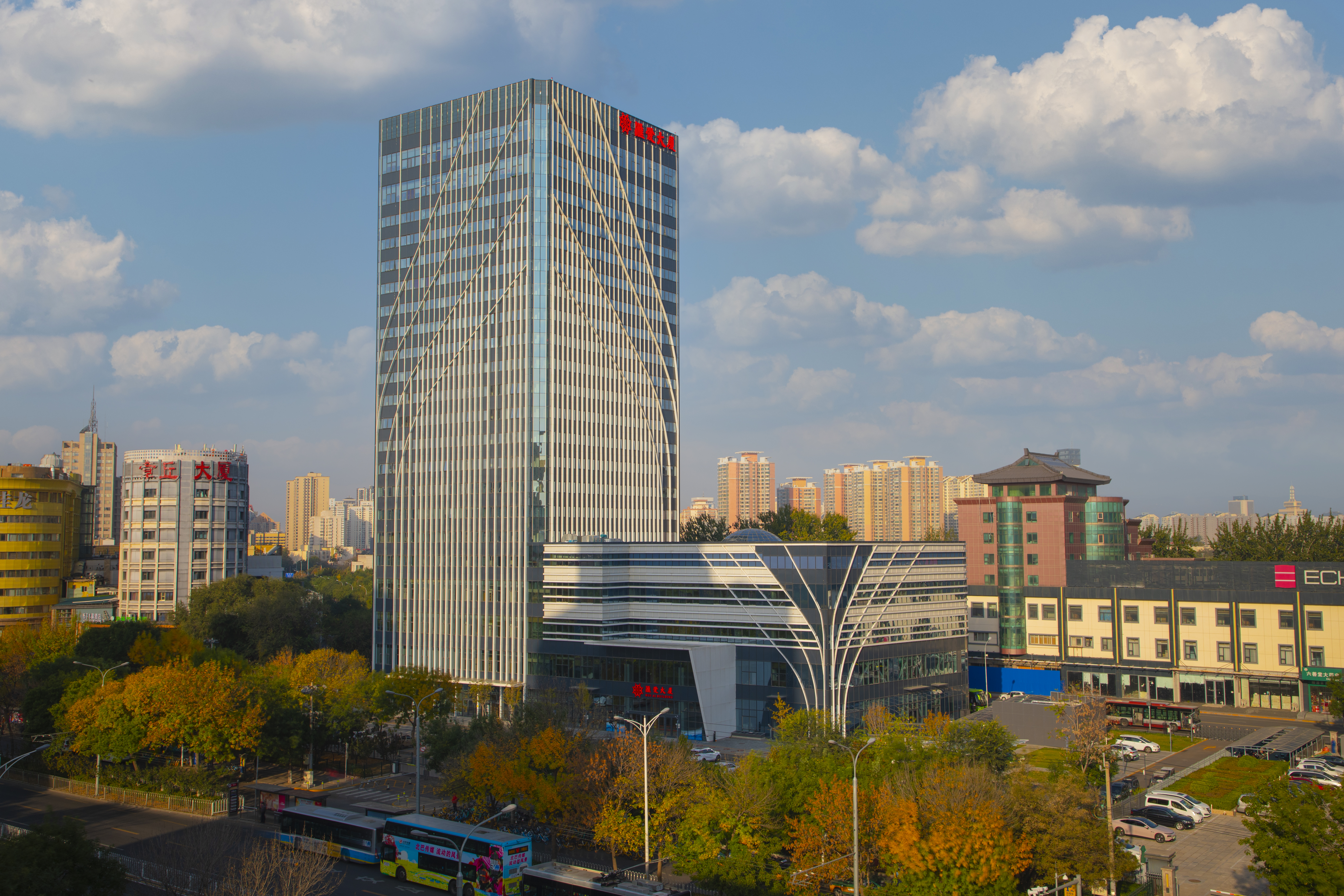
Dajixiang represents the first large-scale urban renewal project in the core area of the capital initiated by Xicheng District following the successful inscription of Beijing Central Axis on the UNESCO World Heritage List. After nine years of meticulous work, guided by the philosophy of "mending the city with the same care as restoring cultural relics", the project has restored heritage-protected buildings to their original form, structure, materials, and craftsmanship. This approach allows historic structures imbued with collective memory to be seamlessly reintegrated into contemporary life, rendering them readable, tangible and usable. The renewal of Dajixiang stems from a systematic response to the needs of local residents and the identified shortcomings of the urban fabric. Addressing practical issues such as scarce public space and inadequate commercial amenities, the project organically integrates four key functions—a urban cultural living room, a civic leisure plaza, a mixed-use commercial complex, and a cluster of eco-friendly office towers—into the existing community. This strategy transforms the historic core of the old city into a vibrant, livable neighborhood where one can stroll, relax, and breathe freely. Today, the meticulously restored heritage buildings stand harmoniously alongside modern commercial towers, where the traditional grey bricks and tiles of the old structures elegantly complement the glass curtain walls of new developments, infusing the ancient city with renewed vitality and dynamism. To date, the project has garnered over a dozen prestigious national and international accolades, including the Platinum Award at the MUSE Design Awards and the Gold Award at the French Design Awards. As one of the country's first zero-carbon buildings, it has achieved the Green Building Label (three-star rating), as well as LEED Platinum and WELL Gold certifications, and has been selected as an outstanding case in the 2026 ESG Initiative.
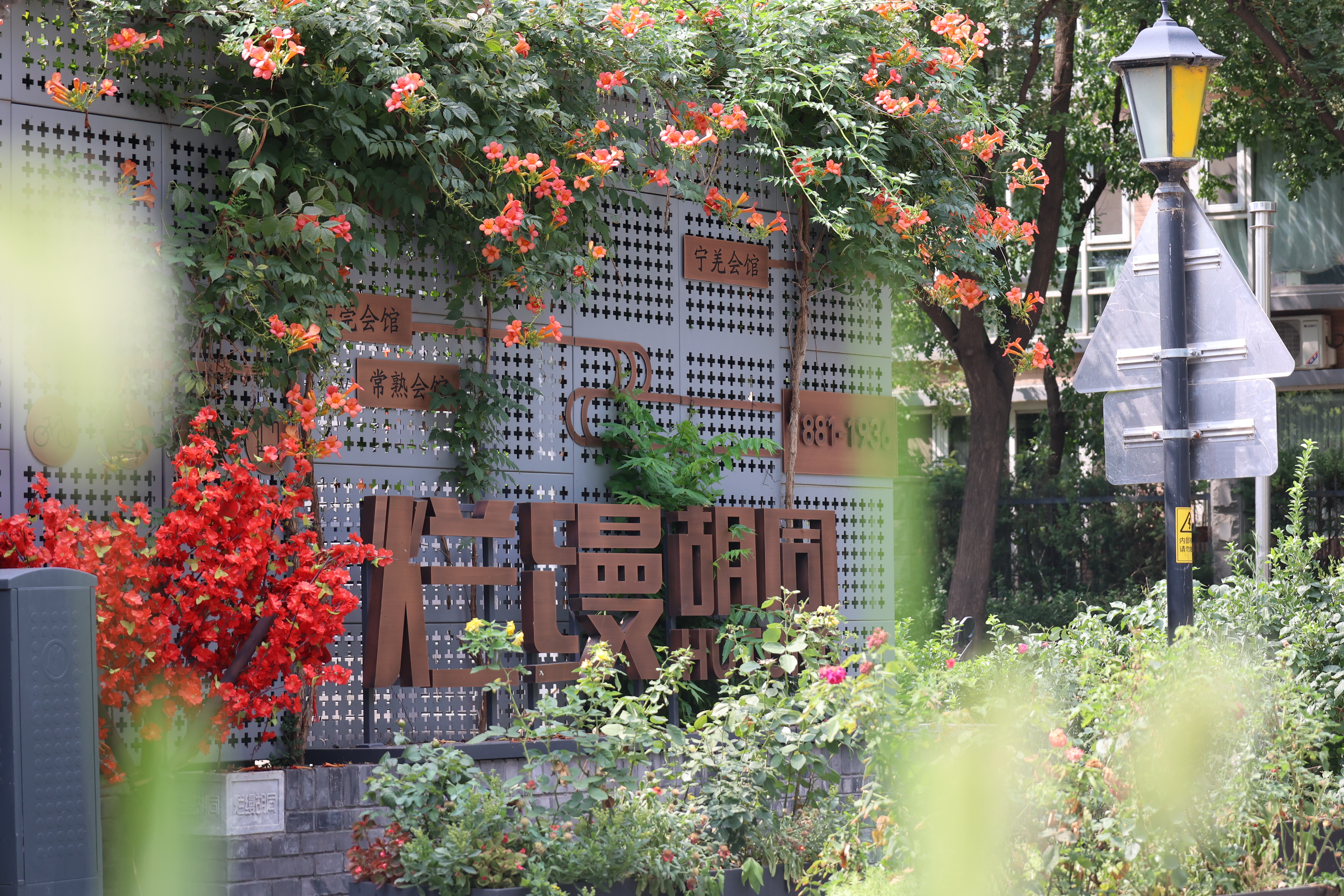
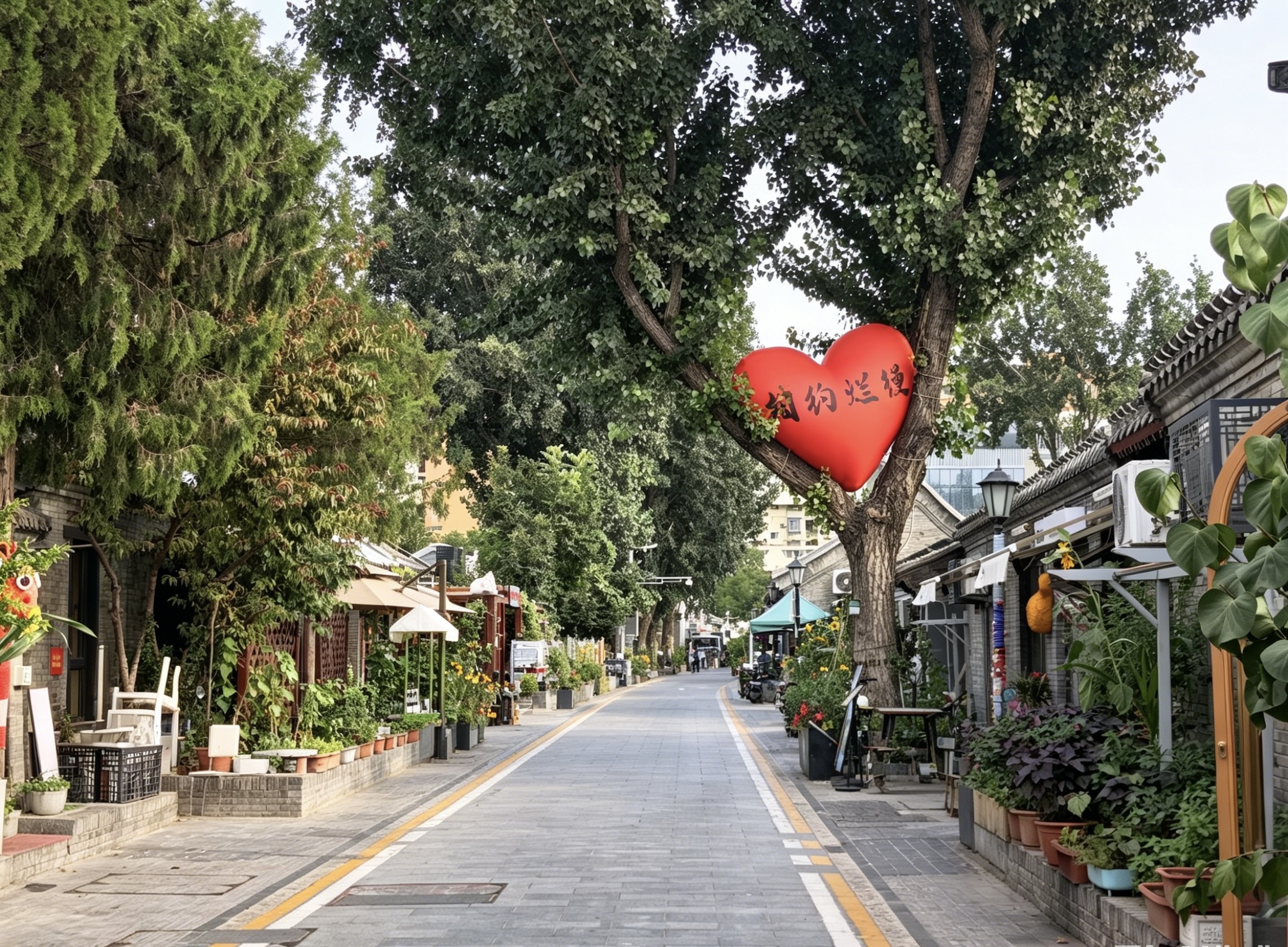
Lanman Hutong is located in the Beijing Fayuan Temple Historical and Cultural Block, with a total length of 363 meters. The name "Lanman" is derived from the imagery of resplendent flowing clouds and vibrant, unfurling vitality, carrying the profound cultural lineage of the old city. In June of this year, the "Fayuan Temple Historical and Cultural Block Urban Renewal Project" was selected as one of the "Top Ten Outstanding Practices" in international urban renewal by UN-Habitat, becoming a benchmark project among UN-Habitat's top ten global renewal cases. The block has adhered to a gentle and gradual organic renewal model, restoring the hutong fabric, revitalizing courtyard spaces, iterating block commercial formats, and establishing itself as a benchmark model for the coexistence and renewal of tradition and modernity in Beijing's old city. The block renewal has always been people-centered, improving infrastructure including drainage, fire safety, smart security and convenient charging facilities, and creating a transparent and tidy "no-parking hutong" to effectively improve the living environment. The old street has been revitalized without losing its authenticity, preserving and restoring guild hall relics, continuing the century-old literary elegance of the Lilac Poetry Festival, and retaining the memories of the old city through refined micro-landscapes such as map manhole covers and artistic murals. The quality enhancement also embraces contemporary trends, precisely introducing new commercial formats such as cultural and creative bookstores, boutique coffee shops, and youth maker spaces, polishing high-quality city walk routes, and allowing the vitality of the ancient hutong's daily life to blend with the dynamism of youth culture. Every change in the block comes from the voices of the people, relying on the "Fayuan Partners" multi-stakeholder co-governance model, linking communities, residents and merchants in co-construction, co-governance and sharing, achieving warm and refined community-level governance.
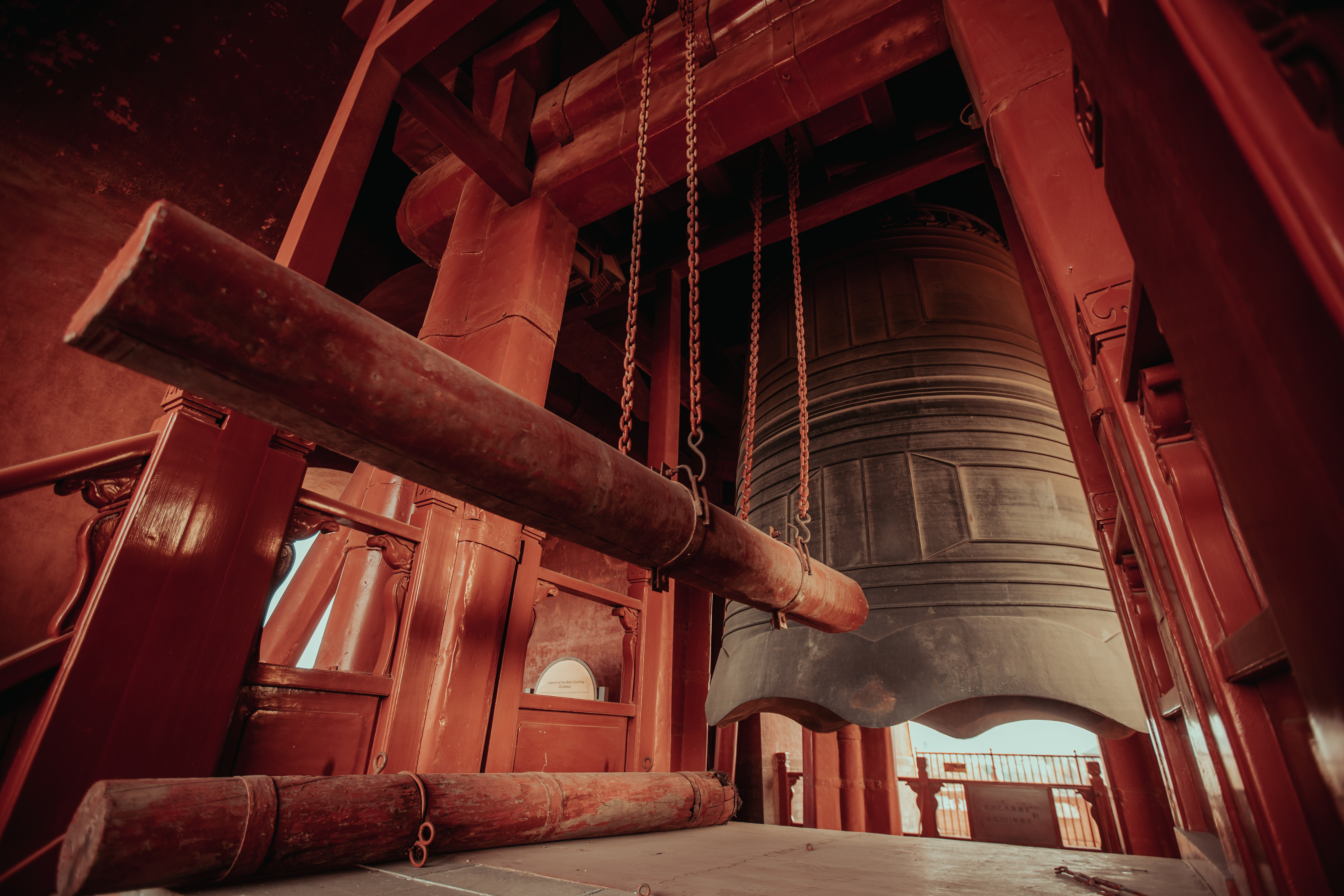
Beijing Bell and Drum Towers are located at the northernmost end of Beijing Central Axis. The two towers are arranged longitudinally. They constitute the best-preserved, largest-scale and most comprehensively equipped group of ancient timekeeping structures among all extant bell and drum towers in China, and stand as landmark buildings of Beijing. They once served as the timekeeping center during the Yuan, Ming, and Qing dynasties. With their prominent geographical location, time-honored timekeeping history, traditional time-announcing methods, as well as bells and drums of pivotal significance, Beijing Bell and Drum Towers have become an architectural exemplar of ancient Chinese urban bell and drum towers.
In 1925, the "Capital Popular Education Center" was established in the Drum Tower, with the Bell Tower serving as its affiliated cinema. The function of the Bell and Drum Towers thus shifted from timekeeping to public education, pioneering popular education in Beijing. In the 1980s, the state allocated special funds for the first large-scale renovation of the Bell and Drum Towers since the founding of the People's Republic of China, and they were successively opened to the public, becoming cultural relic attractions accessible to visitors. They are now designated as Major Historical and Cultural Sites Protected at the National Level and serve as a patriotism education base in Dongcheng District, covering a total area of 12,597 square meters. On July 27, 2024, the 46th session of the UNESCO World Heritage Committee, held in New Delhi, India, adopted the resolution to inscribe the Beijing Central Axis—A Building Ensemble Exhibiting the Ideal Order of the Chinese Capital—on the World Heritage List. Beijing Bell and Drum Towers are one of the important heritage sites along the Beijing Central Axis.
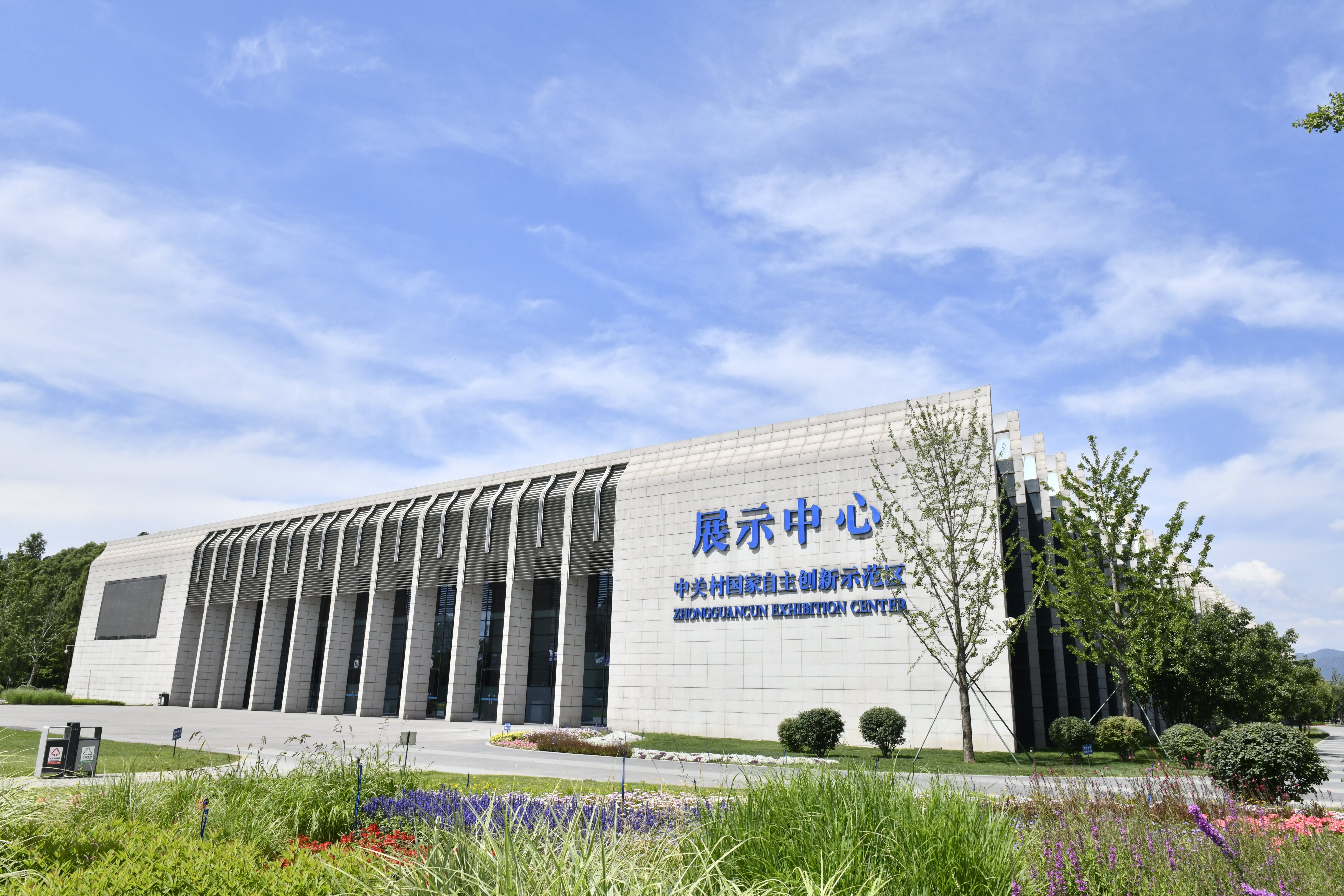
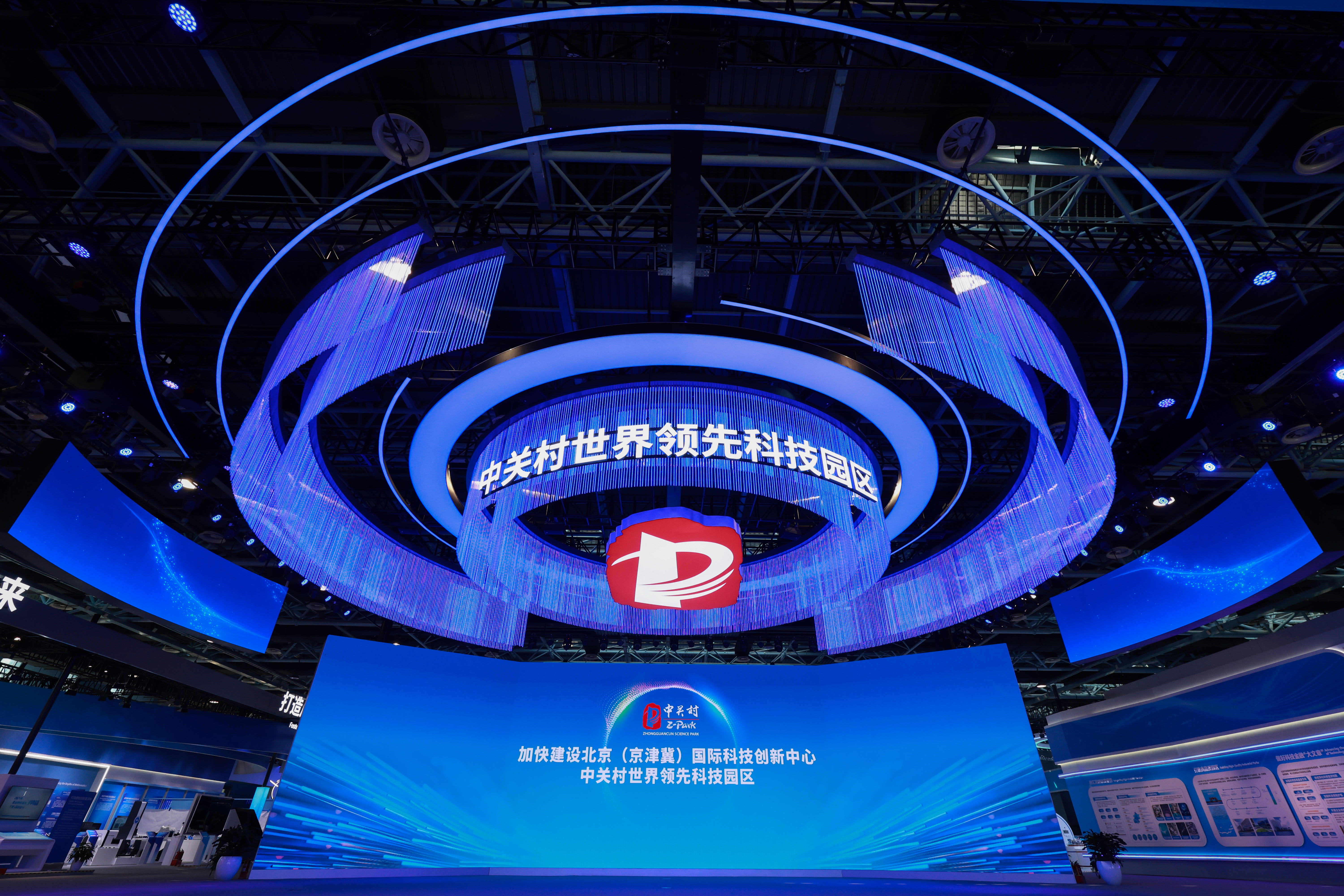
The Zhongguancun Exhibition Center is the core display window of the Beijing International Center for Science and Technology Innovation and a national-level platform showcasing the independent innovation achievements of Beijing and Zhongguancun. The permanent exhibition, newly upgraded and unveiled in March 2026 during the Zhongguancun Forum (ZGC Forum) Annual Conference, covers an exhibition area of 10,000 square meters. Under the overarching theme of "Integrate Technological and Industrial Innovation", the exhibition systematically presents Beijing's latest achievements in leveraging technological innovation to foster new quality productive forces and build a modern industrial system.
The permanent exhibition features a systematic layout of a prelude hall and five themed exhibition zones. The prelude hall showcases Zhongguancun's strategic positioning, development journey, and the top-level design for building Beijing into an international center for science and technology innovation, underscoring Zhongguancun's core standing as a world-leading science and technology park. The "Beijing (Beijing-Tianjin-Hebei) International Center for Science and Technology Innovation" section focuses on Beijing-Tianjin-Hebei collaborative innovation, presenting landmark achievements in joint research, park co-development, industrial collaboration and talent exchange across the three regions from three dimensions: the functional layout of "the core area and the two wings" (the two wings refer to Beijing Municipal Administrative Center and Xiong’an New Area), the modernized capital metropolitan region, and the resilience and dynamism of industrial chains and clusters. The "Cradle of Original Innovation" section highlights basic research and strategic scientific capabilities, featuring major original innovations such as chemically induced pluripotent stem cell (CiPSC) therapy for diabetes, demonstrating Beijing's capacity to generate original breakthroughs at the frontier of science and technology. The "Fostering and Expanding Emerging Industries" section features exhibition zones for intelligent connected vehicles, commercial space, "AI+" and intelligent manufacturing, showcasing exhibits such as autonomous vehicles, space data centers, domestically developed reconfigurable AI chips and the world's highest-field all-superconducting user magnet. The "Forward-Looking Deployment of Future Industries" section includes exhibition zones for biomanufacturing, embodied intelligence, brain-computer interfaces as well as cell and gene therapy, featuring exhibits such as the Linker Hand dexterous hand array, the Beinao No. 1 and Beinao No. 2 intelligent brain-computer interface systems as well as Donaperminogene Seltoplasmid Injection. The "Fostering an Open Innovation Ecosystem" section presents the significant achievements of Beijing-Tianjin-Hebei collaborative innovation, as well as Beijing's practical outcomes in integrating high-end R&D services, developing high-quality industrial parks, strengthening technology finance and connecting with the global innovation network.
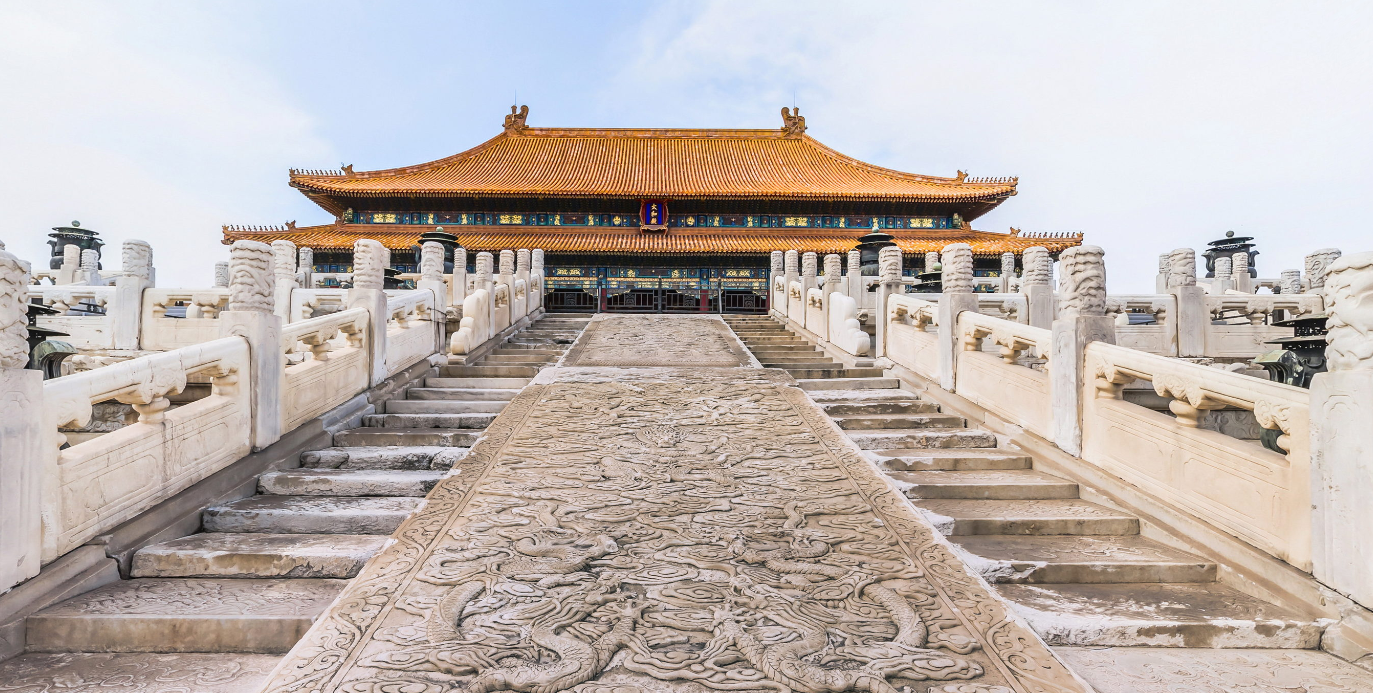

The Palace Museum was established in 1925 as a large comprehensive museum built upon the foundation of the imperial palaces of the Ming and Qing dynasties and their collections. The Forbidden City was designated by the State Council as one of the first batch of "Major Historical and Cultural Sites Protected at the National Leve" in 1961, inscribed by UNESCO on the "World Heritage List" in 1987, and rated as a National 5A-Level Tourist Attraction in 2007. The Palace Museum was rated as one of the first batch of National First-Class Museums in 2008.
The Palace Museum houses the largest and best-preserved ensemble of ancient palace architecture extant in China. It is an important bearer of China's five-thousand-year civilization, a convergence of fine traditional Chinese culture, and a historical witness to the exchange and integration of diverse cultures.
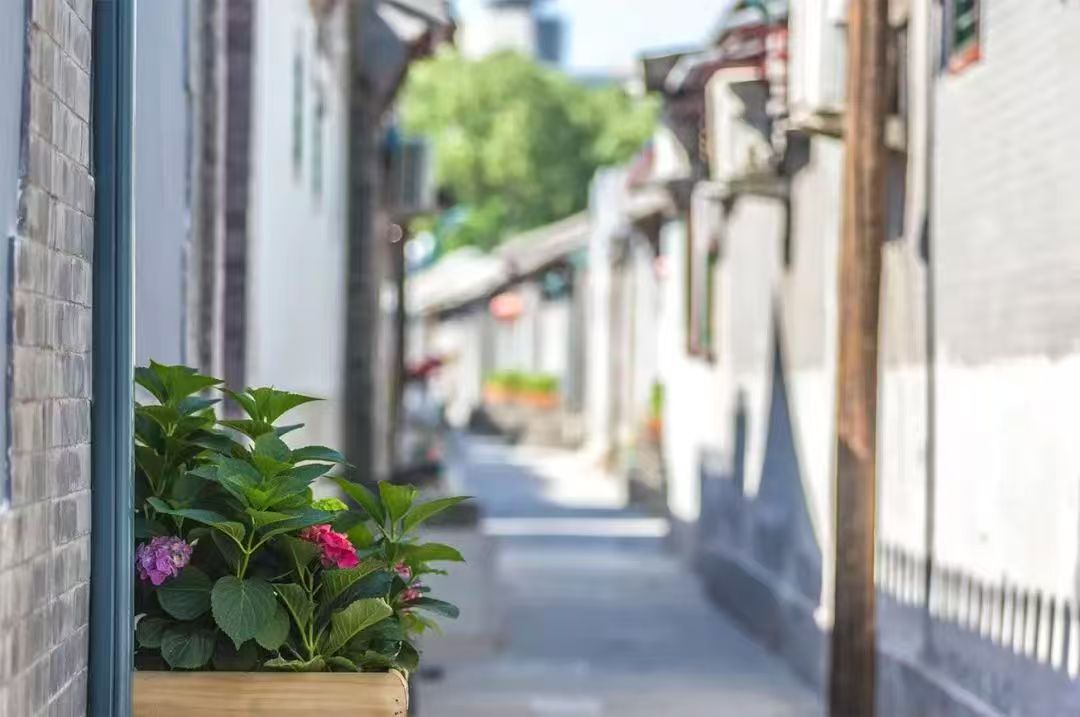
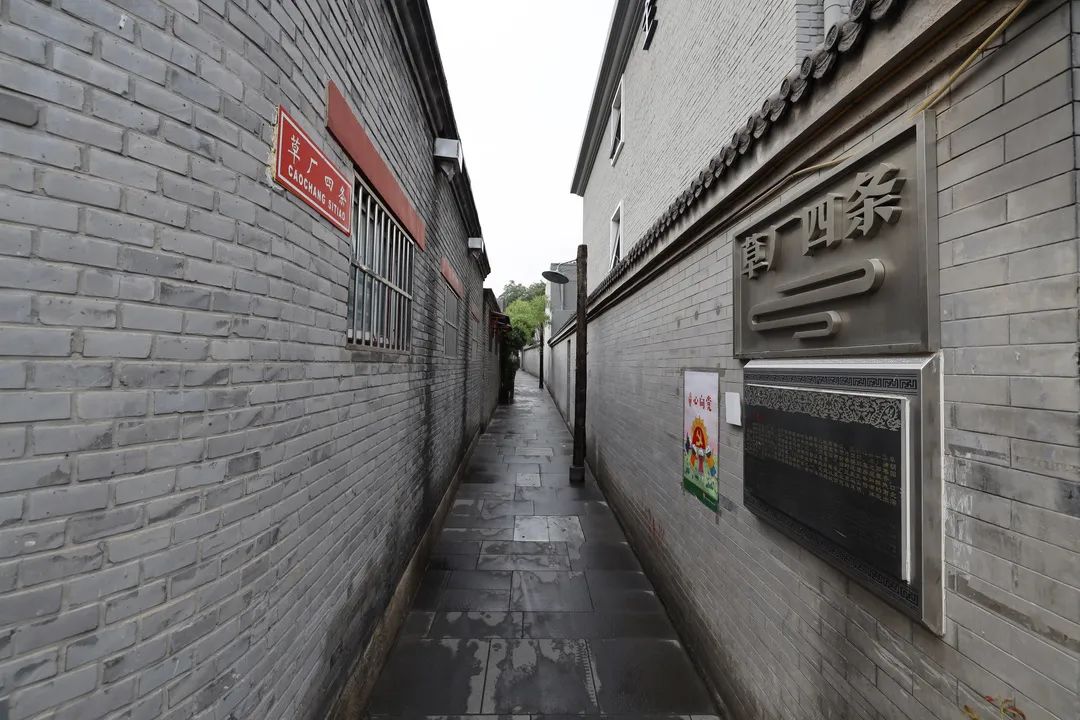
Caochang Community is located in the southeastern part of Tian'anmen Square. It is a distinctive north-south-oriented hutong area in Beijing's southern city, retaining the street fabric of the old city and serving as a typical representation of the hutong landscape and the vibrant street life of old Beijing. As the forefront of community-level governance, the community relies on the "Swift Response to Public Complaints" working mechanism, uses the "Courtyard Meeting Room" regularly to build a consultation platform for residents, and integrates digital and intelligent governance methods to precisely address the urgent, difficult, anxious and aspirational issues of the people, establishing a new pattern of community-level governance featuring co-construction, co-governance and sharing. Here, international guests can experience the street life of old Beijing, learn about China's practices in old city preservation and community-level governance, gain a direct understanding of the "Swift Response to Public Complaints" community-level governance model, appreciate China's people-centered governance philosophy, and witness the warmth and vitality of community-level governance in the new era.
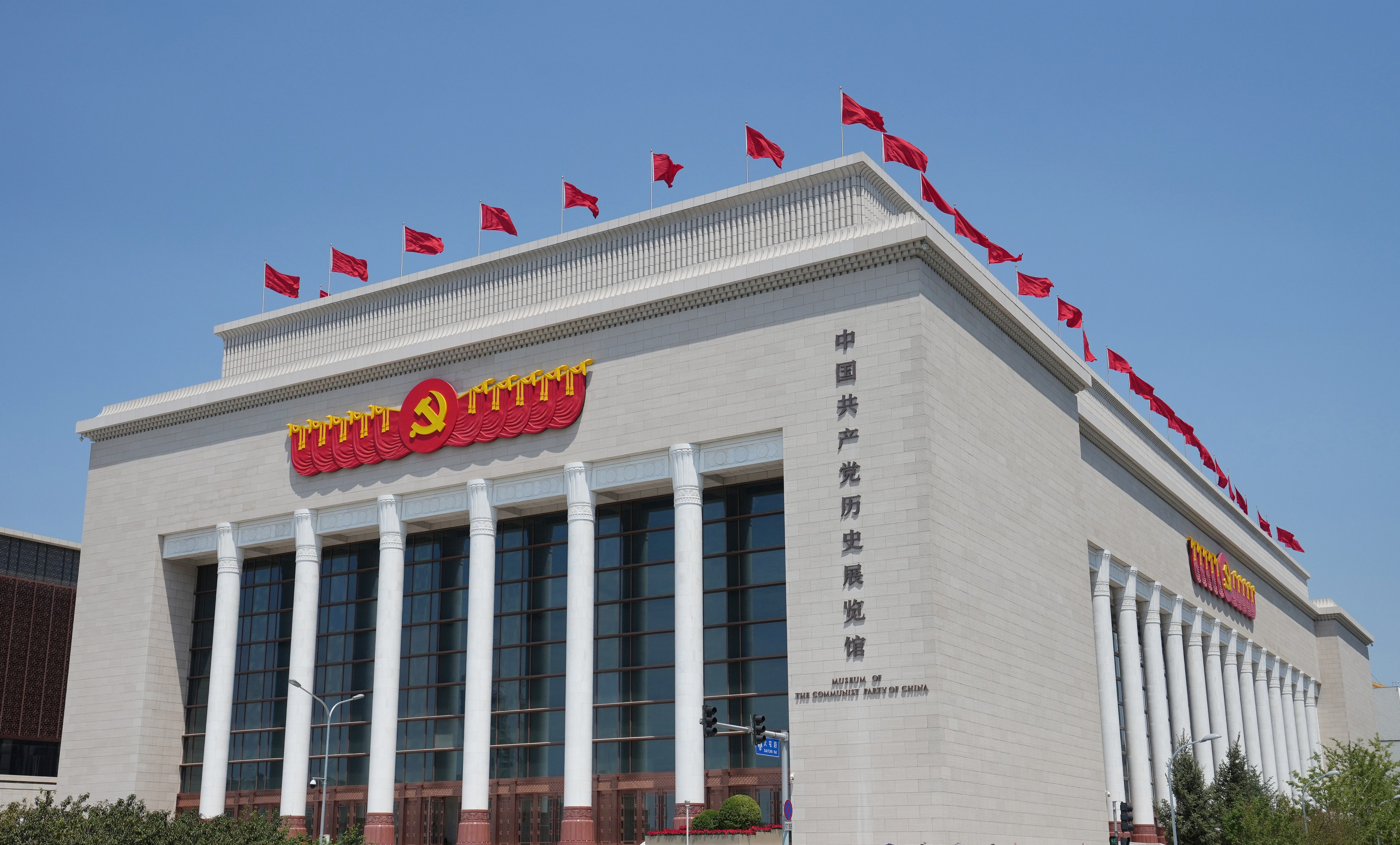
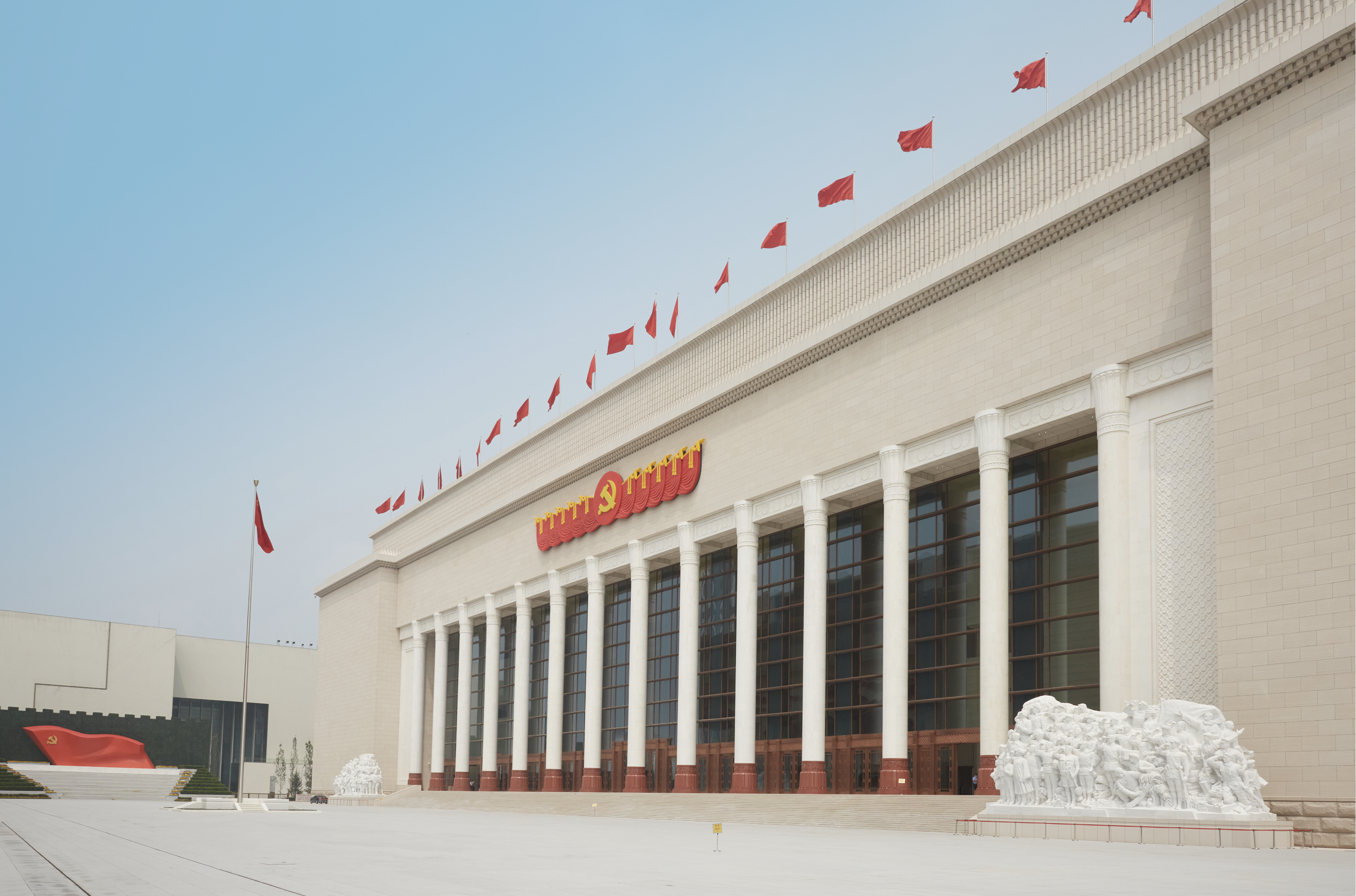
The Museum of the Communist Party of China is an important base for Party history learning and education. The exhibition is hosted by the Publicity Department of the Central Committee of the Communist Party of China, with "Staying True to Our Original Aspiration and Founding Mission" as its overarching theme, presenting the magnificent century-long journey of the Communist Party of China in an all-round, whole-process, panoramic and epic manner.
The museum building is overall shaped like the Chinese character "工" (gong). It measures 201 meters from north to south, 81 meters from east to west, and 50 meters in height. Its exterior adopts a traditional colonnade structure, fully inheriting the essence of traditional Chinese architecture characterized by square and upright form, dignity, and grandeur. The large Party flag sculpture on the square and the four groups of sculptural ensembles themed on "Great Struggle, Great Project, Great Cause, and Great Dream" are organically integrated with the architectural style, highlighting the essence of the spirit of the Party. The main building has seven floors above ground and three basement floors. Floors one to three house the permanent exhibition halls for Party history, while the fourth floor and the first basement floor house thematic exhibition halls.
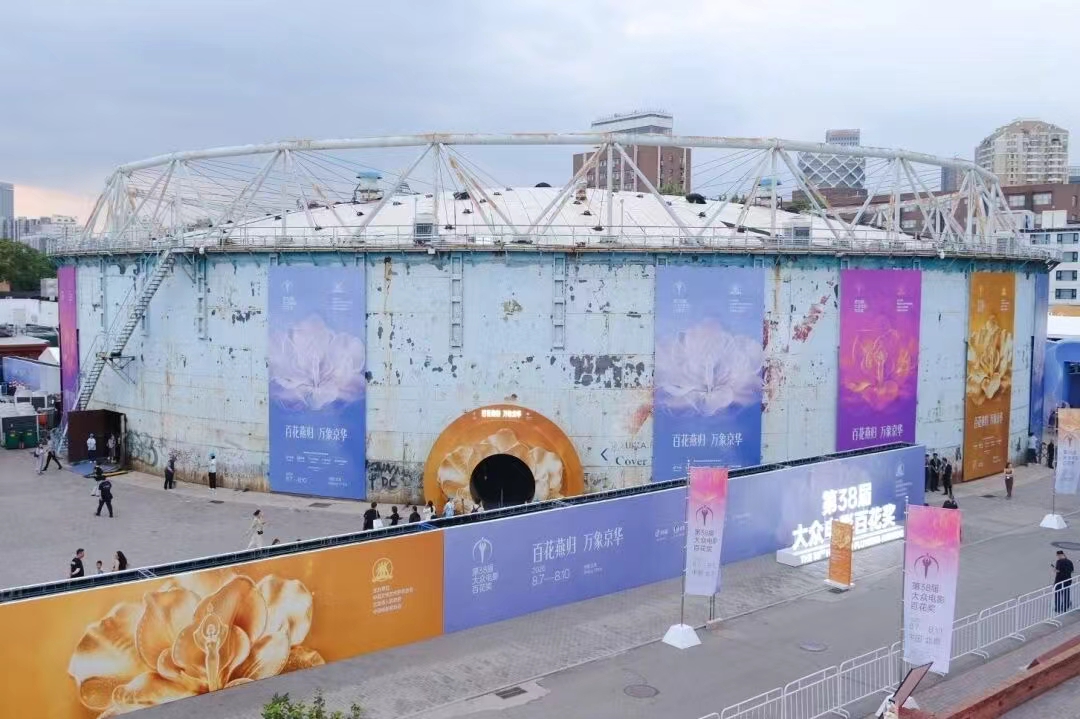

The 798 Art Zone is a key cultural industry park under the Beijing Electronics Holding Co., Ltd. (Beijing Electronics) Seven Star Group, a state-owned enterprise in the capital. In 1999, six factories merged to form the Seven Star Group, and the 798 Art Zone came into being. It is a cultural landmark of Beijing and a world-renowned cultural brand, ranking among the world's top ten art districts.
The 798 Art Zone covers an area of 300,000 square meters and has retained the largest Bauhaus architectural complex in Asia, built with East German assistance at the time of the factory's founding. After more than two decades of development, the 798 Art Zone has successfully transformed from an original ecological electronics manufacturing factory into a cultural industry cluster integrating diverse cultural formats. At present, the 798 Art Zone is home to national cultural exchange centers from 19 countries and regions around the world, international cultural and art institutions, renowned institutions combining traditional and contemporary Chinese art, and nearly one hundred studios of well-known domestic and international artists. The 798 Art Zone is now a Beijing Municipal-Level Cultural Industry Demonstration Park. It has been successively rated as one of the first batch of National-Level Nighttime Culture and Tourism Consumption Agglomeration Areas, a Beijing Cultural Tourism Experience Base, a 2021 Beijing Internet-Famous Check-in Destination (Street and Park Category), a Beijing Industrial Tourism Demonstration Site, and a "Night Beijing" Distinctive Consumption Landmark. In October 2023, the 798 Art Zone was designated by the Ministry of Culture and Tourism as a National Industrial Tourism Demonstration Base. It is a cultural calling card of Beijing and an important window for cultural and artistic exchanges between China and other countries.